TB-500 / Thymosin Beta-4 vs Thymosin Alpha-1
Two thymosin peptides whose names look related and whose evidence bases are nothing alike.
The distinction that mattersNothing but the word "thymosin" connects them. Thymosin alpha-1 is a defined 28-residue immune-modulating peptide with randomised hepatitis trials and approval in dozens of countries; thymosin beta-4 is an actin-binding repair protein whose human trials are in the eye. The harm runs in both directions — immune-support expectations get transferred onto a pro-angiogenic molecule, and thymosin alpha-1's regulatory standing gets borrowed to make this one sound vetted.
These are not equivalent in evidence Thymosin Alpha-1 is rated 4/5 and TB-500 / Thymosin Beta-4 is rated 2/5 — a gap of 2 levels on our scale. Similar marketing does not mean similar proof.
| TB-500 / Thymosin Beta-4 Research Use Only | Thymosin Alpha-1 Limited Approval | |
|---|---|---|
| Evidence rating |
2/5 Limited
Evidence rating 2 out of 5: Limited
|
4/5 Strong
Evidence rating 4 out of 5: Strong
|
| Regulatory status | Full-length Tβ4 has reached phase 2/3 trials for dry eye and corneal wounds. The injectable TB-500 fragment sold to consumers is unapproved. WADA-prohibited. | Approved in more than 30 countries for hepatitis B/C and as a vaccine adjuvant. Not FDA-approved; US orphan designations exist. |
| Category | Healing & Tissue Repair | Immune & Anti-inflammatory |
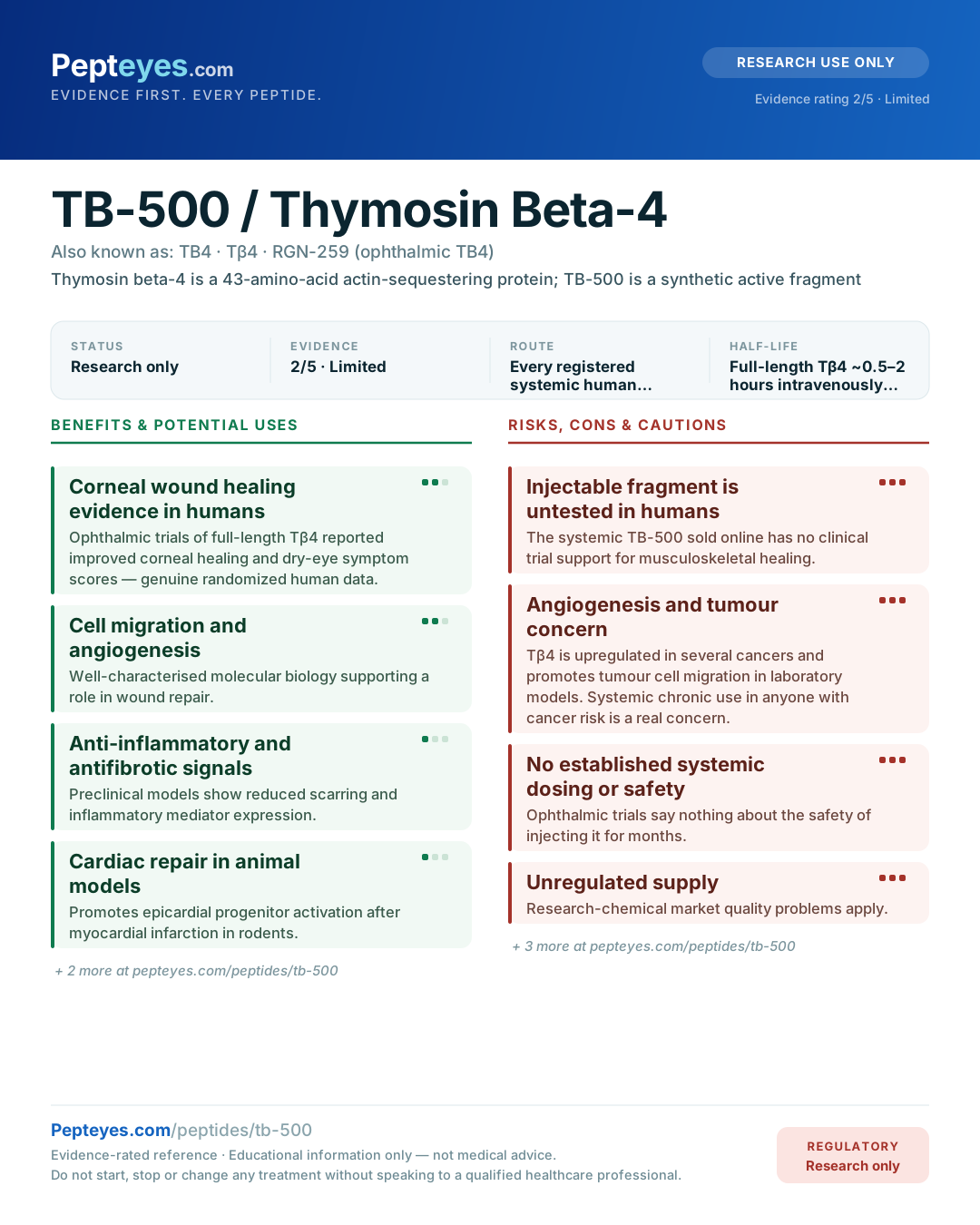
| Drug class | Thymosin beta-4 is a 43-amino-acid actin-sequestering protein; TB-500 is a synthetic active fragment | Naturally occurring 28-amino-acid thymic peptide |
| Route | Every registered systemic human study used the intravenous route with the intact 43-residue protein; the eye trials were topical drops. The subcutaneous and intramuscular injection of the TB-500 fragment that the consumer market runs on has no human pharmacokinetic study behind it. | Subcutaneous |
| Half-life | Full-length Tβ4 ~0.5–2 hours intravenously in healthy volunteers; the LKKTETQ fragment actually sold has no published pharmacokinetics. | ~2 hours |
| Sequence length | 43 residues | 28 residues |
| Molecular weight | 4,963.5 Da | 3,108.3 Da |
| Studied in | Randomised topical trials of full-length Tβ4 in the eye: ARISE-1, ARISE-2 and ARISE-3 in dry eye, and a neurotrophic keratopathy programme (SEER-1 closed early, SEER-2 recruiting, the European SEER-3 missing its primary endpoint). Phase 2 dermal wound trials in venous stasis and pressure ulcers, with the epidermolysis bullosa and diabetic corneal wound trials terminated. Intravenous phase 1 studies of the intact protein in healthy volunteers, and randomised phase 2 cardiac trials of recombinant Tβ4 after myocardial infarction. The marketed TB-500 heptapeptide entered its first registered human trial in 2026, in stable atherosclerotic disease with biomarker endpoints. | Randomized trials in chronic hepatitis B and C, sepsis (including a large Chinese sepsis RCT), severe COVID-19 cohorts, and as an adjunct in several cancers. |
| Who should avoid it |
|
|
| Legal status | Ophthalmic Tβ4 remains investigational. Injectable TB-500 is unapproved and not lawfully sold for human use. | Approved outside the US. In the US it is unapproved; access routes are legally constrained. |
Benefits — TB-500 / Thymosin Beta-4
- Corneal wound healing evidence in humans
Ophthalmic trials of full-length Tβ4 reported improved corneal healing and dry-eye symptom scores — genuine randomized human data.
- Cell migration and angiogenesis
Well-characterised molecular biology supporting a role in wound repair.
- Anti-inflammatory and antifibrotic signals
Preclinical models show reduced scarring and inflammatory mediator expression.
- Cardiac repair in animal models
Promotes epicardial progenitor activation after myocardial infarction in rodents.
- A randomised human cardiac trial now exists — and it was negative overall
A double-blind, placebo-controlled trial of 96 patients with ST-elevation myocardial infarction after primary PCI tested recombinant full-length thymosin beta-4 against placebo, with infarcted area at 90 days as the outcome. The overall comparison was not statistically significant. A reduction was reported in the 43 patients who received their first dose within eight hours of PCI, and the authors themselves conclude that further rigorous randomised studies are needed to assess early use. That is a timing hypothesis, not a result, and it belongs to the intact 43-residue protein given intravenously — not to an injected fragment.
Benefits — Thymosin Alpha-1
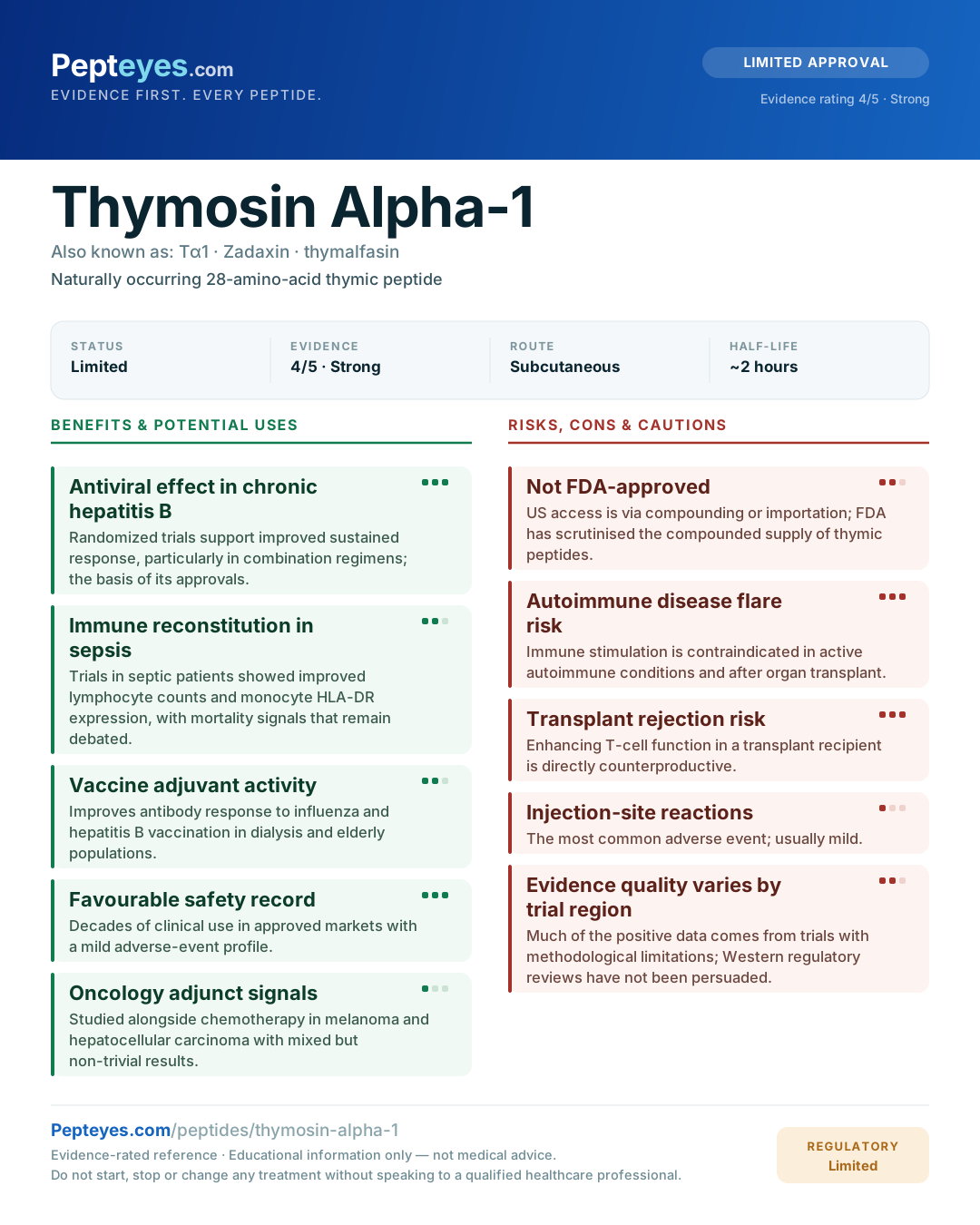
- Antiviral effect in chronic hepatitis B
Randomized trials support improved sustained response, particularly in combination regimens; the basis of its approvals.
- Immune reconstitution in sepsis
Trials in septic patients showed improved lymphocyte counts and monocyte HLA-DR expression, with mortality signals that remain debated.
- Vaccine adjuvant activity
Improves antibody response to influenza and hepatitis B vaccination in dialysis and elderly populations.
- Favourable safety record
Decades of clinical use in approved markets with a mild adverse-event profile.
- Oncology adjunct signals
Studied alongside chemotherapy in melanoma and hepatocellular carcinoma with mixed but non-trivial results.
Risks & cons — TB-500 / Thymosin Beta-4
- Injectable fragment is untested in humans
The systemic TB-500 sold online has no clinical trial support for musculoskeletal healing.
- Angiogenesis and tumour concern
Tβ4 is upregulated in several cancers and promotes tumour cell migration in laboratory models. Systemic chronic use in anyone with cancer risk is a real concern.
- No established systemic dosing or safety
Ophthalmic trials say nothing about the safety of injecting it for months.
- Unregulated supply
Research-chemical market quality problems apply.
- Named on the WADA Prohibited List, with a whole-squad precedent
Not a grey area and not an inference. "Thymosin-β4 and its derivatives, e.g. TB-500" were added as explicit examples of prohibited growth factors under S2.3, a class prohibited at all times, in and out of competition, and treated as non-specified — so the default sanction is the long one, and strict liability means intent is not a defence. The best-documented case is the Essendon Football Club supplements programme: in January 2016 the Court of Arbitration for Sport upheld WADA's appeal and found to its comfortable satisfaction that 34 past and present players had used thymosin beta-4, imposing two-year ineligibility periods backdated to March 2015 and costing most of them the entire 2016 season. Anyone in a tested sport, or in a military or law-enforcement programme that has adopted the WADA categories, is risking a career rather than a fine.
Risks & cons — Thymosin Alpha-1
- Not FDA-approved
US access is via compounding or importation; FDA has scrutinised the compounded supply of thymic peptides.
- Autoimmune disease flare risk
Immune stimulation is contraindicated in active autoimmune conditions and after organ transplant.
- Transplant rejection risk
Enhancing T-cell function in a transplant recipient is directly counterproductive.
- Injection-site reactions
The most common adverse event; usually mild.
- Evidence quality varies by trial region
Much of the positive data comes from trials with methodological limitations; Western regulatory reviews have not been persuaded.
A comparison is not a recommendation. Neither column is being suggested for you. Which — if either — is appropriate depends on your diagnosis, history and medications, and that is a conversation for a qualified clinician.