Supplied as a lyophilised powder to reconstitute
Cardiac & Vascular
At a glance
Ten answers, each one line. Open any row for the detail behind it.
What it does The seven-residue tail of angiotensin II, cut off by ACE2, and the signalling ligand of…
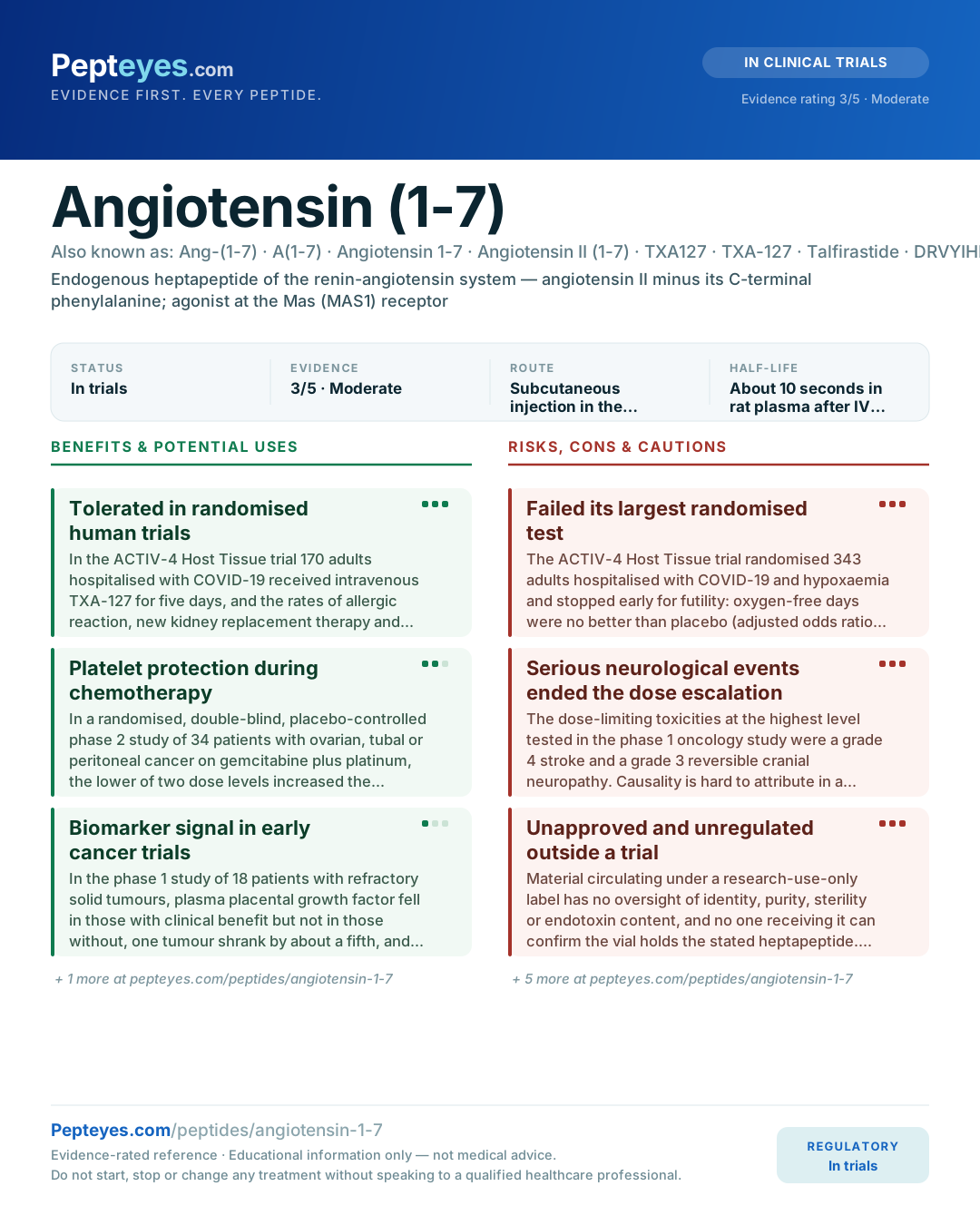
The seven-residue tail of angiotensin II, cut off by ACE2, and the signalling ligand of the protective arm of the renin-angiotensin system: where angiotensin II constricts vessels and drives fibrosis, this peptide dilates and opposes. As the drug candidate TXA127 it has been through roughly two dozen registered human studies since the mid-2000s in cancer, chemotherapy-induced low platelets, COVID-19, muscular dystrophy and stroke recovery. The pharmacology is real and the tolerability record decent; what is missing is a trial showing it helps, and the largest one was stopped for futility.
Half-life About 10 seconds in rat plasma after IV infusion, cleared by… — Documented
About 10 seconds in rat plasma after IV infusion, cleared by ACE; in humans the apparent half-life after subcutaneous dosing was 25-37 minutes.
Typical studied dose No established dose. Each trial protocol fixes its own and publishes it… — Depends on the study
No established dose. Each trial protocol fixes its own and publishes it in the registry entry, under medical supervision that is part of the dose. There is no approved amount for use outside a study.
How often it is used Whatever the protocol specifies. The registry entry for a given study… — Depends on the study
Whatever the protocol specifies. The registry entry for a given study states its interval; nothing establishes one outside a study.
How it is taken Subcutaneous injection in the oncology and haematology trials… — Documented
Subcutaneous injection in the oncology and haematology trials; intravenous infusion, once daily or continuous, in the COVID-19 trials. Not established outside a trial setting.
Main side effects Failed its largest randomised test · Serious neurological events ended the dose escalation · Unapproved and unregulated outside a trial — Carries serious risk
Failed its largest randomised test — The ACTIV-4 Host Tissue trial randomised 343 adults hospitalised with COVID-19 and hypoxaemia and stopped early for futility: oxygen-free days were no better than placebo (adjusted odds ratio 0.88) and 28-day mortality was 13.5 per cent against 13.3 per cent. No indication yet has a confirmed clinical benefit.
Serious neurological events ended the dose escalation — The dose-limiting toxicities at the highest level tested in the phase 1 oncology study were a grade 4 stroke and a grade 3 reversible cranial neuropathy. Causality is hard to attribute in a heavily pretreated cancer population, but those events are why the escalation stopped where it did.
Unapproved and unregulated outside a trial — Material circulating under a research-use-only label has no oversight of identity, purity, sterility or endotoxin content, and no one receiving it can confirm the vial holds the stated heptapeptide. The trial formulation was pharmaceutical-grade material made to a specification; grey-market powder is not the same thing.
Storage before mixing As a sealed lyophilised powder, refrigerated is typical and a freezer…
As a sealed lyophilised powder, refrigerated is typical and a freezer suits long storage; both should be dark and dry. A dry powder tolerates a few days out of the cold far better than anything in solution — which is why it ships that way.
Shelf life after mixing Once mixed it is refrigerated and treated as short-lived. Bacteriostatic…
Once mixed it is refrigerated and treated as short-lived. Bacteriostatic water contains a preservative and buys the longer window; sterile water contains none and buys a much shorter one. Peptides in solution also degrade on their own, so the container is only half the question.
Evidence level 3/5 · Moderate — Depends on the study
Small or early-phase human trials, or good controlled topical human data.
Regulatory status In Clinical Trials — Depends on the study
No regulator has approved it anywhere; it is an investigational drug, developed as TXA127 and given the name talfirastide, in company-sponsored phase 2 trials as of September 2026, and separately circulates under a research-use-only label. Angiotensin-(1-7) holds no marketing authorisation in the United States, the European Union or the United Kingdom for any indication. The FDA has granted TXA127 orphan-drug designation in Duchenne and limb-girdle muscular dystrophy and in LAMA2-related congenital muscular dystrophy, and fast-track designation in Duchenne; a designation is not an approval, though it has been reported as one. It is not a controlled substance, and the identical peptide circulates in everyone. It is not named individually on the WADA Prohibited List, but the S0 clause covering substances with no approval by any government health authority applies.
Overview
The seven-residue tail of angiotensin II, cut off by ACE2, and the signalling ligand of the protective arm of the renin-angiotensin system: where angiotensin II constricts vessels and drives fibrosis, this peptide dilates and opposes. As the drug candidate TXA127 it has been through roughly two dozen registered human studies since the mid-2000s in cancer, chemotherapy-induced low platelets, COVID-19, muscular dystrophy and stroke recovery. The pharmacology is real and the tolerability record decent; what is missing is a trial showing it helps, and the largest one was stopped for futility.
Investigational — not approvedAngiotensin-(1-7) holds no marketing authorisation in the United States, the European Union or the United Kingdom for any indication. The FDA has granted TXA127 orphan-drug designation in Duchenne and limb-girdle muscular dystrophy and in LAMA2-related congenital muscular dystrophy, and fast-track designation in Duchenne; a designation is not an approval, though it has been reported as one. It is not a controlled substance, and the identical peptide circulates in everyone. It is not named individually on the WADA Prohibited List, but the S0 clause covering substances with no approval by any government health authority applies.
| Regulatory status | No regulator has approved it anywhere; it is an investigational drug, developed as TXA127 and given the name talfirastide, in company-sponsored phase 2 trials as of September 2026, and separately circulates under a research-use-only label. |
|---|---|
| Drug class | Endogenous heptapeptide of the renin-angiotensin system — angiotensin II minus its C-terminal phenylalanine; agonist at the Mas (MAS1) receptor |
| Route | Subcutaneous injection in the oncology and haematology trials; intravenous infusion, once daily or continuous, in the COVID-19 trials. Not established outside a trial setting. |
| Half-life | About 10 seconds in rat plasma after IV infusion, cleared by ACE; in humans the apparent half-life after subcutaneous dosing was 25-37 minutes. |
| Evidence rating |
3/5 Moderate
Evidence rating 3 out of 5: Moderate
Small or early-phase human trials, or good controlled topical human data. |
| Studied in | A phase 1 dose-escalation in advanced solid tumours and a phase 2 in metastatic sarcoma at Wake Forest; a randomised placebo-controlled phase 2 in chemotherapy-induced thrombocytopenia; TXA127 studies in stem-cell transplantation, several terminated early; the ACTIV-4 Host Tissue COVID-19 trial and a Brazilian ICU trial; and phase 2 trials in Duchenne cardiomyopathy and stroke recovery from 2024. |
Angiotensin (1-7) sequence & structure
Angiotensin (1-7) is a 7-residue linear peptide with a free C-terminal acid; molecular weight 899.02 Da.
| Three-letter | H-Asp-Arg-Val-Tyr-Ile-His-Pro-OH |
|---|---|
| Length | 7 amino acid residues |
| Modifications | None — an unmodified chain of standard L-amino acids |
| Molecular formula | C41H62N12O11 |
| Molecular weight | 899.02 Da (average, free base) |
| SMILES | CC[C@H](C)[C@@H](C(=O)N[C@@H](CC1=CN=CN1)C(=O)N2CCC[C@H]2C(=O)O)NC(=O)[C@H](CC3=CC=C(C=C3)O)NC(=O)[C@H](C(C)C)NC(=O)[C@H](CCCN=C(N)N)NC(=O)[C@H](CC(=O)O)N |
| Identifiers | CAS 51833-78-4 · PubChem CID 123805 · UniProt P01019 |
| Which molecule | This record is the natural human heptapeptide DRVYIHP: residues 25-31 of angiotensinogen, and residues 1-7 of both angiotensin I and angiotensin II. TXA127, and the name talfirastide, refer to pharmaceutical-grade preparations of this same molecule rather than to a different one. It is not angiotensin II (DRVYIHPF), angiotensin-(1-9) or alamandine, and it is not one of the stabilised analogues built on this sequence — NorLeu3-angiotensin-(1-7) (aclerastide, DSC127), cyclic angiotensin-(1-7) and the glycosylated Mas agonist PNA5 are separate molecules with their own pharmacology. |
| Sources | PubChem CID 123805 — Angiotensin (1-7): formula, average mass, isomeric SMILES, CAS numbers and the TXA127 and talfirastide synonymsUniProt P01019 — Angiotensinogen (AGT), Homo sapiens: the Angiotensin 1-7 peptide feature at residues 25-31Self et al., JAMA 2023;329:1170-1182 — identifies the trial agent TXA-127 as synthetic angiotensin (1-7) |
Catalogues list this fragment as Angiotensin (1-7), Angiotensin I (1-7) or Angiotensin II (1-7) interchangeably, which is harmless because angiotensin I and II share residues 1-7. It is normally handled as an acetate or trifluoroacetate salt, so a certificate of analysis may quote a mass above the 899.02 free-peptide figure; a second registry number, 39386-80-6, also appears against this peptide.
Record confidence: high — two independent authoritative sources agree on the sequence and modifications. Every sequence on the site is listed with its sources on the peptide sequences index.
How it works
Angiotensin-(1-7) is produced mainly when ACE2 clips the C-terminal phenylalanine off angiotensin II, and also straight from angiotensin I by neprilysin and thimet oligopeptidase. It signals through the G-protein-coupled Mas receptor, and to a lesser extent at the angiotensin AT2 receptor, activating endothelial nitric oxide synthase and opposing the AT1-receptor programme of vasoconstriction, oxidative stress, inflammation and fibrosis. Downstream it lowers NADPH-oxidase-derived reactive oxygen species, damps TGF-beta-driven fibrosis in heart, skeletal muscle and kidney, and in bone marrow stimulates progenitor proliferation, which is the basis of the haematology programme. ACE, the enzyme that makes angiotensin II, is also the main enzyme that destroys angiotensin-(1-7), so ACE inhibitors raise endogenous concentrations of it. The therapeutic thesis is to supply the protective arm directly rather than block the pressor one.
Evidence base
Rated 3 of 5 — Moderate. Small or early-phase human trials, or good controlled topical human data.
- The human record is substantial in volume: roughly two dozen registered studies since the mid-2000s, several randomised and placebo-controlled, spanning oncology, haematology, COVID-19 and now cardiomyopathy and stroke recovery.
- The one adequately powered randomised trial with a hard clinical endpoint, ACTIV-4 Host Tissue in COVID-19 with 343 participants, was stopped early for futility and showed no difference in oxygen-free days or mortality.
- Positive findings are small, single-trial and mostly pharmacodynamic — platelet counts, placental growth factor — rather than replicated clinical outcomes, and the sarcoma phase 2 failed to reproduce the phase 1 biomarker effect.
- A Brazilian intensive-care trial found no difference in oxygen-free days in its randomised phase; only a pooled analysis that folded in the open-label phase reached significance.
- Early-phase human trials without a confirmed clinical benefit is a 3 on this scale, not a 4.
Benefits and risks, weighed against the evidence
Every entry below carries the strength of the evidence behind it — three bars for strong human data, two for moderate, one for preliminary or preclinical work. The two columns are not equal by design: where a compound has more documented risk than demonstrated benefit, the lists say so.
Reported benefits
4 entries · 1 on strong human evidence
-
Tolerated in randomised human trials
In the ACTIV-4 Host Tissue trial 170 adults hospitalised with COVID-19 received intravenous TXA-127 for five days, and the rates of allergic reaction, new kidney replacement therapy and hypotension were similar to placebo. The oncology, haematology and intensive-care studies likewise reported no drug-related safety problem at the levels they used.
Evidence: Strong evidence -
Platelet protection during chemotherapy
In a randomised, double-blind, placebo-controlled phase 2 study of 34 patients with ovarian, tubal or peritoneal cancer on gemcitabine plus platinum, the lower of two dose levels increased the maximal rise in platelet count over placebo, preserved relative chemotherapy dose intensity, and produced no grade 4 thrombocytopenia against 6 per cent of placebo cycles. The higher level did nothing.
Evidence: Moderate evidence -
Biomarker signal in early cancer trials
In the phase 1 study of 18 patients with refractory solid tumours, plasma placental growth factor fell in those with clinical benefit but not in those without, one tumour shrank by about a fifth, and three more were stable past three months. The follow-on phase 2 in metastatic sarcoma failed to reproduce that biomarker effect.
Evidence: Preliminary -
Coherent counter-regulatory pharmacology
It is the natural ligand of the Mas arm, and its effects in animals — vasodilation, less fibrosis, less oxidative stress, faster marrow recovery after chemotherapy or irradiation — are reproducible across laboratories and organs. That mechanism, not a clinical result, is what earned it orphan and fast-track designations in the muscular dystrophies.
Evidence: Preliminary
Risks and cautions
8 entries · 3 serious or common
-
Failed its largest randomised test
The ACTIV-4 Host Tissue trial randomised 343 adults hospitalised with COVID-19 and hypoxaemia and stopped early for futility: oxygen-free days were no better than placebo (adjusted odds ratio 0.88) and 28-day mortality was 13.5 per cent against 13.3 per cent. No indication yet has a confirmed clinical benefit.
Evidence: Serious -
Serious neurological events ended the dose escalation
The dose-limiting toxicities at the highest level tested in the phase 1 oncology study were a grade 4 stroke and a grade 3 reversible cranial neuropathy. Causality is hard to attribute in a heavily pretreated cancer population, but those events are why the escalation stopped where it did.
Evidence: Serious -
Unapproved and unregulated outside a trial
Material circulating under a research-use-only label has no oversight of identity, purity, sterility or endotoxin content, and no one receiving it can confirm the vial holds the stated heptapeptide. The trial formulation was pharmaceutical-grade material made to a specification; grey-market powder is not the same thing.
Evidence: Serious -
Blood pressure and heart rate effects
It is a vasodilator, and hypotension was a prespecified safety outcome in the COVID-19 trials. In the open-label phase of the Brazilian intensive-care study one serious adverse event, bradycardia, was judged possibly related and led to the infusion being stopped.
Evidence: Moderate evidence -
Effects on vessels and tumours cut both ways
The same molecule was developed as an antiangiogenic cancer drug and, as a stabilised analogue, as a wound-healing agent. What suppressing or stimulating vascular growth does in a particular person with a particular tumour, retinopathy or healing wound has never been established.
Evidence: Moderate evidence -
Overlaps with very common cardiovascular drugs
ACE inhibitors block the main route by which this peptide is cleared, and angiotensin receptor blockers shift the same system toward the arm it acts on. Adding an exogenous Mas agonist on top of either has not been studied outside a trial.
Evidence: Moderate evidence -
It disappears within seconds
Plasma clearance is fast enough that trials used continuous infusion or daily repeat administration to keep any exposure at all. Claims of a lasting effect from occasional injection do not follow from what is known about how quickly ACE destroys it.
Evidence: Moderate evidence -
Injection hazards independent of the molecule
Reconstituting and injecting an unregulated lyophilised powder outside sterile conditions risks local infection, abscess and bloodstream infection whatever the peptide itself does.
Evidence: Moderate evidence
Counts are not a score. A single serious risk can outweigh several well-supported benefits, and a long benefit list built on preclinical work outweighs nothing at all.
Opinion — what people actually report
No community discussion to summarise
There is no community self-report for angiotensin-(1-7) to summarise. It has been through roughly two dozen registered human studies as the drug candidate TXA127, but always in a hospital setting — intravenous infusion in the COVID-19 trials, injection in the oncology and haematology programmes — and the patients in them were not choosing it. It has never crossed into the wellness or grey market in any visible way. The peptide-forum interest that attaches to almost everything else in this library has simply never formed around it, despite an anti-ageing story about the protective arm of the renin-angiotensin system that would have been easy to tell. What public discussion exists is investor and rare-disease-advocacy coverage of the muscular dystrophy and stroke programmes, which is commentary on a company rather than an account of an experience.
Readers on Angiotensin (1-7)
Questions and answers from readers, under generated names. Nothing here has been checked or reviewed by the site and none of it is medical advice. It is the least verified thing on this page — and it is here because people ask each other these things anyway, and most of the other places they can ask are run by sellers.
0 questions · 0 answers
No questions yet. Ask the first one above — it takes one box and an email address.
How names work, and the house rules
Names. Every verified address is given one generated name — two ordinary words — and keeps it. Nobody chooses a name and nobody can take another's. Posts marked desk were written by the site's own editorial desk, usually to open a thread; they carry a generated name like everyone else's and are held to the site's rules, which means they never state an amount.
What is not allowed. Selling, sourcing, vendor names, coupon codes and "message me" — posts that read that way are held and usually removed. Personal medical details you would not want public. Abuse. Instructions framed as what someone else should do.
What this is not. A reader's report of what happened to them is a report, not a finding, and an answer here is one person's view. Nothing in this section changes the evidence rating above it. If something you read here would change what you take, take it to a pharmacist or physician first.
Your data. Delete any post of yours at any time, or remove everything you have written together with your name. Details in the privacy notice.
Who should avoid it
- Use outside a registered clinical trial
- Anyone with active cancer, given unresolved effects on tumour vasculature
- Anyone with a history of stroke or other cerebrovascular disease
- Anyone taking ACE inhibitors, angiotensin receptor blockers or other blood-pressure medicine
- Pregnancy and breastfeeding
- Children and adolescents, outside the trials that enrol them
If used under medical supervision, monitor
- Not applicable outside a registered trial
- A trial would track blood pressure and heart rate, including bradycardia
- Renal function and serum potassium, as with any agent acting on the renin-angiotensin system
- Full blood count, the endpoint in the haematology studies
- Neurological symptoms, given the events that ended the phase 1 escalation
Interactions
Not exhaustive. Always have a pharmacist or physician review your full medication list — including supplements.
- ACE inhibitors — ACE is the main enzyme clearing angiotensin-(1-7), so blocking it already raises endogenous levels
- Angiotensin receptor blockers — shift the same system toward the Mas and AT2 arm; combined effects untested
- Other antihypertensives — additive vasodilation is plausible and unstudied
- Granulocyte colony-stimulating factor and erythropoietin — combined with this peptide in marrow-recovery studies in animals and in a registered transplantation trial
Regulatory & legal status
Angiotensin-(1-7) holds no marketing authorisation in the United States, the European Union or the United Kingdom for any indication. The FDA has granted TXA127 orphan-drug designation in Duchenne and limb-girdle muscular dystrophy and in LAMA2-related congenital muscular dystrophy, and fast-track designation in Duchenne; a designation is not an approval, though it has been reported as one. It is not a controlled substance, and the identical peptide circulates in everyone. It is not named individually on the WADA Prohibited List, but the S0 clause covering substances with no approval by any government health authority applies.
Infographic
What this entry was checked against
The specific records this monograph was verified against on its last research pass. We link live literature searches below as well, because these are a snapshot and the literature is not.
- Self et al., JAMA 2023;329:1170-1182 — Renin-Angiotensin System Modulation With Synthetic Angiotensin (1-7) and Angiotensin II Type 1 Receptor-Biased Ligand in Adults With COVID-19: Two Randomized Clinical Trials (ACTIV-4 Host Tissue, NCT04924660)
- Petty et al., Clin Cancer Res 2009;15:7398-7404 — Phase I and Pharmacokinetic Study of Angiotensin-(1-7), an Endogenous Antiangiogenic Hormone
- Savage et al., Sarcoma 2016:4592768 — Phase II Trial of Angiotensin-(1-7) for the Treatment of Patients with Metastatic Sarcoma
- Pham et al., Cancer Chemother Pharmacol 2013;71:965-972 — Pharmacodynamic stimulation of thrombogenesis by angiotensin (1-7) in recurrent ovarian cancer patients receiving gemcitabine and platinum-based chemotherapy
- Ann Intensive Care 2024;14:127 — Angiotensin-(1-7) infusion in COVID-19 patients admitted to the ICU: a seamless phase 1-2 randomized clinical trial
- Yamada, Iyer, Chappell et al., Hypertension 1998;32:496-502 — Converting enzyme determines plasma clearance of angiotensin-(1-7) (half-life and ACE-dependent clearance)
- ClinicalTrials.gov — registry records for TXA127 and angiotensin (1-7), including NCT06013839 in Duchenne-associated cardiomyopathy and NCT06135103 in post-ischaemic stroke
- UniProt P01019 — Angiotensinogen: the Angiotensin 1-7 peptide at residues 25-31 of the precursor
Where to read further
We link to live literature searches rather than a frozen citation list, so you always see current results — including anything published after our last review.
- PubMed — all published literature on Angiotensin (1-7)
- PubMed — randomized controlled trials only
- ClinicalTrials.gov — registered human trials
Related peptides in Cardiac & Vascular
Terms used on this page
- Fibrosis
- Fibrosis is the accumulation of excess extracellular matrix that replaces functional tissue, representing repair that has failed to resolve rather than a separate disease process.
- Ligand
- A ligand is any molecule that binds specifically to a receptor or other macromolecule, a term that describes the binding alone and says nothing about whether the molecule activates or blocks its target.
- Nitric Oxide
- Nitric oxide is a short-lived gaseous signalling molecule made from arginine by nitric oxide synthase that relaxes vascular smooth muscle and participates in immunity and repair.
- C-Terminus
- The C-terminus is the end of a peptide chain carrying a free alpha-carboxyl group, the point at which sequences stop being written and where carboxypeptidases attack.
- Placebo and Placebo Control
- A placebo is an inactive intervention matched to the real one in appearance and route, used as a control arm so that improvement caused by the drug can be separated from improvement that would occur anyway.
- Hard Clinical Endpoint
- A hard clinical endpoint is an outcome that matters directly to a patient and is objectively ascertainable, such as death, stroke or fracture, rather than a laboratory value standing in for one.
This page is educational information, not medical advice. It cannot account for your medical history, medications, or risk factors. Do not start, stop or change any treatment based on it. Speak to a qualified healthcare professional who knows your case.