5-Amino-1MQ vs NAD+ (Nicotinamide Adenine Dinucleotide)
These are not equivalent in evidence NAD+ (Nicotinamide Adenine Dinucleotide) is rated 2/5 and 5-Amino-1MQ is rated 1/5 — a gap of 1 level on our scale. Similar marketing does not mean similar proof.
| 5-Amino-1MQ Not a Peptide | NAD+ (Nicotinamide Adenine Dinucleotide) Not a Peptide | |
|---|---|---|
| Evidence rating |
1/5 Minimal
Evidence rating 1 out of 5: Minimal
|
2/5 Limited
Evidence rating 2 out of 5: Limited
|
| Regulatory status | Not a peptide: a small-molecule quinolinium salt, listed here because it is sold and argued about inside the peptide market. Not approved anywhere, and no human trial of it has ever been registered or published. | Not a peptide: a coenzyme present in every living cell. Not an approved drug anywhere. It sits in category 1 of the FDA's 503A compounding review — under evaluation, which is neither approval nor permission. |
| Category | Metabolic & Weight | Longevity & Mitochondrial |
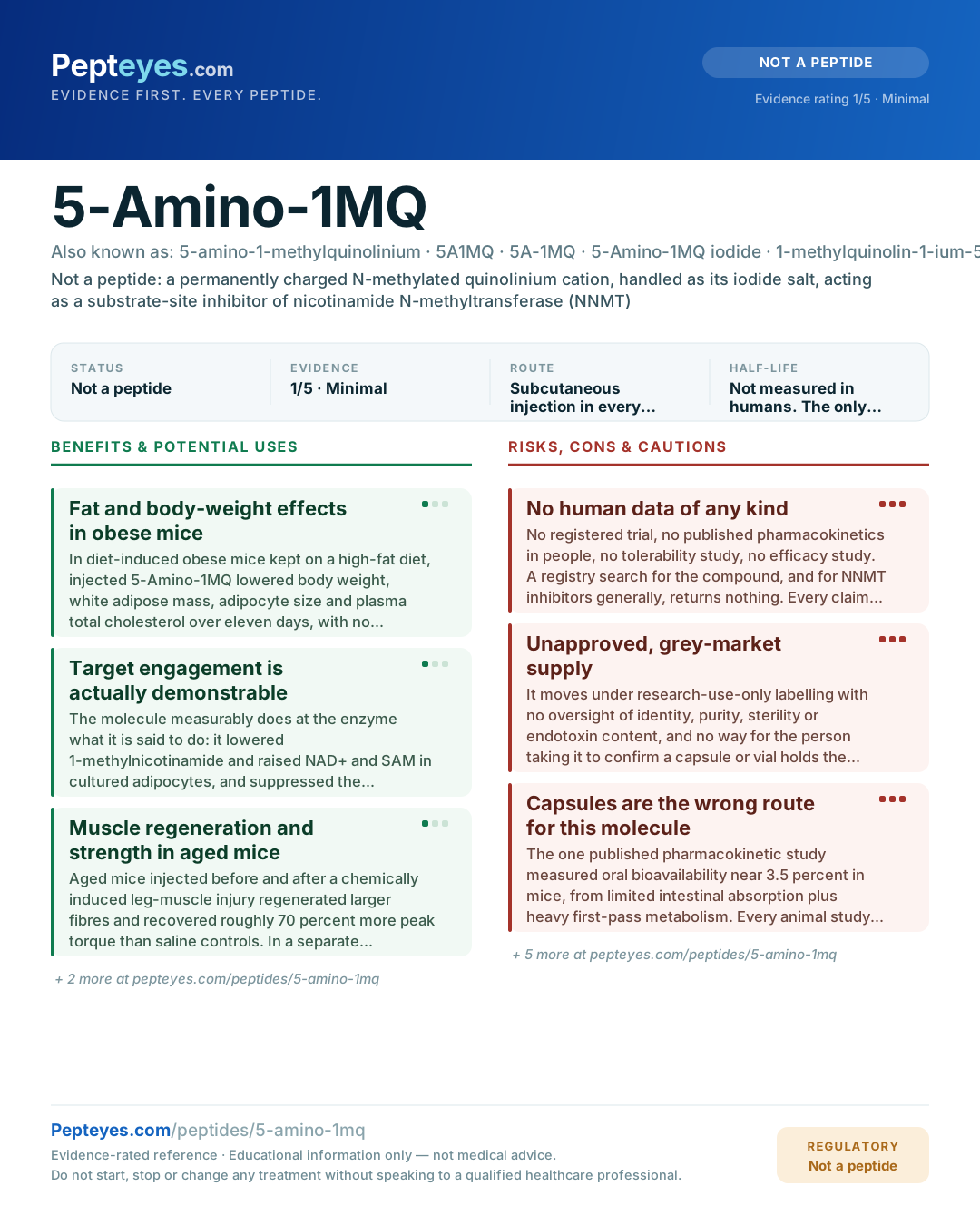
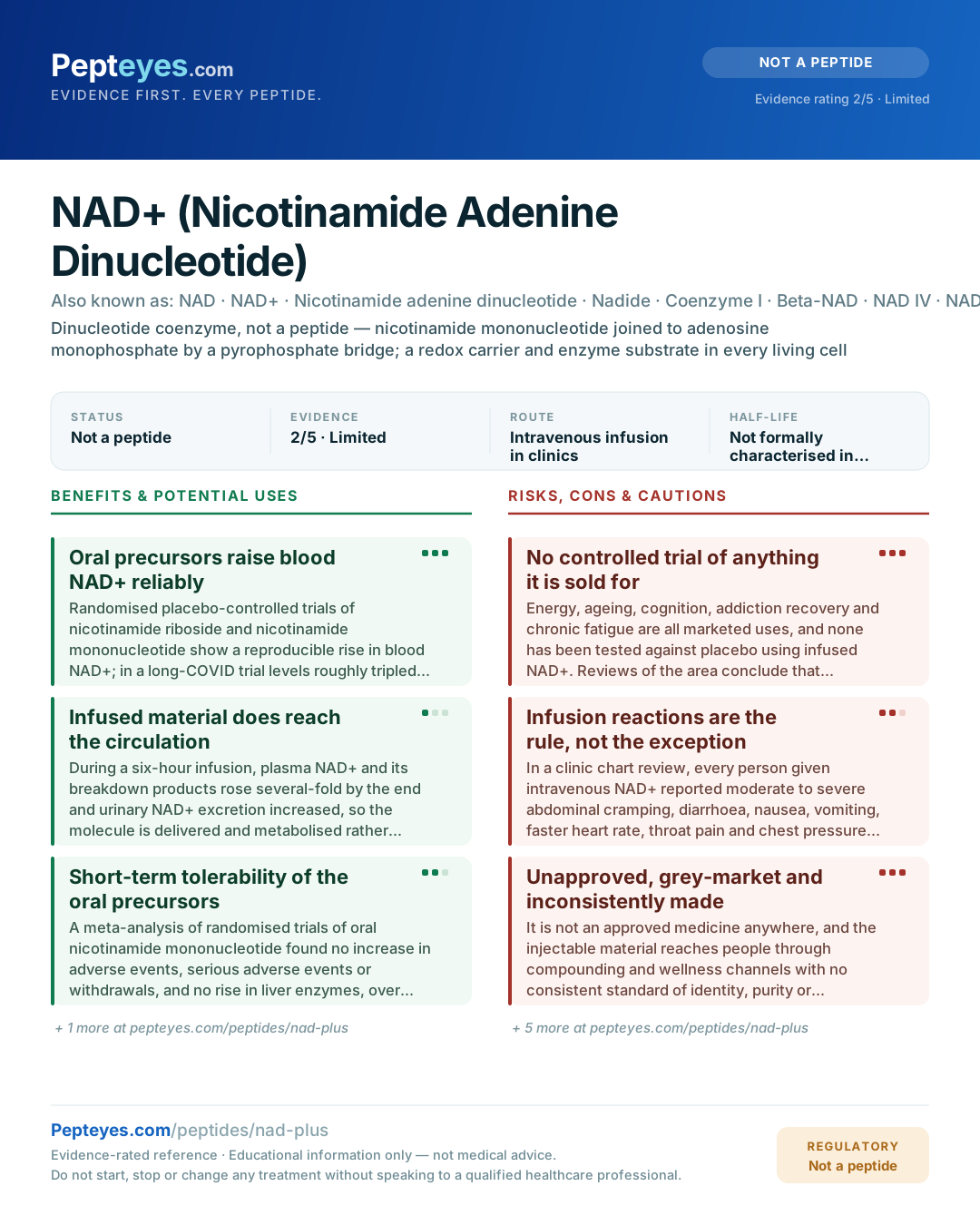
| Drug class | Not a peptide: a permanently charged N-methylated quinolinium cation, handled as its iodide salt, acting as a substrate-site inhibitor of nicotinamide N-methyltransferase (NNMT) | Dinucleotide coenzyme, not a peptide — nicotinamide mononucleotide joined to adenosine monophosphate by a pyrophosphate bridge; a redox carrier and enzyme substrate in every living cell |
| Route | Subcutaneous injection in every published animal efficacy study. Circulated for human use as oral capsules and as injectable vials, neither of which has been tested in a person. | Intravenous infusion in clinics; also sold for subcutaneous and intramuscular injection, and as oral, sublingual and nasal products. |
| Half-life | Not measured in humans. The only published data are in rats: about 3.8 h after IV and 6.9 h after oral dosing, with 38% oral bioavailability. | Not formally characterised in people. During a slow infusion, plasma levels stayed flat for about two hours, implying rapid and near-complete clearance. |
| Sequence length | Not a peptide | Not a peptide |
| Molecular weight | 286.1 Da | 663.4 Da |
| Studied in | Enzyme and cell assays, then mice only: diet-induced obese male mice on a high-fat diet, the same model combined with a switch to a lean diet, and aged mice with a chemically injured leg muscle or running on weighted wheels. All in vivo work used injection, and nearly all of it traces to one university group and the company its founder started. | An open-label study infused NAD+ into eleven men over six hours and tracked plasma and urine metabolites. A retrospective chart review compared intravenous NAD+ against intravenous nicotinamide riboside in a small clinic cohort, and a registered pilot compared both with saline. Everything else is precursor research. |
| Who should avoid it |
|
|
| Legal status | 5-Amino-1MQ is not an approved medicine in the United States, the European Union, the United Kingdom or anywhere else. It has never been reviewed as a dietary ingredient in the United States, and a synthetic chemical of this kind does not become a lawful supplement by being packaged as one. It circulates under research-use-only labelling, which is a labelling convention and confers no permission to give it to a person. It is not named individually on the WADA Prohibited List, but the S0 clause covering substances with no approval by any government health authority reaches it, so it is prohibited at all times in tested sport. | No NAD+ product is an approved medicine in the United States or the European Union. In the FDA's 503A review of substances nominated for pharmacy compounding, nicotinamide adenine dinucleotide sits in category 1 — under evaluation, with no significant safety risk identified — which is a holding position rather than permission, and is not the same as appearing on the 503A bulks list itself. It is not on the 503B list that governs outsourcing facilities, and in January 2026 the FDA told one such facility that its NAD+ products were therefore unapproved new drugs. The oral precursors are regulated as foods, on separate and shifting rules. |
Benefits — 5-Amino-1MQ
- Fat and body-weight effects in obese mice
In diet-induced obese mice kept on a high-fat diet, injected 5-Amino-1MQ lowered body weight, white adipose mass, adipocyte size and plasma total cholesterol over eleven days, with no change in food intake. A later 30-day study in the same model found it limited further weight and fat gain rather than reversing established obesity.
- Target engagement is actually demonstrable
The molecule measurably does at the enzyme what it is said to do: it lowered 1-methylnicotinamide and raised NAD+ and SAM in cultured adipocytes, and suppressed the 1-methylnicotinamide signal in fat and muscle of injected mice. Whatever else is uncertain here, the mechanism is not hand-waving.
- Muscle regeneration and strength in aged mice
Aged mice injected before and after a chemically induced leg-muscle injury regenerated larger fibres and recovered roughly 70 percent more peak torque than saline controls. In a separate eight-week study, aged sedentary mice gained about 40 percent in grip strength, and that gain added to what weighted-wheel running produced on its own.
- Liver fat improved in obese mice
Mice treated for a month showed less hepatic steatosis and macrophage infiltration, lower liver weight and triglycerides, and normalised transaminases. Liver outcomes are among the more plausible translations of this mechanism, but they are still mouse histology.
- Narrow selectivity in the screens run
It did not inhibit DNA methyltransferase 1, protein arginine methyltransferase 3, catechol-O-methyltransferase or the NAD+ salvage enzymes tested. In a broad receptor and enzyme panel the only notable hit was partial inhibition of monoamine oxidase A.
Benefits — NAD+ (Nicotinamide Adenine Dinucleotide)
- Oral precursors raise blood NAD+ reliably
Randomised placebo-controlled trials of nicotinamide riboside and nicotinamide mononucleotide show a reproducible rise in blood NAD+; in a long-COVID trial levels roughly tripled within weeks and stayed up. This is the best-supported claim in the whole field, and it is a claim about a blood measurement, not about injected NAD+.
- Infused material does reach the circulation
During a six-hour infusion, plasma NAD+ and its breakdown products rose several-fold by the end and urinary NAD+ excretion increased, so the molecule is delivered and metabolised rather than vanishing. What it then does inside cells, and whether any of it enters intact, was not measured.
- Short-term tolerability of the oral precursors
A meta-analysis of randomised trials of oral nicotinamide mononucleotide found no increase in adverse events, serious adverse events or withdrawals, and no rise in liver enzymes, over trials running from a fortnight to several months. Tolerability over years is unstudied, and this says nothing about infusion.
- Muscle NAD+ tracks with function in older adults
A cross-sectional study of human muscle found NAD+ lower in older adults, lowest in the physically impaired, and closer to young values in exercise-trained older people, correlating with mitochondrial and muscle function. It is an association in a snapshot, and the intervention it most supports is exercise.
Risks & cons — 5-Amino-1MQ
- No human data of any kind
No registered trial, no published pharmacokinetics in people, no tolerability study, no efficacy study. A registry search for the compound, and for NNMT inhibitors generally, returns nothing. Every claim made for it in a human being is an extrapolation from mice.
- Unapproved, grey-market supply
It moves under research-use-only labelling with no oversight of identity, purity, sterility or endotoxin content, and no way for the person taking it to confirm a capsule or vial holds the stated compound at all. Salt form and free-cation content are quoted inconsistently across listings.
- Capsules are the wrong route for this molecule
The one published pharmacokinetic study measured oral bioavailability near 3.5 percent in mice, from limited intestinal absorption plus heavy first-pass metabolism. Every animal study that produced an effect used injection. Swallowing it does not reproduce the exposure any of the evidence describes.
- Freeing methyl groups is not a local intervention
Blocking NNMT spares SAM wherever the enzyme is expressed, and SAM is the donor for DNA and histone methylation. The knockdown work that validated the target reported changes in histone H3 lysine 4 methylation in adipose tissue. Nothing has examined what months of that do, in any species.
- The cancer question runs in both directions
NNMT is overexpressed in many tumours and inhibiting it is being explored as an anti-cancer idea, but its role is context-dependent and in some tissues low NNMT tracks with worse behaviour. No NNMT inhibitor has been validated in tumour therapy, and nobody has studied chronic inhibition in a person carrying an undiagnosed cancer.
Risks & cons — NAD+ (Nicotinamide Adenine Dinucleotide)
- No controlled trial of anything it is sold for
Energy, ageing, cognition, addiction recovery and chronic fatigue are all marketed uses, and none has been tested against placebo using infused NAD+. Reviews of the area conclude that randomised placebo-controlled trials of intravenous NAD+ are simply absent, and that the case rests on case series and uncontrolled report.
- Infusion reactions are the rule, not the exception
In a clinic chart review, every person given intravenous NAD+ reported moderate to severe abdominal cramping, diarrhoea, nausea, vomiting, faster heart rate, throat pain and chest pressure during the drip, which stopped when the drip did. People slow the rate themselves to tolerate it, which is why infusions run long.
- Unapproved, grey-market and inconsistently made
It is not an approved medicine anywhere, and the injectable material reaches people through compounding and wellness channels with no consistent standard of identity, purity or sterility. The federal recall record for compounded NAD+ injection runs back a decade and is dominated by failures of sterility assurance, with one batch also pulled as sub-potent.
- A contaminated lot reached patients
In 2025 a compounded NAD+ injection was recalled at the most serious classification after three people developed low blood pressure, shaking and body aches from one lot; testing found bacterial endotoxin far above the permitted limit. The regulator's inspection described absent environmental monitoring and unvalidated aseptic practice.
- Cancer history is an open and unanswered question
Proliferating cells depend on NAD+ as heavily as healthy ones — enough that blocking its synthesis has been pursued as an anticancer strategy. Animal work on precursors has not shown increased tumour burden, but that cannot exclude a long-term risk in a person given repeated infusions, and no human study has looked.
A comparison is not a recommendation. Neither column is being suggested for you. Which — if either — is appropriate depends on your diagnosis, history and medications, and that is a conversation for a qualified clinician.