AHK-Cu vs GHK-Cu
The distinction that mattersOne residue apart and constantly swapped for each other. GHK-Cu is glycyl-histidyl-lysine copper, an endogenous plasma tripeptide with decades of wound-healing and skin literature behind it; AHK-Cu replaces that glycine with alanine, is not a natural human peptide, and has one ex-vivo hair paper. Claims made for GHK-Cu are routinely reprinted on AHK-Cu labels.
These are not equivalent in evidence GHK-Cu is rated 3/5 and AHK-Cu is rated 1/5 — a gap of 2 levels on our scale. Similar marketing does not mean similar proof.
| AHK-Cu Cosmetic Ingredient | GHK-Cu Cosmetic Ingredient | |
|---|---|---|
| Evidence rating |
1/5 Minimal
Evidence rating 1 out of 5: Minimal
|
3/5 Moderate
Evidence rating 3 out of 5: Moderate
|
| Regulatory status | A lawful cosmetic ingredient, labelled copper tripeptide-3. No drug approval anywhere, no registered clinical trial, and no published human study of any design. | Established cosmetic ingredient with human topical data. Injectable use is unapproved and unstudied. |
| Category | Skin & Cosmetic | Skin & Cosmetic |
| Drug class | Copper(II) complex of the synthetic tripeptide Ala-His-Lys — GHK with alanine in place of the N-terminal glycine | Naturally occurring copper-binding tripeptide |
| Route | Topical, in scalp and skin products; also injected into the scalp outside any approved or studied use. | Topical (well studied); injectable (not studied) |
| Half-life | Not characterised. No pharmacokinetic study of the complex in humans has been published for any route. | Commonly quoted as 30–60 minutes — that figure is an estimate repeated by suppliers and search summaries, not a measurement, and the same sources elsewhere give 1–2 hours or 4. No human pharmacokinetic study of GHK-Cu has been published for any route, so there is no measured half-life to report. What is established: rat work shows the tripeptide is cleared from plasma and broken to the dipeptide His-Lys, and once the peptide bonds are cut the copper does not leave with it but transfers to albumin, so the copper outlasts the peptide by far. Endogenous plasma GHK falls with age, but that is a concentration, not a half-life. |
| Sequence length | 3 residues | 3 residues |
| Molecular weight | 415.9 Da | 401.9 Da |
| Studied in | One 2007 report from a Korean dermatology group: human hair follicles in ex-vivo organ culture plus cultured human dermal papilla cells, with flow-cytometric annexin V labelling and blots for Bcl-2, Bax, cleaved caspase-3 and PARP. No human in-vivo study of any kind, and no registered trial. | A handful of small controlled human studies: a randomised, evaluator-blinded, vehicle-controlled trial of a copper tripeptide gel in diabetic foot ulcers (whose larger 511-patient successor failed), a maker-funded 8-week split-face wrinkle trial in 40 women, a small trial after laser resurfacing that was negative on blinded measures, and an 18-person eyebrow study. The cosmetic facial and eye-cream results were reported as 2002 conference abstracts rather than papers, and no controlled trial supports GHK-Cu alone for scalp hair. The bulk of the literature is fibroblast and keratinocyte culture plus rodent wound, lung and liver models. No controlled human study of any injected route. |
| Who should avoid it |
|
|
| Legal status | AHK-Cu holds no marketing authorisation as a medicine anywhere in the world. In cosmetics it is used lawfully and appears on labels as copper tripeptide-3; the closely related GHK complex is the one with the long-established European cosmetic ingredient entry, copper tripeptide-1. Cosmetic lawfulness is a fact about naming and about ingredient safety review at cosmetic use levels. It is not a finding of efficacy, and it says nothing whatever about injecting the material. Powders move under a research-use-only label, which is a labelling convention and not permission to give the substance to a person. It is not a controlled substance. | Lawful as a cosmetic ingredient. Injectable preparations are unapproved. |
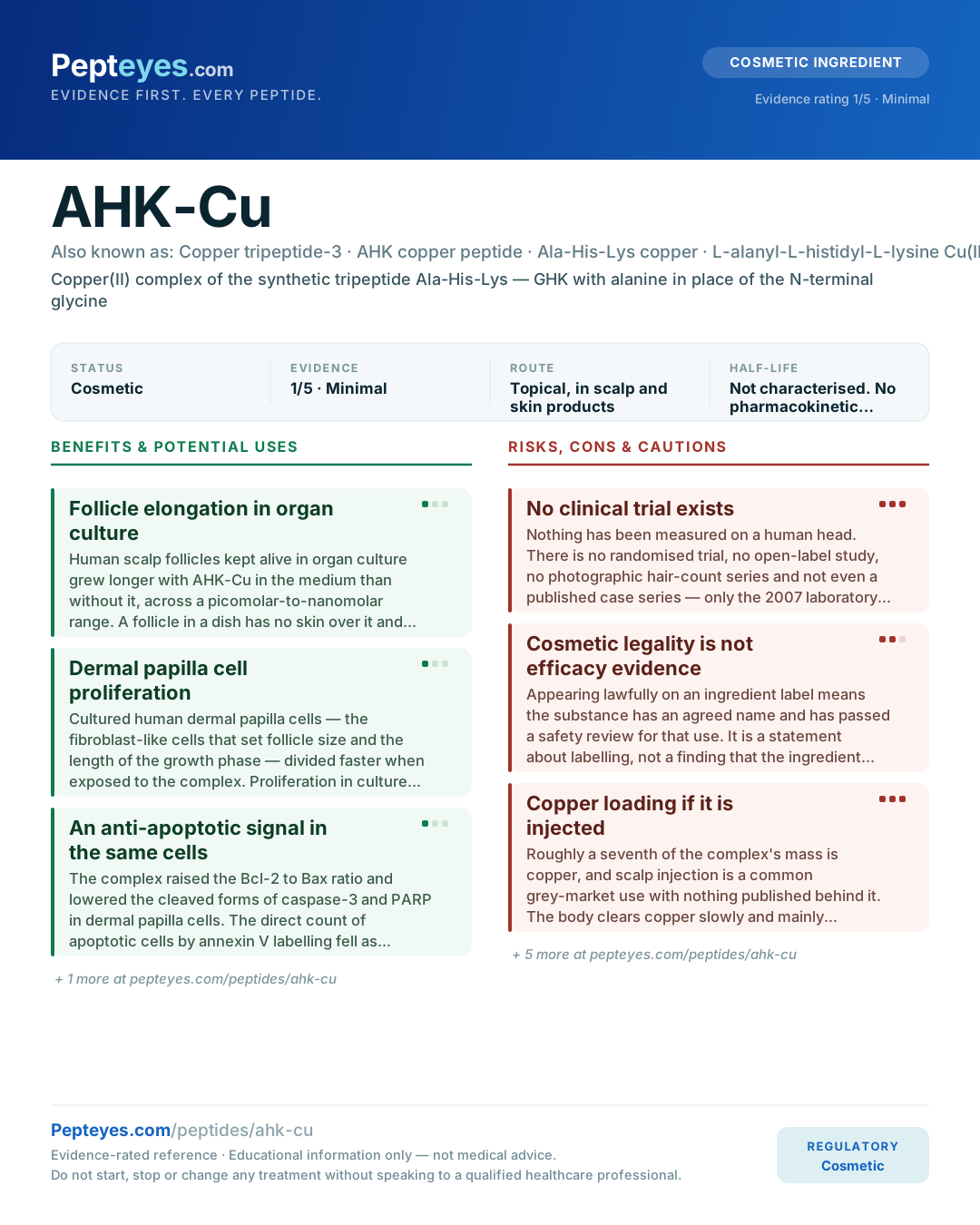
Benefits — AHK-Cu
- Follicle elongation in organ culture
Human scalp follicles kept alive in organ culture grew longer with AHK-Cu in the medium than without it, across a picomolar-to-nanomolar range. A follicle in a dish has no skin over it and no blood supply, so this is a starting point rather than a result about hair.
- Dermal papilla cell proliferation
Cultured human dermal papilla cells — the fibroblast-like cells that set follicle size and the length of the growth phase — divided faster when exposed to the complex. Proliferation in culture is the standard first screen for a hair candidate, and also the standard place where candidates quietly stop.
- An anti-apoptotic signal in the same cells
The complex raised the Bcl-2 to Bax ratio and lowered the cleaved forms of caspase-3 and PARP in dermal papilla cells. The direct count of apoptotic cells by annexin V labelling fell as well, but the authors report that particular fall as not statistically significant.
- Presents copper in a chelated form
Copper is the cofactor of lysyl oxidase and of other enzymes involved in matrix crosslinking and pigmentation, and a peptide chelate is a gentler way to present it to cells than a copper salt. Whether follicles in an intact scalp are short of copper in the first place has never been shown.
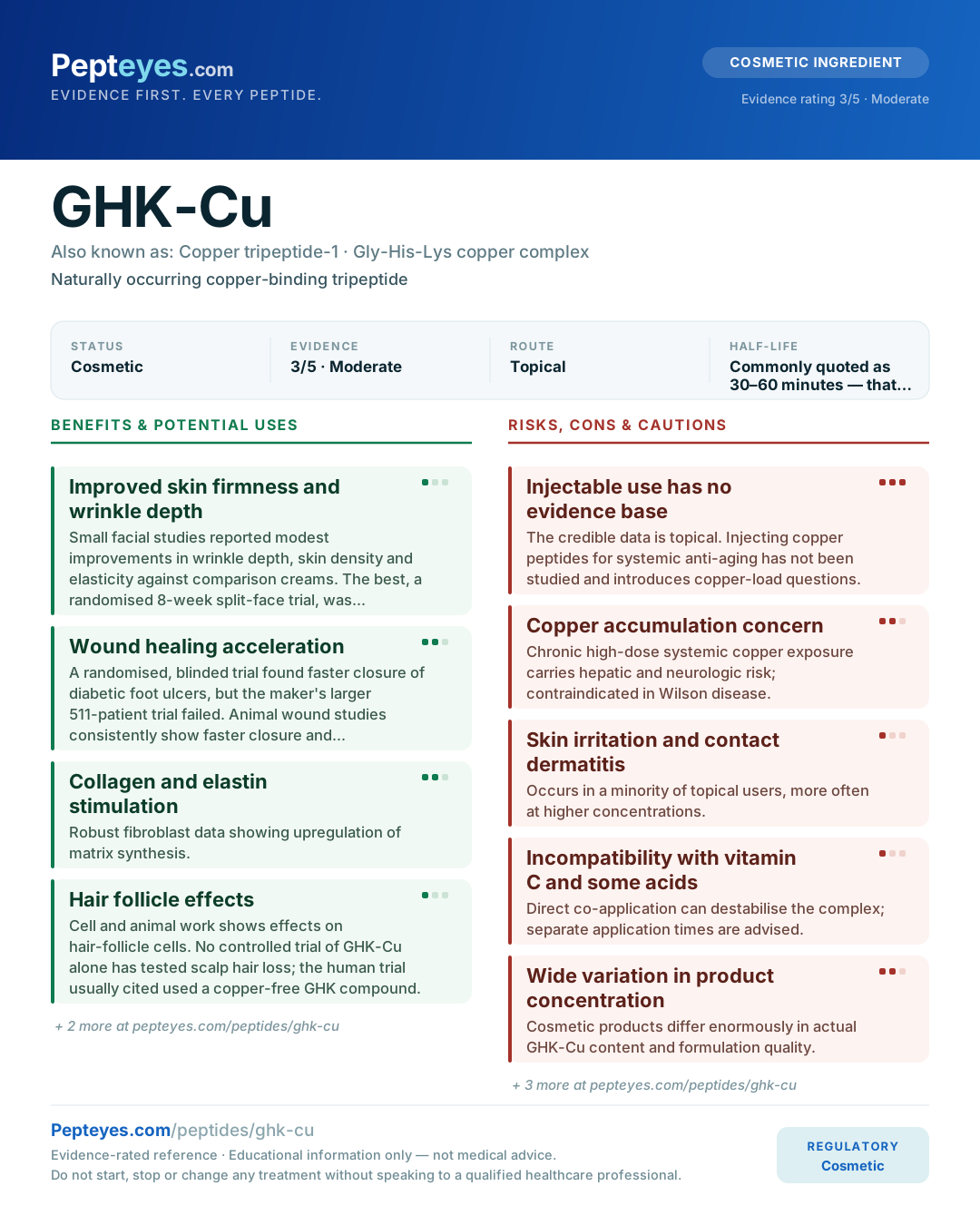
Benefits — GHK-Cu
- Improved skin firmness and wrinkle depth
Small facial studies reported modest improvements in wrinkle depth, skin density and elasticity against comparison creams. The best, a randomised 8-week split-face trial, was maker-funded and could not separate GHK-Cu from its carrier; the older cream studies exist only as conference abstracts.
- Wound healing acceleration
A randomised, blinded trial found faster closure of diabetic foot ulcers, but the maker's larger 511-patient trial failed. Animal wound studies consistently show faster closure and better-organised collagen.
- Collagen and elastin stimulation
Robust fibroblast data showing upregulation of matrix synthesis.
- Hair follicle effects
Cell and animal work shows effects on hair-follicle cells. No controlled trial of GHK-Cu alone has tested scalp hair loss; the human trial usually cited used a copper-free GHK compound.
- Antioxidant and anti-inflammatory activity
Reduces oxidative damage markers in laboratory models.
Risks & cons — AHK-Cu
- No clinical trial exists
Nothing has been measured on a human head. There is no randomised trial, no open-label study, no photographic hair-count series and not even a published case series — only the 2007 laboratory work and the marketing built on top of it.
- Cosmetic legality is not efficacy evidence
Appearing lawfully on an ingredient label means the substance has an agreed name and has passed a safety review for that use. It is a statement about labelling, not a finding that the ingredient grows hair, and the two are routinely conflated in product copy.
- Copper loading if it is injected
Roughly a seventh of the complex's mass is copper, and scalp injection is a common grey-market use with nothing published behind it. The body clears copper slowly and mainly through bile; putting a copper chelate under the skin repeatedly bypasses the gut absorption control that normally holds copper balance, and nobody has measured where that leads.
- Hazardous in impaired copper handling
Wilson's disease, other copper-storage disorders and significant cholestatic liver disease all impair copper excretion. Deliberately adding copper in those settings is a genuine hazard, and the hazard scales sharply with anything that puts the complex under the skin rather than on it.
- Unregulated grey-market powder
Material sold under a research-use-only label carries no assurance of identity, copper content, purity, sterility or endotoxin load. Someone injecting it has no way to confirm what the vial holds, and copper content in particular is not something that can be checked at home.
Risks & cons — GHK-Cu
- Injectable use has no evidence base
The credible data is topical. Injecting copper peptides for systemic anti-aging has not been studied and introduces copper-load questions.
- Copper accumulation concern
Chronic high-dose systemic copper exposure carries hepatic and neurologic risk; contraindicated in Wilson disease.
- Skin irritation and contact dermatitis
Occurs in a minority of topical users, more often at higher concentrations.
- Incompatibility with vitamin C and some acids
Direct co-application can destabilise the complex; separate application times are advised.
- Wide variation in product concentration
Cosmetic products differ enormously in actual GHK-Cu content and formulation quality.
A comparison is not a recommendation. Neither column is being suggested for you. Which — if either — is appropriate depends on your diagnosis, history and medications, and that is a conversation for a qualified clinician.