Supplied as a finished topical
Skin & Cosmetic
At a glance
Ten answers, each one line. Open any row for the detail behind it.
What it does One of the few peptides on this list with credible controlled human data — for skin…
One of the few peptides on this list with credible controlled human data — for skin, applied topically. It occurs naturally in plasma, and its discoverer reports levels falling by more than half between young adulthood and old age, which is the origin of its anti-aging framing.
Half-life Commonly quoted as 30–60 minutes — that figure is an estimate… — Nothing established
Commonly quoted as 30–60 minutes — that figure is an estimate repeated by suppliers and search summaries, not a measurement, and the same sources elsewhere give 1–2 hours or 4. No human pharmacokinetic study of GHK-Cu has been published for any route, so there is no measured half-life to report. What is established: rat work shows the tripeptide is cleared from plasma and broken to the dipeptide His-Lys, and once the peptide bonds are cut the copper does not leave with it but transfers to albumin, so the copper outlasts the peptide by far. Endogenous plasma GHK falls with age, but that is a concentration, not a half-life.
Typical studied dose Set by the formulation, as a percentage of the finished cream or serum… — On the label
Set by the formulation, as a percentage of the finished cream or serum rather than as an amount taken. The concentration used in the published work is the figure worth comparing a product against.
How often it is used Applied as the product directs, usually once or twice a day. Topical… — On the label
Applied as the product directs, usually once or twice a day. Topical results in the published trials came from months of continuous use, not from a short course.
How it is taken Topical (well studied); injectable (not studied) — Documented
Topical (well studied); injectable (not studied)
Main side effects Injectable use has no evidence base · Injection bypasses the step where the body regulates copper uptake · Grey-market vials: heavy metals and contents that do not match the label — Carries serious risk
Injectable use has no evidence base — The credible data is topical. Injecting copper peptides for systemic anti-aging has not been studied and introduces copper-load questions.
Injection bypasses the step where the body regulates copper uptake — Copper homeostasis is enforced at the gut wall and the bile duct: the fraction of copper absorbed falls as intake rises, and bile is the main route out. An injection skips the absorptive gate entirely, which is why intravenous copper in parenteral nutrition is dosed on a separate basis from oral copper and cut back in cholestasis. Systemic copper loading is therefore a question the topical route simply does not raise. Clinicians describing self-injectors in 2026 reported patients presenting with raised liver enzymes and raised serum copper after injecting without any monitoring, and chronic copper excess damages liver and nervous system.
Grey-market vials: heavy metals and contents that do not match the label — A forensic screen of the falsified injectable peptide products most often seized in Belgium found wide variation in amount per unit, purity ranging from a small fraction of label to about three-quarters, residual tetrahydrofuran from synthesis in every sample, and the class-one toxic elemental impurities arsenic and lead — the arsenic entirely in its more toxic inorganic form and, in several samples, at up to ten times the ICH limit for parenteral products. That study did not test GHK-Cu specifically, but it is the same supply chain injected GHK-Cu comes from, and dermatologists interviewed in 2026 said their first uncertainty about an online vial is whether it contains a copper peptide at all.
Storage before mixing A finished cream or serum follows its own label — usually cool, dark and…
A finished cream or serum follows its own label — usually cool, dark and sealed. Copper peptides in particular discolour when they degrade, and a colour change is a reason to stop using it.
Shelf life after mixing Nothing to mix — it is not supplied as a powder. The relevant date is…
Nothing to mix — it is not supplied as a powder. The relevant date is the one printed on the product.
Evidence level 3/5 · Moderate — Depends on the study
Small or early-phase human trials, or good controlled topical human data.
Regulatory status Cosmetic Ingredient — Nothing established
Established cosmetic ingredient with human topical data. Injectable use is unapproved and unstudied. Lawful as a cosmetic ingredient. Injectable preparations are unapproved.
Overview
One of the few peptides on this list with credible controlled human data — for skin, applied topically. It occurs naturally in plasma, and its discoverer reports levels falling by more than half between young adulthood and old age, which is the origin of its anti-aging framing.
Cosmetic IngredientEstablished cosmetic ingredient with human topical data. Injectable use is unapproved and unstudied.
GHK-Cu before and after: what to expect, and what the evidence supports
On the skin, GHK-Cu has small, slow effects in a handful of studies. Most of the dramatic numbers and photos online rest on much weaker ground. Here is what to expect, and how to tell the two apart.
What the evidence labels mean
- Controlled human trialA randomised study in people, with a comparison group.
- Small or maker-run studyPeople were studied, but the study was small, run with the maker, or never published in full.
- Cells or animals onlyCells in a dish or animals. Shows a mechanism, not a result in people.
- User reportsForum posts, reviews and photos. Useful for what to watch for, not proof.
- General skin biologyWell-established facts about skin or hair in general, not about GHK-Cu.
- Not studiedNobody has studied it.
How it works, in four steps
- Carries copperGHK grips a copper ion and delivers it to cells that use it.
- Signals repair cellsIn cultured fibroblasts, the cells that build skin's framework, it switches on repair activity.
- Builds frameworkThose cells make more collagen, elastin and the molecules that hold water in skin.
- Clears old tissueIt also tunes the enzymes that break down damaged tissue so it can be replaced.
Cells or animals only Shown in cell cultures and animal wounds. How much a cream gets through intact skin to do the same in people is the open question, which is why real-world changes are small and slow.
What to expect, and when
Weeks 1–2
Feels smoother, looks the same
Softer texture and better hydration are the first things people mention. Seeing nothing yet is normal.
User reportsWeeks 3–5
A rough patch, for some
A minority describe skin looking duller or rougher for a while, the so-called "copper uglies". Most say it eased when they used it less often.
User reportsWeeks 5–8
First changes worth a photo
Softer fine lines and a more even tone are the most-reported early changes. No controlled study measured this early.
User reportsWeeks 8–12
Where the studies measured
In the best face trial, one crow's-feet wrinkle shrank by about a quarter in 8 weeks, against 15% with a plain serum. Older 12-week cream studies reported firmer, thicker skin but were never published in full.
Small or maker-run studyMonths 3–6
Gains, if any, keep building
No published cosmetic study ran longer than about 12 weeks, so this stretch is user report only. It is also where the most dramatic online photos come from.
User reportsTimings follow user reports and the length of the published studies. Individual results vary widely.
Weeks 1–6
Possible extra shedding
Some users report shedding early on. It is a known pattern with hair treatments that restart the growth cycle, but no GHK-Cu study has measured it.
User reportsWeeks 6–12
Little to see yet
Scalp hair grows roughly a centimetre a month, so any new growth is still too short to change how hair looks.
General skin biologyMonths 3–4
Fine new hairs, if any
The earliest point at which any hair treatment can show new hairs in photos.
General skin biologyMonths 4–6+
Density change, in responders
Only follicles that have shrunk but are still alive can respond. No controlled human trial of GHK-Cu alone has shown this.
Not studiedFinasteride and minoxidil were each tested in randomised trials of hundreds to over a thousand people. GHK-Cu for scalp hair has no such trial; its case rests on cell and animal work.
Where it has actually been tested
Pick an area. The bars show how strong the evidence is there, not how big the effect is.
Face
Small or maker-run studyThe best trial, a randomised split-face study in 40 women, found about 24% less volume in one crow's-feet wrinkle after 8 weeks, against 15% with a plain serum. It was maker-funded, and its authors credit the carrier the GHK-Cu came in. Older 12-week cream studies were only ever conference abstracts.
Around the eyes
Small or maker-run studyOne 12-week eye-cream study in about 40 women reported smoother, firmer skin than a comparison cream. It was run for a cosmetics maker and exists only as a conference abstract.
Wounds and ulcers
Controlled human trialIn a randomised, blinded trial, diabetic foot ulcers closed more with GHK-Cu gel than with a plain gel. But the maker's larger trial of 511 patients failed, and the gel was later cleared only as a wound dressing. A small trial after laser resurfacing found no difference on blinded measures.
Scalp and hair
Small or maker-run studyNo controlled trial of GHK-Cu alone for scalp hair loss. The human trial usually cited used copper-free GHK joined to another compound, and the lab study usually cited tested a different copper peptide. One 18-person eyebrow study found more hairs on the treated brow.
Neck and hands
Not studiedNo study has looked at the neck or hands on their own. That skin is thinner and more sun-damaged, so a result on the face may not carry over.
Scars and stretch marks
Not studiedNo study of old scars or stretch marks. The one acne-scar study paired it with microneedling and found no lasting benefit over needling alone.
Who it is most and least likely to help
Who the studies were in
- Women aged about 40 to 65 with sun-damaged facial skin (the face studies)
- People with diabetic foot ulcers or laser-treated skin (the wound studies)
- Early, mild hair thinning, in theory only: no scalp trial exists
Unlikely to change much
- Deep, set-in wrinkles and sagging
- Lost facial volume, which needs fillers or surgery, not a cream
- Scalp that has been bald for years
- Anyone expecting results in two weeks
Ask a doctor first
- Pregnant or breastfeeding: there are no data at all, human or animal
- Wilson disease or any copper-handling disorder
- Broken, infected or freshly treated skin
- A known copper or metal allergy
- Anyone thinking about injecting it
Is that before-and-after photo evidence?
Most before-and-after photos change more than the skin. Tick what the pair you are looking at actually controls.
- Not evidenceToo much changed besides the skin. Lighting alone can erase fine lines.
- Suggestive at bestBetter, but one uncontrolled change can still produce the whole effect.
- A fair before-and-afterStill one person with nothing to compare against, and nobody posts the photos that showed no change.
- As good as a photo getsAn untreated comparison is how real trials are designed. It is still a single case.
The numbers you will see quoted, checked
Each card is a figure that circulates in GHK-Cu marketing. Tap to see what the original study actually was.
GHK-Cu raised collagen in 70% of people, beating vitamin C (50%) and tretinoin (40%).
That was 7 of 10 healthy volunteers, on thigh skin, after one month, with no plain-cream comparison and no statistical test between the creams. A melatonin cream matched vitamin C and was left out of the quote.
Abdulghani AA et al. 1998, Disease Management and Clinical OutcomesCut wrinkle volume by 55.8% in 12 weeks, beating Matrixyl 3000.
It ran 8 weeks, not 12. The wrinkle shrank about 24–26%, against 15% with a plain serum; 55.8% is the gap between the two. The rival was StriVectin-SD, a product that contains Matrixyl. The maker funded it, and the authors credit the carrier, not the GHK-Cu.
Badenhorst T et al. 2016, Journal of Aging Science (full text)Collagen density rose 28% on average and 51% in top responders.
Not from the review it is credited to. Both numbers come from a 2023 press release for one company's gel: 21 people, 3 months, no control group, never published. It measured ultrasound brightness under the skin, not collagen.
Company press release, EurekAlert, 25 May 2023A 12-week trial in 67 women aged 50–59 improved firmness, fine lines and pigmentation.
The figure comes from a review summarising a book chapter by authors linked to a cosmetics maker. The study behind it exists only as 2002 conference abstracts, which give 71 women. Its methods and statistics were never published.
Pickart L, Margolina A. Int J Mol Sci 2018 — cites the studies as meeting abstractsGHK-Cu boosted hair-follicle cell growth by up to 70%.
The study quoted tested AHK-Cu, a different copper peptide, on hair follicles in a dish. The 70% figure is not in its abstract.
Pyo HK et al. 2007, Archives of Pharmacal ResearchWounds healed 64.5%, against 28.2% without it.
In rats, not people. Wound area shrank 64.5% with GHK-Cu gel, 45.6% with the same gel minus GHK-Cu, and 28.2% untreated. The quote dropped the fair comparison.
Canapp SO et al. 2003, Veterinary SurgeryGHK-Cu resets about 4,000 genes to a younger pattern.
A reanalysis of three experiments on copper-free GHK in cancer cell lines. No skin cells were involved, and no young-versus-old comparison was ever made.
Pickart L et al. 2014, BioMed Research InternationalBlood levels fall from 200 ng/mL at age 20 to 80 ng/mL by 60.
Repeated in its discoverer's reviews with no citation or method. It may be true, but nobody has published how it was measured or in how many people.
Pickart L, Margolina A. Int J Mol Sci 2018Fitting it into a routine
No pairing below has been tested in people. Tap one to see what the rule actually rests on.
No known problem
Some brands say keep apart
Tap an ingredient to see why.
Sunlight breaks collagen down faster than any cream builds it. Daily sunscreen is the best-proven anti-ageing step there is, and it protects whatever GHK-Cu achieves.
General skin biologyIt does a different job, holding water at the surface. Nobody has tested the pair, and there is no chemical reason to expect a problem.
Not studiedBarrier support with no known interaction. Untested as a pair, like every combination here.
Not studiedThe old claim that niacinamide strips the copper traces to no study, and copper-serum makers do not list it as a conflict. Untested, and unlikely to matter.
Not studiedOne major brand says not to combine them. The chemistry is mixed: free copper and vitamin C generate damaging oxygen species, but the copper-GHK complex itself held up against vitamin C in a lab study. Using them at different times costs nothing.
Cells or animals onlyGHK-Cu is most stable between about pH 4.5 and 7.4, so a copper serum should not itself be acidic. Whether a separate acid product used at another time affects it has never been tested, and one maker recommends alternating them.
Cells or animals onlyNo chemical clash is known, and one copper-peptide maker sells them combined. The reason to stagger them is that irritation adds up.
User reportsMicroneedling
The claim: Applying GHK-Cu straight after microneedling drives more of it into the skin and speeds results.
The caution: The one comparison, 40 people with acne scars and not randomised, found the copper serum helped only for the first few weeks, and 8 of 20 developed dark patches against none with needling alone. Cosmetics pushed into fresh needle channels have also caused lasting granulomas, and the FDA has cleared no microneedling device for home use or for delivering cosmetics.
Small or maker-run studyThe "copper uglies"
What people describe: Skin that looks duller, rougher, puffy or loose for a few weeks, mostly after starting strong copper products often or around the eyes, and lately among people injecting it.
What is known: No study or case series describes it. The name is forum slang, and the best-known maker calls it overuse or a "transition period". The popular "breaks down before it builds" story ignores lab data showing GHK-Cu also raises the blockers of those breakdown enzymes.
What people do: Use it less often and with fewer strong products at once, and stop if it does not settle. That is maker advice, not tested.
User reportsOn the skin or injected: not the same thing
- Human evidence
- On the skinA few small trials, mostly maker-run, with mixed results
- InjectedNone for GHK-Cu on its own. Mouse studies only.
- How you get it
- On the skinOver the counter, listed as copper tripeptide-1 in creams and serums
- InjectedOnly by prescription from a compounding pharmacy. "Research use only" vials are not for people.
- Legal status (US)
- On the skinA lawful cosmetic ingredient. For non-injected pharmacy compounding, it is under FDA review (Category 1).
- InjectedNot an approved drug, and in neither FDA compounding category since April 2026. Dated record below.
- Main risks
- On the skinIrritation in a minority
- InjectedCopper overload, contaminated grey-market vials, unknown long-term effects
- Result timeline
- On the skinAbout 8–12 weeks for skin, in the studies
- InjectedNever measured
- Who is in charge
- On the skinYou, following the product label
- InjectedA prescriber and a licensed pharmacy
How to tell a real product
-
It is blue
The copper complex is blue to violet-blue. Colour shows copper is present, not that it is GHK-Cu or how much: a weak cream can look almost colourless.
-
A lot-matched test certificate
From an independent lab and matched to your batch number: identity by mass spectrometry, purity by HPLC, ideally copper content too.
-
The concentration is on the label
A product that will not say how much it contains cannot be compared with anything.
-
A batch number and expiry date
Without them, no certificate can be matched to what you are holding.
-
No injection advice
A cosmetic sold with injection tips, or a "research use only" vial sold for people, is outside every quality rule for human use.
Why two people get different results
-
Sun exposure
UV breaks collagen down faster than creams build it. Skipping sunscreen slows any visible result.
-
Smoking
Smoking speeds collagen breakdown and slows skin repair.
-
Menopause
Skin collagen falls fastest in the first years after menopause, so changes may come more slowly.
-
Consistency
The studies used daily or twice-daily application for 12 weeks. Occasional use was never tested.
-
Product quality
Concentration, formula, packaging and storage vary widely. Degraded or fake product does nothing.
-
Sleep and stress
Poor sleep and long-term stress are linked to slower skin repair, though the effect on any one cream is unknown.
General skin biology These are general points about skin, not findings from GHK-Cu studies.
Questions people ask
How long does GHK-Cu take to work on skin?
Users mention smoother texture in the first few weeks. The studies measured at 8 to 12 weeks and found modest changes, and nobody has measured what happens after about three months.
Does GHK-Cu actually reduce wrinkles?
A little, in the best trial: one crow's-feet wrinkle shrank by about a quarter in 8 weeks, against 15% with a plain serum. That study was maker-funded and could not separate GHK-Cu from the carrier it came in. Deep, set-in wrinkles are unlikely to change.
Is GHK-Cu better than retinol or vitamin C?
There is no good evidence that it is. The comparison usually quoted used 10 people per cream, on thigh skin, for one month. Prescription tretinoin, by contrast, has been tested in many large randomised trials for sun-damaged skin.
Can GHK-Cu regrow hair?
It has not been shown. There is no controlled trial of GHK-Cu alone for scalp hair loss, and the studies usually cited used different compounds. Minoxidil and finasteride are the treatments with real trial evidence.
Is injected GHK-Cu better than topical?
Nobody knows, because GHK-Cu injected on its own has never been studied in people. Injection also brings risks a cream does not, including copper overload and contaminated grey-market vials.
Can I use GHK-Cu with retinol or vitamin C?
No study has tested either pairing. Some brands say to keep them apart, while others sell them together. Using them at different times of day is a cautious default that costs nothing.
Do the results last after I stop?
Unknown. No study has followed people after they stopped using it.
Is GHK-Cu safe in pregnancy or while breastfeeding?
There are no data either way, from people or animals. Ask your doctor before using it.
How do I know if my GHK-Cu product is real?
Look for a blue colour, a stated concentration, a batch number, and a test certificate from an independent lab that matches that batch. Colour alone only shows that copper is present.
How much GHK-Cu should be injected?
No dose has been established, because injected GHK-Cu has never been tested in people. Any figure you see, including community protocols, does not come from a human study.
Is GHK-Cu legal?
As a cosmetic ingredient it is lawful in the US and the EU, with no concentration limit. It is not an approved drug for any use, and its status for pharmacy compounding is in the dated record further down this page.
| Regulatory status | Established cosmetic ingredient with human topical data. Injectable use is unapproved and unstudied. |
|---|---|
| Drug class | Naturally occurring copper-binding tripeptide |
| Route | Topical (well studied); injectable (not studied) |
| Half-life | Commonly quoted as 30–60 minutes — that figure is an estimate repeated by suppliers and search summaries, not a measurement, and the same sources elsewhere give 1–2 hours or 4. No human pharmacokinetic study of GHK-Cu has been published for any route, so there is no measured half-life to report. What is established: rat work shows the tripeptide is cleared from plasma and broken to the dipeptide His-Lys, and once the peptide bonds are cut the copper does not leave with it but transfers to albumin, so the copper outlasts the peptide by far. Endogenous plasma GHK falls with age, but that is a concentration, not a half-life. |
| Evidence rating |
3/5 Moderate
Evidence rating 3 out of 5: Moderate
Small or early-phase human trials, or good controlled topical human data. |
| Studied in | A handful of small controlled human studies: a randomised, evaluator-blinded, vehicle-controlled trial of a copper tripeptide gel in diabetic foot ulcers (whose larger 511-patient successor failed), a maker-funded 8-week split-face wrinkle trial in 40 women, a small trial after laser resurfacing that was negative on blinded measures, and an 18-person eyebrow study. The cosmetic facial and eye-cream results were reported as 2002 conference abstracts rather than papers, and no controlled trial supports GHK-Cu alone for scalp hair. The bulk of the literature is fibroblast and keratinocyte culture plus rodent wound, lung and liver models. No controlled human study of any injected route. |
GHK-Cu sequence & structure
GHK-Cu is a 3-residue linear peptide with a free C-terminal acid, carrying a bound metal ion; molecular weight 401.91 Da.
| Three-letter | H-Gly-His-Lys-OH |
|---|---|
| Length | 3 amino acid residues |
| Modifications |
|
| Molecular formula | C14H22CuN6O4 |
| Molecular weight | 401.91 Da (average, free base) |
| SMILES | C(CCN)C[C@@H](C(=O)[O-])NC(=O)[C@H](Cc1c[n-]cn1)NC(=O)CN.[Cu+2] |
| Identifiers | CAS 89030-95-5 · PubChem CID 10111685 · DrugBank DB14683 |
| Which molecule | The name covers the free tripeptide GHK (glycyl-L-histidyl-L-lysine; CAS 49557-75-7, C14H24N6O4, MW 340.38, PubChem CID 73587, DrugBank DB11296, ChEMBL1814493, INCI 'Tripeptide-1') and its copper(II) complex GHK-Cu (INCI 'Copper Tripeptide-1', USAN 'prezatide copper', UNII 6BJQ43T1I9, CAS 89030-95-5). This record describes the 1:1 Cu(II) complex, which is what the monograph, the cosmetic literature and vendors mean by 'copper peptide'; a 2:1 peptide:Cu species (C28H46CuN12O8, MW 742.3, PubChem CID 9831891) also forms in solution at higher peptide:copper ratios. |
| Sources | FDA Global Substance Registration System – Prezatide copper, UNII 6BJQ43T1I9 (C14H22N6O4·Cu, MW 401.9085; CAS 89030-95-5; DrugBank DB14683; PubChem CID 10111685; INCI Copper tripeptide-1)PubChem CID 71587328 – Prezatide copper, Names and Identifiers (CAS 89030-95-5; UNII 6BJQ43T1I9; DB14683; INCI Copper tripeptide-1)PubChem properties for CIDs 10111685 / 165429100 (neutral complex C14H22CuN6O4, 401.91), 71587328 (monocation C14H23CuN6O4+, 402.92) and 73587 (free GHK C14H24N6O4, 340.38)PubChem CID 73587 synonyms (free GHK; CAS 49557-75-7; DB11296; CHEMBL1814493)NovoPro Labs – Copper tripeptide (GHK-Cu), vendor cross-check |
Sequence Gly-His-Lys and the identifiers are confirmed independently by FDA GSRS and PubChem (and match Pickart & Thaler, Nature 1973). Quoted MWs differ by how the copper is counted: 401.91 for the neutral chelate C14H22CuN6O4 (two N–H protons lost on binding; the FDA GSRS/USAN structure), 402.92 for the monocation C14H23CuN6O4+ (PubChem CID 71587328) and ~403.9 (free peptide 340.38 + Cu 63.55) as printed by most vendors; NovoPro prints 400.9. GHK-Cu is often supplied as the acetate (prezatide copper acetate) or with excess free GHK, so peptide content per vial differs from the labelled mass. DrugBank (DB14683) returns HTTP 403 to automated requests; its id is confirmed from the FDA GSRS and PubChem cross-references rather than from DrugBank itself.
Record confidence: high — two independent authoritative sources agree on the sequence and modifications. Every sequence on the site is listed with its sources on the peptide sequences index.
How it works
Chelates copper(II) and delivers it to cells, modulating expression of a broad set of genes involved in extracellular matrix remodelling. Stimulates collagen I, elastin, glycosaminoglycan and proteoglycan synthesis while modulating metalloproteinase activity, and has antioxidant and anti-inflammatory effects.
Evidence base
Rated 3 of 5 — Moderate. Small or early-phase human trials, or good controlled topical human data.
- Among the better-supported peptides for topical use.
- Systemic evidence is essentially absent — do not conflate the two.
- What the controlled human topical data actually consists of. The best-designed study is a multicentre, randomised, evaluator-blinded, vehicle-controlled trial of a topical copper tripeptide gel in diabetic neuropathic foot ulcers, reported by Mulder and colleagues in 1994, which found faster closure of plantar ulcers and a lower rate of ulcer infection than vehicle on top of standardised wound care — a wound-healing indication, not a cosmetic one. The same maker's larger 511-patient phase III trial of the gel failed against control in 1994, ending the drug programme; the gel was later cleared only as a wound dressing. The cosmetic results everyone quotes are two twelve-week vehicle- and comparator-controlled studies, a facial cream in women with photoaged facial skin and an eye cream in women with periorbital photodamage, both presented as abstracts in the 2002 American Academy of Dermatology meeting proceedings by investigators working with the manufacturer, and never published as full peer-reviewed papers. The thigh-skin comparison against vitamin C, melatonin and tretinoin was a 1998 pilot histologic and ultrastructural study in a minor journal. For context, a 2025 Bayesian network meta-analysis of topical treatments for facial photoaging pooled 23 randomised trials in 3,905 participants and contained no copper-peptide arm at all.
- The mechanistic literature is overwhelmingly cultured cells. The collagen, elastin, glycosaminoglycan, proteoglycan and metalloproteinase findings come from fibroblast monolayers, with keratinocyte and osteoblast work alongside and rat wound models behind them. In a dish the experimenter chooses the concentration, no stratum corneum stands between the molecule and the cell, and no plasma albumin or liver competes for the copper — the three things that decide whether any of it happens in a person. A large share of the foundational work and of the most-cited reviews comes from the investigator who discovered GHK and holds a commercial copper-peptide interest, so the direction of effect is better supported than its size.
- For the injected route there is nothing controlled, in any indication. A search of ClinicalTrials.gov returns only topical or patch interventions — a vehicle-controlled phase 2 gel study in acute skin wounds recruiting through 2026, a patch study measuring circulating GHK, and a completed facial-treatment device trial — and no registered trial of injected GHK-Cu at all. The only human reports involving injection are uncontrolled studies of multi-ingredient intradermal hair formulations in which copper tripeptide-1 is one of five actives sitting beside several growth factors, which cannot attribute anything to GHK-Cu. Systemic administration has been tested only in rodents.
Benefits and risks, weighed against the evidence
Every entry below carries the strength of the evidence behind it — three bars for strong human data, two for moderate, one for preliminary or preclinical work. The two columns are not equal by design: where a compound has more documented risk than demonstrated benefit, the lists say so.
Reported benefits
6 entries
-
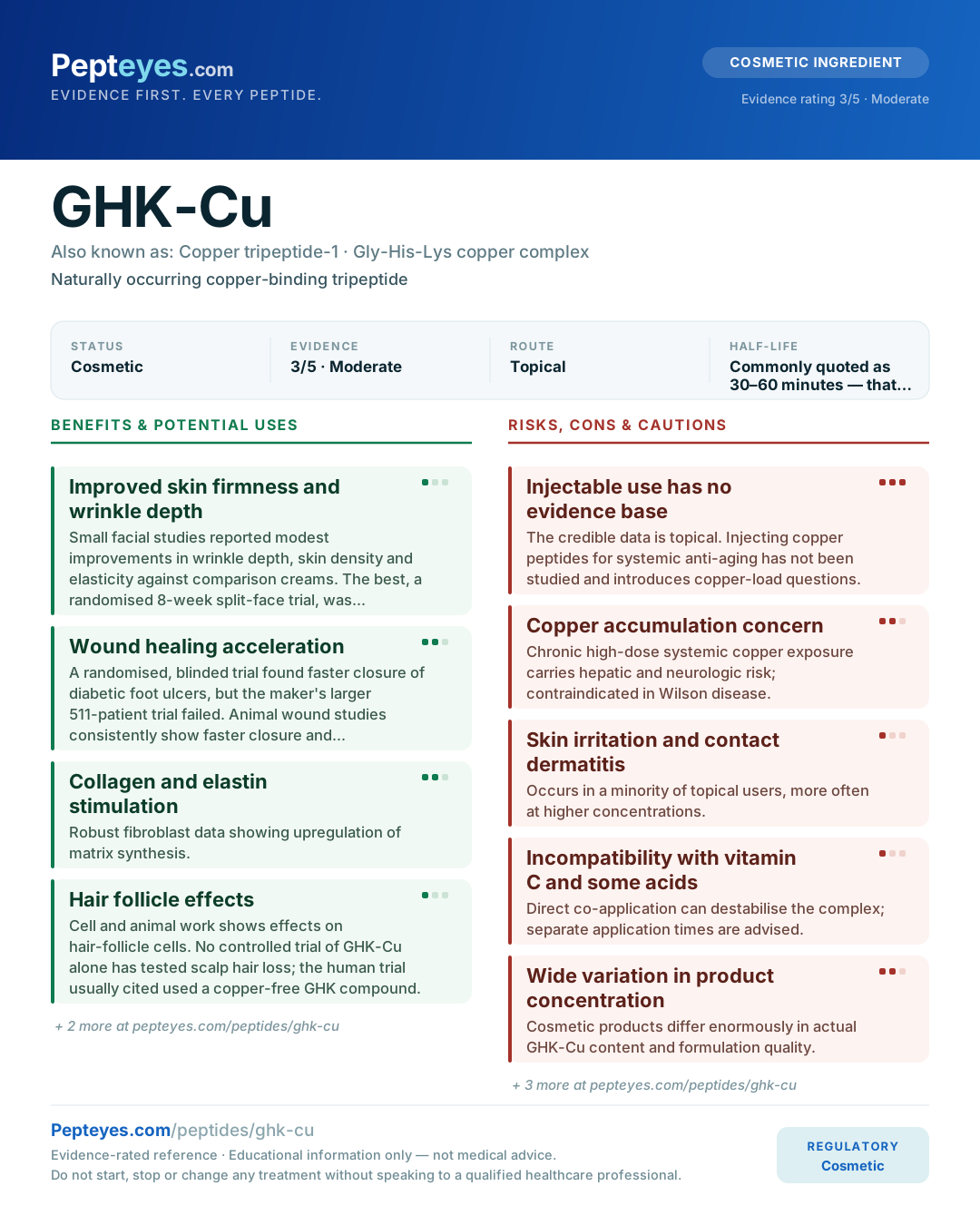
Improved skin firmness and wrinkle depth
Small facial studies reported modest improvements in wrinkle depth, skin density and elasticity against comparison creams. The best, a randomised 8-week split-face trial, was maker-funded and could not separate GHK-Cu from its carrier; the older cream studies exist only as conference abstracts.
Evidence: Preliminary -
Wound healing acceleration
A randomised, blinded trial found faster closure of diabetic foot ulcers, but the maker's larger 511-patient trial failed. Animal wound studies consistently show faster closure and better-organised collagen.
Evidence: Moderate evidence -
Collagen and elastin stimulation
Robust fibroblast data showing upregulation of matrix synthesis.
Evidence: Moderate evidence -
Hair follicle effects
Cell and animal work shows effects on hair-follicle cells. No controlled trial of GHK-Cu alone has tested scalp hair loss; the human trial usually cited used a copper-free GHK compound.
Evidence: Preliminary -
Antioxidant and anti-inflammatory activity
Reduces oxidative damage markers in laboratory models.
Evidence: Preliminary -
Organ protection in mice given GHK-Cu systemically
The only body of work on GHK-Cu delivered by injection rather than to skin. Mice dosed intraperitoneally showed less lung inflammation, less collagen deposition and less emphysematous change than untreated controls across three separate injury models — crystalline silica (Redox Biology, 2024, which proposed peroxiredoxin 6 as the binding target), bleomycin (Life Sciences, 2020) and chronic cigarette smoke (Frontiers in Molecular Biosciences, 2022). It is mouse-only, the three papers share overlapping senior authors, and a lung-injury model is not an anti-ageing or cosmetic endpoint. It is listed because it is the closest thing to evidence for the injected route, and it is a long way from a person.
Evidence: Preliminary
Risks and cautions
8 entries · 3 serious or common
-
Injectable use has no evidence base
The credible data is topical. Injecting copper peptides for systemic anti-aging has not been studied and introduces copper-load questions.
Evidence: Serious -
Copper accumulation concern
Chronic high-dose systemic copper exposure carries hepatic and neurologic risk; contraindicated in Wilson disease.
Evidence: Moderate evidence -
Skin irritation and contact dermatitis
Occurs in a minority of topical users, more often at higher concentrations.
Evidence: Minor -
Incompatibility with vitamin C and some acids
Direct co-application can destabilise the complex; separate application times are advised.
Evidence: Minor -
Wide variation in product concentration
Cosmetic products differ enormously in actual GHK-Cu content and formulation quality.
Evidence: Moderate evidence -
Injection bypasses the step where the body regulates copper uptake
Copper homeostasis is enforced at the gut wall and the bile duct: the fraction of copper absorbed falls as intake rises, and bile is the main route out. An injection skips the absorptive gate entirely, which is why intravenous copper in parenteral nutrition is dosed on a separate basis from oral copper and cut back in cholestasis. Systemic copper loading is therefore a question the topical route simply does not raise. Clinicians describing self-injectors in 2026 reported patients presenting with raised liver enzymes and raised serum copper after injecting without any monitoring, and chronic copper excess damages liver and nervous system.
Evidence: Serious -
The "copper uglies"
In 2026 coverage of the injected trend, people injecting grey-market GHK-Cu described skin that looked worse rather than younger over weeks to months — dull, lacklustre, textured or leathery, with a sense of increased sagging. This is anecdote: no case series, no biopsies, no denominator, no mechanism, and a dermatologist quoted in the same article said she had never seen a case in her own practice. It is recorded here because it is the most frequently reported harm from the injected route, and because nothing in the topical literature either predicts it or rules it out.
Evidence: Moderate evidence -
Grey-market vials: heavy metals and contents that do not match the label
A forensic screen of the falsified injectable peptide products most often seized in Belgium found wide variation in amount per unit, purity ranging from a small fraction of label to about three-quarters, residual tetrahydrofuran from synthesis in every sample, and the class-one toxic elemental impurities arsenic and lead — the arsenic entirely in its more toxic inorganic form and, in several samples, at up to ten times the ICH limit for parenteral products. That study did not test GHK-Cu specifically, but it is the same supply chain injected GHK-Cu comes from, and dermatologists interviewed in 2026 said their first uncertainty about an online vial is whether it contains a copper peptide at all.
Evidence: Serious
Counts are not a score. A single serious risk can outweigh several well-supported benefits, and a long benefit list built on preclinical work outweighs nothing at all.
Opinion — what people actually report
6 themes · 2 reported benefits · 3 reported problems
This is the weakest tier on this site. These are themes drawn from public discussion — forums, subreddits and patient threads — not from trials. There is no control group, no denominator, and no way to confirm that what someone injected matched its label. People post when a result is dramatic and when something goes wrong, and rarely when nothing happens, so treat everything below as a description of the conversation rather than of the compound. The bars count how often a thing is said, not how well it is supported.
-
Skin texture and fine lines Reported benefit. Dominant theme: Comes up in most discussions of this compound.
The most common report by a wide margin, and one of the few in this library where people are describing a visible, photographable change over weeks rather than a subjective feeling.
-
It stains and it pills Reported problem. Dominant theme: Comes up in most discussions of this compound.
The blue copper colour transfers to pillowcases and can leave a cast on the skin, and it is widely reported to pill under makeup or other actives. The dominant practical complaint.
-
Does not layer with vitamin C or strong acids Reported problem. Recurring: Raised regularly, though not by everyone.
A near-universal piece of routine advice, on the grounds that the copper complex and ascorbic acid interfere with each other. Widely repeated; the underlying chemistry is more debated than the confidence suggests.
-
Hair thickness, mostly from scalp serums Reported benefit. Recurring: Raised regularly, though not by everyone.
A secondary use with steady enthusiasm but noticeably thinner evidence than the skin reports.
-
Irritation and breakouts on sensitive skin Reported problem. Occasional: Reported by a minority, or in specific contexts.
A minority effect, usually attributed to the formulation rather than the peptide.
-
Injected use is a different conversation entirely Practical note. Recurring: Raised regularly, though not by everyone.
Topical use is mainstream cosmetic. Injected GHK-Cu is a fringe practice with far more caution around it, including concern about copper load.
Where the reports and the evidence part ways
Topical GHK-Cu is one of the better-supported compounds here — there are controlled human studies showing improvements in skin density, wrinkles and photodamage — so for once the enthusiasm is not unfounded. The gap is elsewhere. Forums extend the topical evidence to injected use, hair regrowth and systemic anti-ageing claims, none of which the human data covers. The "never with vitamin C" rule is repeated with more certainty than the evidence carries. And the studies that exist are mostly small, short and industry-funded, which makes the direction of the effect more credible than its size.
Cheat sheet
The full sheet, all 77 compounds →The community reference numbers for this compound — reconstitution, working dose, cycle and bloodwork. Research and education only, not medical advice, and not part of the evidence-rated monograph above. Doses assume a 1mL / 100-unit insulin syringe — the calculator does the units for you.
Protocol overview
Dosing & reconstitution 50 mg vial
| WEEK | DAILY DOSE | UNITS PER INJECTION |
|---|---|---|
| Weeks 1 to 4 | 1.0 mg | 5 units (0.05 mL) |
| Weeks 5 to 8 | 1.5 mg | 7.5 units (0.07 mL) |
| Weeks 9 to 12 | 2.0 mg | 10 units (0.10 mL) |
Frequency: Inject once daily subcutaneously, 5 days per week (Mon to Fri) with weekends off. For 10-unit (0.10 mL) or smaller administrations, consider 30- or 50-unit insulin syringes for improved readability.
On the master sheet
- Vial
- 50mg
- BAC
- 2mL
- Dose
- 1–2.5mg, 2–3x weekly
- Route
- SubQ/topical
- Cycle
- 4–8 wks
- Time Off
- 2–4 wks
- Bloodwork
- Serum copper, liver
- Vial
- 50mg
- BAC
- 4mL
- Dose
- Inj 1–2.5mg 2–3x weekly
- Route
- Both
- Cycle
- 4–8 wks
- Bloodwork
- Serum copper
Readers on GHK-Cu
Questions and answers from readers, under generated names. Nothing here has been checked or reviewed by the site and none of it is medical advice. It is the least verified thing on this page — and it is here because people ask each other these things anyway, and most of the other places they can ask are run by sellers.
1 question · 1 answer
-
Olive Falcon desk — written by the site's editorial desk asked
Is there any evidence for injecting GHK-Cu, or does all of it come from skin creams?
Reply
Show 1 answerCollapse 1 answer
- Mild Birch desk — written by the site's editorial desk answered
All of the human evidence is topical, and injected use has none. The trial everyone cites for hair used a copper-free GHK joined to another molecule, so it is not GHK-Cu evidence either. Injected use in the threads is common and is running on the topical data plus theory.
How names work, and the house rules
Names. Every verified address is given one generated name — two ordinary words — and keeps it. Nobody chooses a name and nobody can take another's. Posts marked desk were written by the site's own editorial desk, usually to open a thread; they carry a generated name like everyone else's and are held to the site's rules, which means they never state an amount.
What is not allowed. Selling, sourcing, vendor names, coupon codes and "message me" — posts that read that way are held and usually removed. Personal medical details you would not want public. Abuse. Instructions framed as what someone else should do.
What this is not. A reader's report of what happened to them is a report, not a finding, and an answer here is one person's view. Nothing in this section changes the evidence rating above it. If something you read here would change what you take, take it to a pharmacist or physician first.
Your data. Delete any post of yours at any time, or remove everything you have written together with your name. Details in the privacy notice.
Who should avoid it
- Wilson disease or copper metabolism disorders (systemic use)
- Known copper allergy
- Broken or actively infected skin without medical advice
If used under medical supervision, monitor
- Topical use: none required
- Systemic use: not advised outside research
Interactions
Not exhaustive. Always have a pharmacist or physician review your full medication list — including supplements.
- Zinc supplements and other heavy zinc sources — inferred from copper physiology, not from any GHK-Cu study. Zinc and copper compete for intestinal uptake, and zinc induces metallothionein in the enterocyte, which binds copper more tightly than zinc and traps it in the gut lining. Sustained high zinc intake is a well documented cause of copper deficiency, with anaemia, neutropenia and a myelopathy that mimics B12 deficiency; published cases trace back to zinc supplements and even zinc-containing denture adhesive. The practical problem is that zinc pushes copper status one way while a copper complex pushes it the other, and serum copper and ceruloplasmin become hard to read in someone doing both.
- Penicillamine and trientine are the prescribed chelators, and both increase urinary copper excretion, with trientine additionally blocking intestinal uptake - shown directly in a copper isotope imaging study in healthy volunteers. Zinc is used as maintenance therapy but does not strip copper: it induces intestinal metallothionein and blocks absorption. Tetrathiomolybdate is not a prescribed drug at all. It is investigational, approved in no market, with a rolling application to the FDA begun in 2026, and it works by locking copper into a stable complex with albumin rather than by increasing urinary copper.
- Wilson disease and anything that impairs biliary copper excretion — bile is the body's main exit route for copper and it is run by the ATP7B transporter, which is defective in Wilson disease; in cholestasis or advanced hepatobiliary disease the route is physically obstructed. Parenteral nutrition practice reduces or withholds intravenous copper in cholestasis for exactly this reason. Wilson disease is already listed as a contraindication here; the wider point is that anyone with cholestatic liver disease has no reliable way to clear copper that was never metered at the gut wall.
- Ascorbic acid — two separate issues that get merged. In a formulation, ascorbate reduces Cu(II) to Cu(I), which the tripeptide holds far less tightly, and the pair generates hydrogen peroxide as it cycles. That chemistry is what the layering rule is reaching for, though one study found the copper-GHK complex itself redox-inert to ascorbate under moderate conditions, and no published stability or clinical study of a copper peptide layered with ascorbic acid appears to exist. Systemically, controlled feeding studies in young men found that high supplemental ascorbate lowered serum ceruloplasmin oxidase activity — by roughly a fifth in one of them — without changing measured copper absorption. So heavy vitamin C use can shift the very laboratory values a clinician would use to judge copper status, in the opposite direction to copper loading.
- Other copper sources — copper-containing multivitamins and mineral supplements, and stacking a topical copper peptide with an injected one — are additive, and the tolerable upper intake level for copper is defined for oral intake, where the intestine still regulates how much gets in. There is no equivalent ceiling for an injected route and no study of combined exposure. Inferred from copper physiology.
- Estrogens, including combined oral contraceptives and hormone therapy — increase ceruloplasmin synthesis and therefore total serum copper, an elevation a meta-analysis found consistent across preparations. This adds no copper to the body, but it can make serum copper look high in someone who is not loaded, or unremarkable in someone who is. It matters for interpreting labs, not for the compound's action.
- Iron supplements and iron status - copper deficiency produces an anaemia that does not respond to iron, because the copper-dependent ferroxidases ceruloplasmin and hephaestin are what move iron out of cells onto transferrin. Iron given for that anaemia will not correct it, and only copper does. Very high dietary iron may also blunt copper absorption, described mainly in infants.
- Molybdenum supplements - the copper-stripping reputation comes from grazing animals, where sulphide in the rumen converts molybdenum into thiomolybdates that bind copper. People have no rumen, and controlled feeding of very high molybdenum intakes to healthy young men did not disturb copper status. The drug form, tetrathiomolybdate, is a separate matter and is given deliberately to remove copper.
- Vitamin B12 - relevant not because it interacts with the compound but because it is what copper deficiency gets mistaken for. The copper myelopathy presents with spastic gait and sensory ataxia and is indistinguishable, clinically and on imaging, from the subacute combined degeneration of B12 deficiency, and the two can coexist. The wrong deficiency gets treated.
- Vitamin C and copper taken together systemically - in mice given both by mouth, protein oxidation rose in serum, intestine, bladder and kidney and renal function and structure deteriorated. Neither agent alone did this, and a thiol antioxidant prevented it entirely. The pair redox-cycles to hydrogen peroxide. Animal work, with no human counterpart.
- Antacids and acid-suppressing drugs - stomach acid is what frees copper from food into an absorbable form, and antacids at very high intakes are described as interfering with copper absorption; in rats, omeprazole reduced intestinal copper uptake and left copper accumulating in the stomach. The human evidence is thin, and the direction is lower copper status rather than higher.
Commonly confused with
These mix-ups cause real harm — two products sold under one name, or two molecules whose effects run in opposite directions.
Same GHK tripeptide. GHK-Cu carries a copper ion and works partly by delivering copper; palmitoyl tripeptide-1 carries a fatty tail for penetration and delivers no copper.
Compare side by sideInjected GHK-Cu is usually bought inside the three-peptide "GLOW" blend alongside BPC-157 and TB-500, and forum reports credit or blame "GHK-Cu" for whatever the blend did. No published human trial has tested that combination, or any of its parts by injection, so reasoning from those reports assigns both effects and side effects to the wrong molecule — and GHK-Cu is the only one of the three that carries a metal ion.
Compare side by sideBoth are sold as collagen-building "peptides" for the face, and Matrixyl 3000 blends in a palmitoylated GHK derivative, which makes the labels look interchangeable. Nothing in the Matrixyl family delivers copper. The cosmetic safety record people cite for copper peptides comes from products that sit on the skin, and none of it speaks to injecting a copper complex.
Compare side by sideRegulatory & legal status
Lawful as a cosmetic ingredient. Injectable preparations are unapproved.
Off Category 2 since April 2026 with no committee vote yet: neither prohibited as a significant safety risk nor authorised for compounding.
- Removed from Category 2
- 22 April 2026
- Approved as a drug?
- No. Compounding status and drug approval are separate questions; this compound has no approval for the uses it is sold for.
Injected GHK-Cu came off Category 2 in April 2026 and is in neither category now. GHK-Cu for non-injectable routes was briefly removed from Category 1 at the same time, then put back on 14 May after a nominator said it had meant to withdraw only the injectable nomination. It was not among the compounds voted on in July, and the FDA plans to consult its advisory committee before the end of February 2027. None of this changes GHK-Cu as a topical cosmetic ingredient, which is lawful and is where its human evidence is.
The full dated record, with sources, and every affected peptide →
Infographic
What this entry was checked against
The specific records this monograph was verified against on its last research pass. We link live literature searches below as well, because these are a snapshot and the literature is not.
- Mulder GD et al. Enhanced healing of ulcers in patients with diabetes by topical treatment with glycyl-L-histidyl-L-lysine copper. Wound Repair Regen 1994;2:259-269 — multicentre, randomised, evaluator-blinded, vehicle-controlled
- Pickart L, Margolina A. Regenerative and Protective Actions of the GHK-Cu Peptide in the Light of the New Gene Data. Int J Mol Sci 2018;19:1987 — full text; shows the cosmetic facial and eye-cream studies cited as 2002 AAD meeting proceedings abstracts, and the authors' Skin Biology affiliation
- Comparative efficacy of topical interventions for facial photoaging: a network meta-analysis. Sci Rep 2025 — 23 RCTs, 3,905 participants, no copper-peptide arm
- Janvier S et al. Impurity profiling of the most frequently encountered falsified polypeptide drugs on the Belgian market. Talanta 2018;188:795-807 — inorganic arsenic and lead in injectable grey-market peptide vials, purity 5-75%, residual tetrahydrofuran
- Hibberd J. Celebs Are Injecting Copper to Look Younger. What Could Go Wrong? The Hollywood Reporter, 15 July 2026 — the "copper uglies" reports, the GLOW blend, grey-market heavy metals, dermatologist commentary
- The copper peptide trend has gone from creams to injections — ahead of the science. NPR, 7 September 2026 — self-injectors presenting with elevated liver enzymes and elevated copper; no human studies of injectable GHK-Cu
- ClinicalTrials.gov registry search for GHK-Cu, copper tripeptide and prezatide — topical and patch interventions only; no registered trial of an injected route
- Perks P et al. Advances in Trace Element Supplementation for Parenteral Nutrition. Nutrients 2022;14:1770 — intake reference values are set for the oral route; cholestasis and hepatobiliary dysfunction cause copper accumulation and warrant reducing parenteral copper
- Copper - Linus Pauling Institute Micronutrient Information Center: nutrient interactions with zinc, iron, fructose and vitamin C, drug interactions with penicillamine and antacids, and the limits of serum copper and ceruloplasmin as status markers
- Zinc - Linus Pauling Institute Micronutrient Information Center: metallothionein mechanism of zinc-induced copper depletion, the upper intake level set to prevent it, and the denture-cream cases
- Molybdenum - Linus Pauling Institute Micronutrient Information Center: the ruminant thiomolybdate mechanism and the controlled human feeding study finding no effect of very high molybdenum intake on copper status
- Kumar N. Copper deficiency myelopathy (human swayback). Mayo Clin Proc 2006;81:1371-84 - clinical and imaging resemblance to B12 subacute combined degeneration, causes including excess zinc, and the incomplete neurological recovery after repletion
- Jacob RA et al. Effect of varying ascorbic acid intakes on copper absorption and ceruloplasmin levels of young men. J Nutr 1987;117:2109-15 - stable-isotope copper absorption unchanged, ceruloplasmin oxidase activity down an average of 21% on the high ascorbate intake
- Finley EB, Cerklewski FL. Influence of ascorbic acid supplementation on copper status in young adult men. Am J Clin Nutr 1983;37:553-6 - ceruloplasmin activity significantly reduced at every timepoint during supplementation
- Jiang Y et al. The combined administration of vitamin C and copper induces a systemic oxidative stress and kidney injury. Biomolecules 2023;13:143 - mice, oral gavage; effects seen only with the combination and fully prevented by a thiol antioxidant
- Monopar Therapeutics press release, 22 July 2026 - ALXN1840 (bis-choline tetrathiomolybdate) is investigational, unapproved, with a rolling NDA just begun; described as an albumin tripartite complex activator that sequesters copper
Where to read further
We link to live literature searches rather than a frozen citation list, so you always see current results — including anything published after our last review.
- PubMed — all published literature on GHK-Cu
- PubMed — randomized controlled trials only
- ClinicalTrials.gov — registered human trials
Related peptides in Skin & Cosmetic
Terms used on this page
- Extracellular Matrix (ECM)
- The extracellular matrix is the network of collagens, proteoglycans and glycoproteins outside cells that bears mechanical load, stores growth factors, and signals back to the cells within it.
- Glycosaminoglycans (GAGs)
- Glycosaminoglycans are long unbranched sugar chains of repeating disaccharides that hold water in the dermal ground substance and, except for hyaluronan, are sulfated and attached to core proteins.
- Matrix Metalloproteinase (MMP)
- Matrix metalloproteinases are zinc-dependent enzymes that cut extracellular matrix proteins, and their balance against tissue inhibitors decides whether tissue remodels or degrades.
- Elastin
- Elastin is the insoluble crosslinked protein that gives skin its recoil, deposited during development on microfibril scaffolds and effectively not replaced in adult life.
- Carrier Peptide
- A carrier peptide is a cosmetic peptide that chelates a trace metal, almost always copper, and is marketed as delivering that metal into skin to support matrix-building enzymes.
- Phase 3 Trial
- A Phase 3 trial is the large confirmatory study, powered for a prespecified clinical endpoint, on which a marketing application and the resulting product label are built.
This page is educational information, not medical advice. It cannot account for your medical history, medications, or risk factors. Do not start, stop or change any treatment based on it. Speak to a qualified healthcare professional who knows your case.