GHK-Cu vs Matrixyl (Palmitoyl Pentapeptide-4)
The distinction that mattersBoth are sold as collagen-building "peptides" for the face, and Matrixyl 3000 blends in a palmitoylated GHK derivative, which makes the labels look interchangeable. Nothing in the Matrixyl family delivers copper. The cosmetic safety record people cite for copper peptides comes from products that sit on the skin, and none of it speaks to injecting a copper complex.
| GHK-Cu Cosmetic Ingredient | Matrixyl (Palmitoyl Pentapeptide-4) Cosmetic Ingredient | |
|---|---|---|
| Evidence rating |
3/5 Moderate
Evidence rating 3 out of 5: Moderate
|
3/5 Moderate
Evidence rating 3 out of 5: Moderate
|
| Regulatory status | Established cosmetic ingredient with human topical data. Injectable use is unapproved and unstudied. | Established cosmetic ingredient with published controlled human studies, including a comparison against retinol. |
| Category | Skin & Cosmetic | Skin & Cosmetic |
| Drug class | Naturally occurring copper-binding tripeptide | Lipidated pentapeptide — a collagen fragment conjugated to palmitic acid |
| Route | Topical (well studied); injectable (not studied) | Topical |
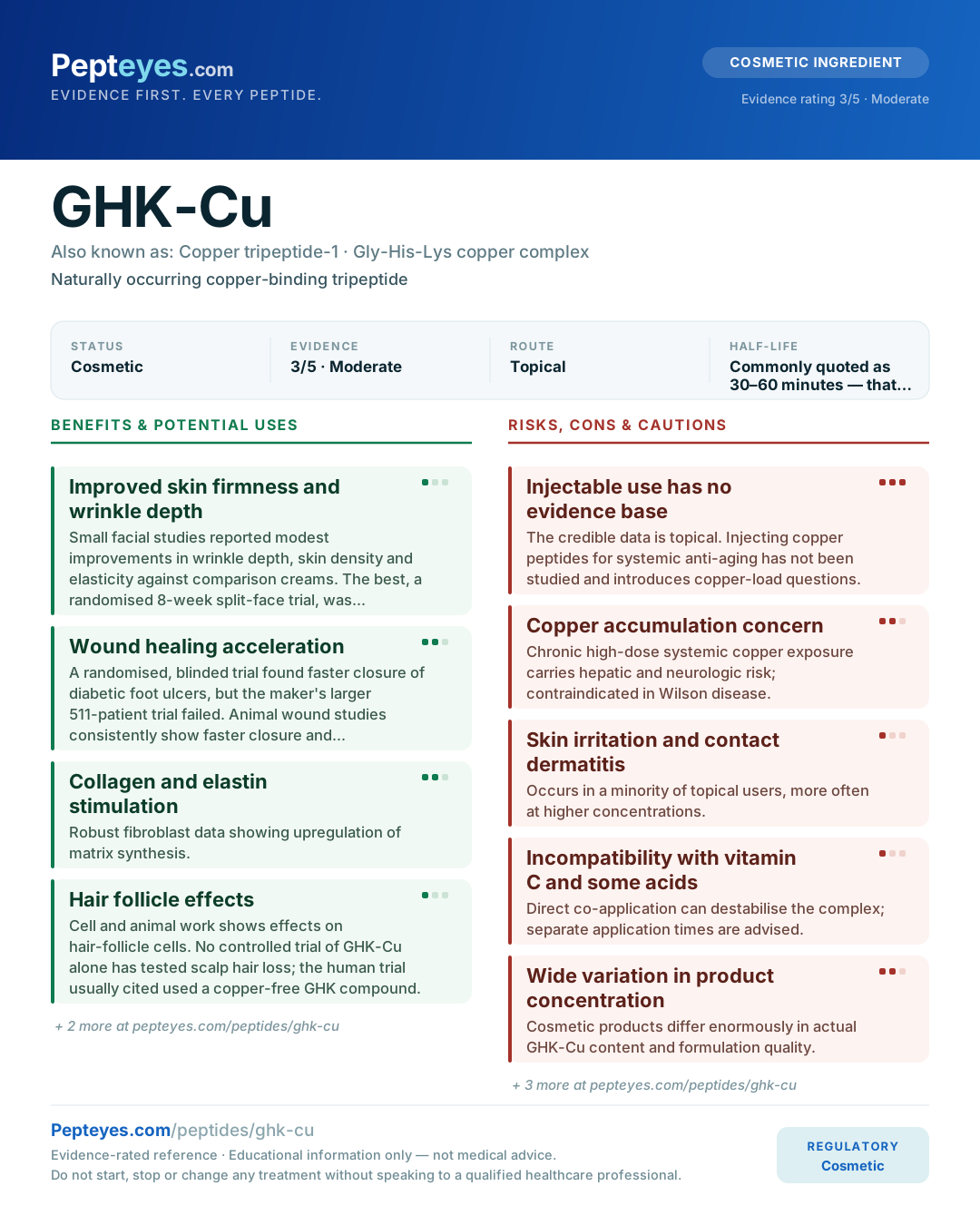
| Half-life | Commonly quoted as 30–60 minutes — that figure is an estimate repeated by suppliers and search summaries, not a measurement, and the same sources elsewhere give 1–2 hours or 4. No human pharmacokinetic study of GHK-Cu has been published for any route, so there is no measured half-life to report. What is established: rat work shows the tripeptide is cleared from plasma and broken to the dipeptide His-Lys, and once the peptide bonds are cut the copper does not leave with it but transfers to albumin, so the copper outlasts the peptide by far. Endogenous plasma GHK falls with age, but that is a concentration, not a half-life. | Not applicable — applied topically. The palmitoyl chain drives partitioning into the stratum corneum; no systemic pharmacokinetics exist. |
| Sequence length | 3 residues | 5 residues |
| Molecular weight | 401.9 Da | 802.1 Da |
| Studied in | A handful of small controlled human studies: a randomised, evaluator-blinded, vehicle-controlled trial of a copper tripeptide gel in diabetic foot ulcers (whose larger 511-patient successor failed), a maker-funded 8-week split-face wrinkle trial in 40 women, a small trial after laser resurfacing that was negative on blinded measures, and an 18-person eyebrow study. The cosmetic facial and eye-cream results were reported as 2002 conference abstracts rather than papers, and no controlled trial supports GHK-Cu alone for scalp hair. The bulk of the literature is fibroblast and keratinocyte culture plus rodent wound, lung and liver models. No controlled human study of any injected route. | A 12-week double-blind split-face trial versus vehicle; a comparative study against retinol; multiple fibroblast and ex-vivo skin studies. |
| Who should avoid it |
|
|
| Legal status | Lawful as a cosmetic ingredient. Injectable preparations are unapproved. | Lawful cosmetic ingredient. |
Benefits — GHK-Cu
- Improved skin firmness and wrinkle depth
Small facial studies reported modest improvements in wrinkle depth, skin density and elasticity against comparison creams. The best, a randomised 8-week split-face trial, was maker-funded and could not separate GHK-Cu from its carrier; the older cream studies exist only as conference abstracts.
- Wound healing acceleration
A randomised, blinded trial found faster closure of diabetic foot ulcers, but the maker's larger 511-patient trial failed. Animal wound studies consistently show faster closure and better-organised collagen.
- Collagen and elastin stimulation
Robust fibroblast data showing upregulation of matrix synthesis.
- Hair follicle effects
Cell and animal work shows effects on hair-follicle cells. No controlled trial of GHK-Cu alone has tested scalp hair loss; the human trial usually cited used a copper-free GHK compound.
- Antioxidant and anti-inflammatory activity
Reduces oxidative damage markers in laboratory models.
Benefits — Matrixyl (Palmitoyl Pentapeptide-4)
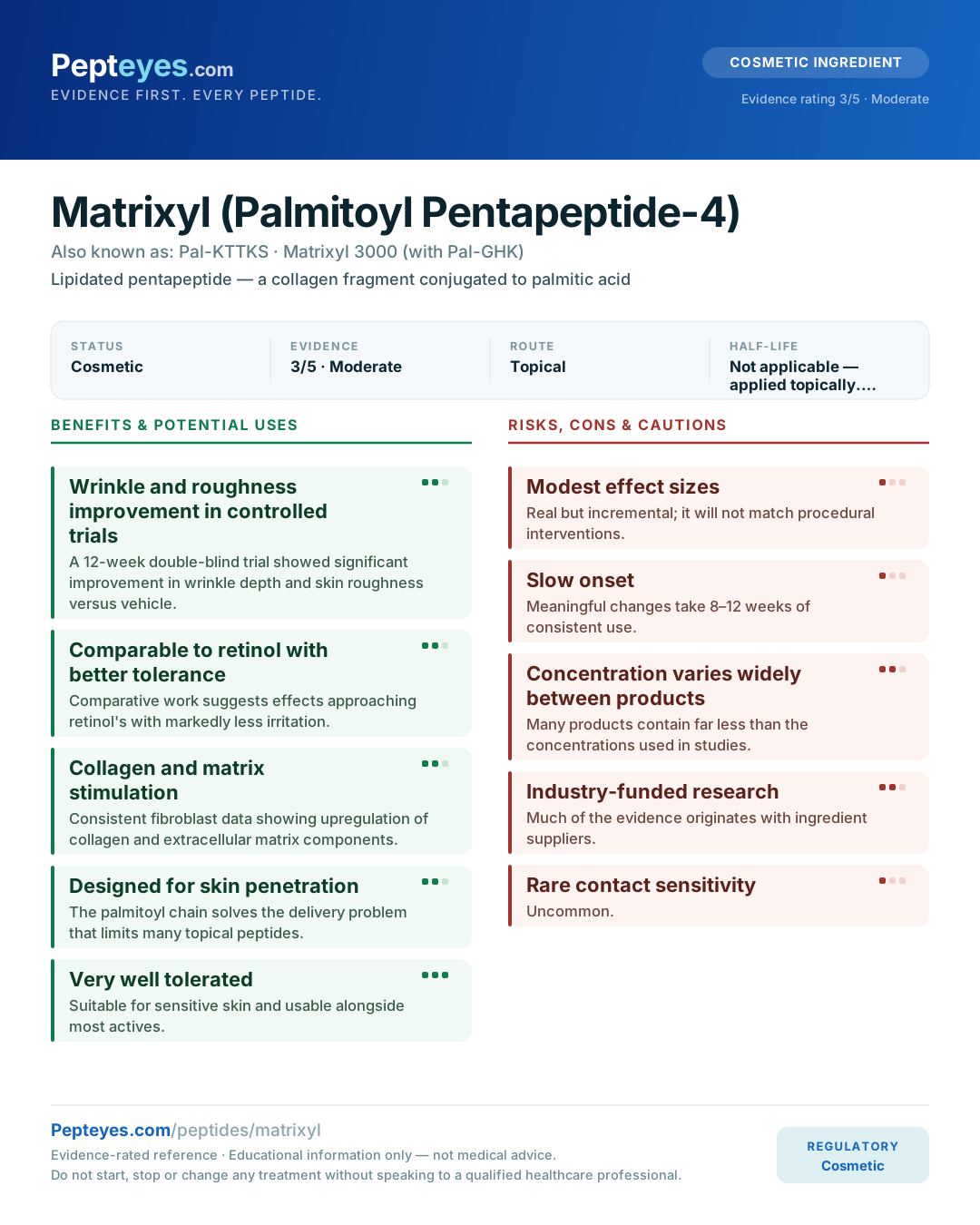
- Wrinkle and roughness improvement in controlled trials
A 12-week double-blind trial showed significant improvement in wrinkle depth and skin roughness versus vehicle.
- Comparable to retinol with better tolerance
Comparative work suggests effects approaching retinol's with markedly less irritation.
- Collagen and matrix stimulation
Consistent fibroblast data showing upregulation of collagen and extracellular matrix components.
- Designed for skin penetration
The palmitoyl chain solves the delivery problem that limits many topical peptides.
- Very well tolerated
Suitable for sensitive skin and usable alongside most actives.
Risks & cons — GHK-Cu
- Injectable use has no evidence base
The credible data is topical. Injecting copper peptides for systemic anti-aging has not been studied and introduces copper-load questions.
- Copper accumulation concern
Chronic high-dose systemic copper exposure carries hepatic and neurologic risk; contraindicated in Wilson disease.
- Skin irritation and contact dermatitis
Occurs in a minority of topical users, more often at higher concentrations.
- Incompatibility with vitamin C and some acids
Direct co-application can destabilise the complex; separate application times are advised.
- Wide variation in product concentration
Cosmetic products differ enormously in actual GHK-Cu content and formulation quality.
Risks & cons — Matrixyl (Palmitoyl Pentapeptide-4)
- Modest effect sizes
Real but incremental; it will not match procedural interventions.
- Slow onset
Meaningful changes take 8–12 weeks of consistent use.
- Concentration varies widely between products
Many products contain far less than the concentrations used in studies.
- Industry-funded research
Much of the evidence originates with ingredient suppliers.
- Rare contact sensitivity
Uncommon.
A comparison is not a recommendation. Neither column is being suggested for you. Which — if either — is appropriate depends on your diagnosis, history and medications, and that is a conversation for a qualified clinician.