Biotinoyl Tripeptide-1 (Biotinyl-GHK) vs Matrixyl (Palmitoyl Pentapeptide-4)
The distinction that mattersMatrixyl is palmitoyl pentapeptide-4, a different sequence entirely. The confusion is real because the Matrixyl 3000 blend contains palmitoyl tripeptide-1, which is the same GHK core as this molecule with a palmitoyl group instead of a biotinoyl one. Same tripeptide, different acyl group, different target: skin rather than scalp.
These are not equivalent in evidence Matrixyl (Palmitoyl Pentapeptide-4) is rated 3/5 and Biotinoyl Tripeptide-1 (Biotinyl-GHK) is rated 2/5 — a gap of 1 level on our scale. Similar marketing does not mean similar proof.
| Biotinoyl Tripeptide-1 (Biotinyl-GHK) Cosmetic Ingredient | Matrixyl (Palmitoyl Pentapeptide-4) Cosmetic Ingredient | |
|---|---|---|
| Evidence rating |
2/5 Limited
Evidence rating 2 out of 5: Limited
|
3/5 Moderate
Evidence rating 3 out of 5: Moderate
|
| Regulatory status | A lawful cosmetic ingredient with no drug approval anywhere. The EU ingredient inventory lists it as a hair-conditioning agent, which is a labelling classification, not a regulator's finding that it grows hair. | Established cosmetic ingredient with published controlled human studies, including a comparison against retinol. |
| Category | Skin & Cosmetic | Skin & Cosmetic |
| Drug class | Vitamin-peptide conjugate: the tripeptide GHK (Gly-His-Lys) with biotin amide-bonded to the glycine N-terminus | Lipidated pentapeptide — a collagen fragment conjugated to palmitic acid |
| Route | Topical, in leave-on scalp, brow and lash formulations | Topical |
| Half-life | Not applicable — topical and non-systemic; no human pharmacokinetics have been published | Not applicable — applied topically. The palmitoyl chain drives partitioning into the stratum corneum; no systemic pharmacokinetics exist. |
| Sequence length | 3 residues | 5 residues |
| Molecular weight | 566.7 Da | 802.1 Da |
| Studied in | On the peptide alone: cultured human hair-follicle explants over fourteen days and an eighteen-hour skin-explant localisation study, both commissioned by the ingredient manufacturer. The gene array in that dossier tested the blend, not the peptide. In people, only blend trials: a four-month randomised placebo-controlled study in 35 men, then add-on trials with minoxidil or PRP. | A 12-week double-blind split-face trial versus vehicle; a comparative study against retinol; multiple fibroblast and ex-vivo skin studies. |
| Who should avoid it |
|
|
| Legal status | A lawful cosmetic ingredient in the United States, the European Union and the United Kingdom, listed in the EU cosmetic ingredient inventory as a hair-conditioning agent under Regulation 1223/2009. It holds no marketing authorisation as a medicine anywhere. That boundary constrains claims: in the US a product claiming to regrow hair or to treat androgenetic alopecia is making a drug claim and would need approval, and in the EU such a claim is outside what a cosmetic may say. It is not a controlled substance and is not named on the WADA Prohibited List. | Lawful cosmetic ingredient. |
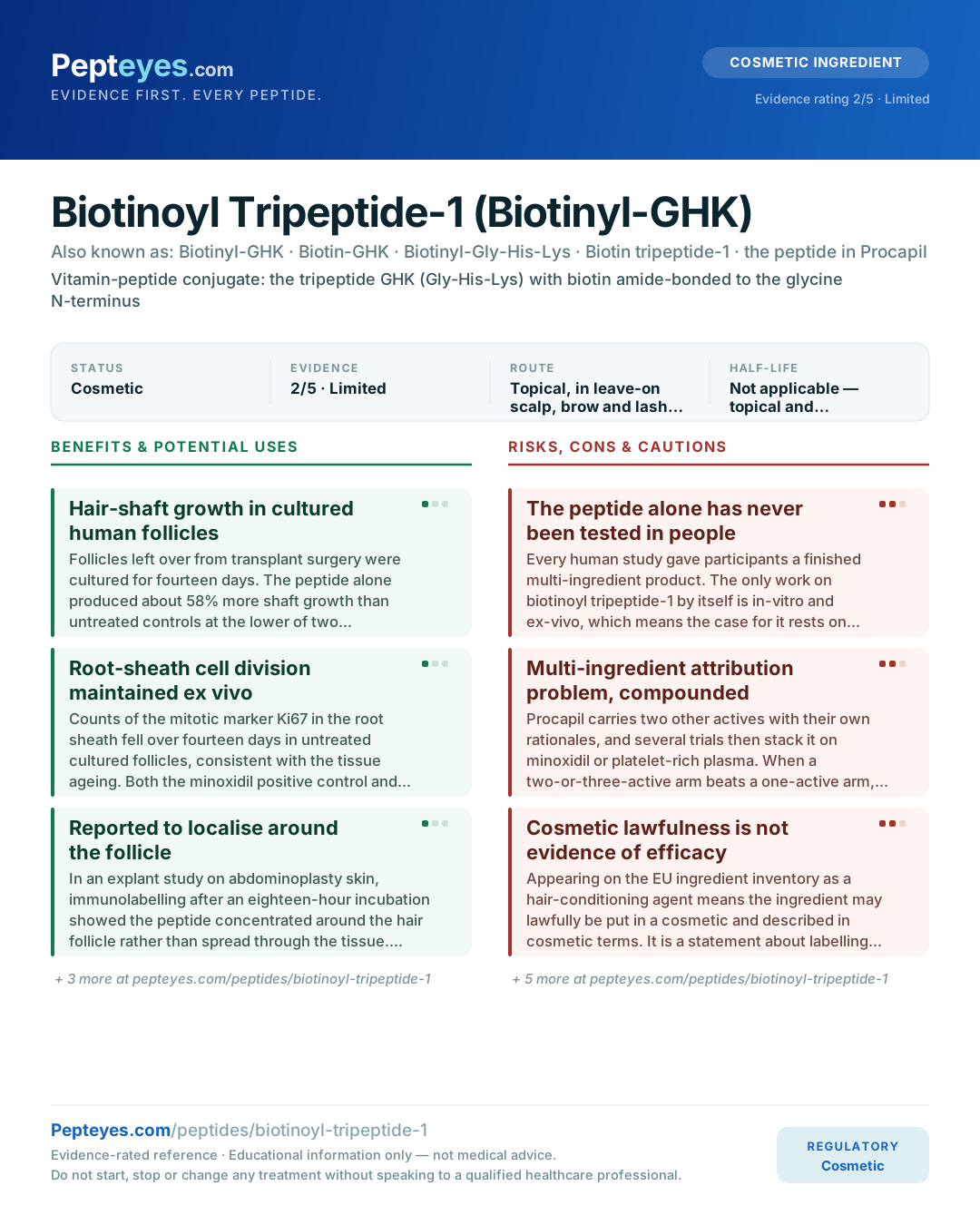
Benefits — Biotinoyl Tripeptide-1 (Biotinyl-GHK)
- Hair-shaft growth in cultured human follicles
Follicles left over from transplant surgery were cultured for fourteen days. The peptide alone produced about 58% more shaft growth than untreated controls at the lower of two concentrations, similar to the minoxidil positive control, and about 121% more at the higher one. This is human tissue in a dish, not a person.
- Root-sheath cell division maintained ex vivo
Counts of the mitotic marker Ki67 in the root sheath fell over fourteen days in untreated cultured follicles, consistent with the tissue ageing. Both the minoxidil positive control and the peptide kept the count up. A laboratory readout on explanted tissue, with no clinical endpoint attached.
- Reported to localise around the follicle
In an explant study on abdominoplasty skin, immunolabelling after an eighteen-hour incubation showed the peptide concentrated around the hair follicle rather than spread through the tissue. That addresses the obvious objection to a hydrophilic tripeptide, but it is a short explant experiment from the manufacturer's own dossier.
- Anagen shift in a blend trial
A four-month randomised placebo-controlled trial in 35 men, 18 on the blend and 17 on an indistinguishable placebo, measured the anagen-to-telogen ratio by videotrichogram and reported roughly a tenth more hair in the growth phase than at baseline, with no change on placebo. It tested the three-ingredient lotion, so nothing in it is attributable to the peptide.
- Possible add-on value to minoxidil or PRP
A randomised trial in 140 men alternating the blend with 5% minoxidil reported higher hair counts than 5% minoxidil alone over twelve months, and a 160-patient non-randomised study favoured platelet-rich plasma plus the blend over PRP alone. A third randomised trial, in 54 men, found the blend plus PRP did worse than a rival multi-ingredient topical plus PRP. None isolates the peptide.
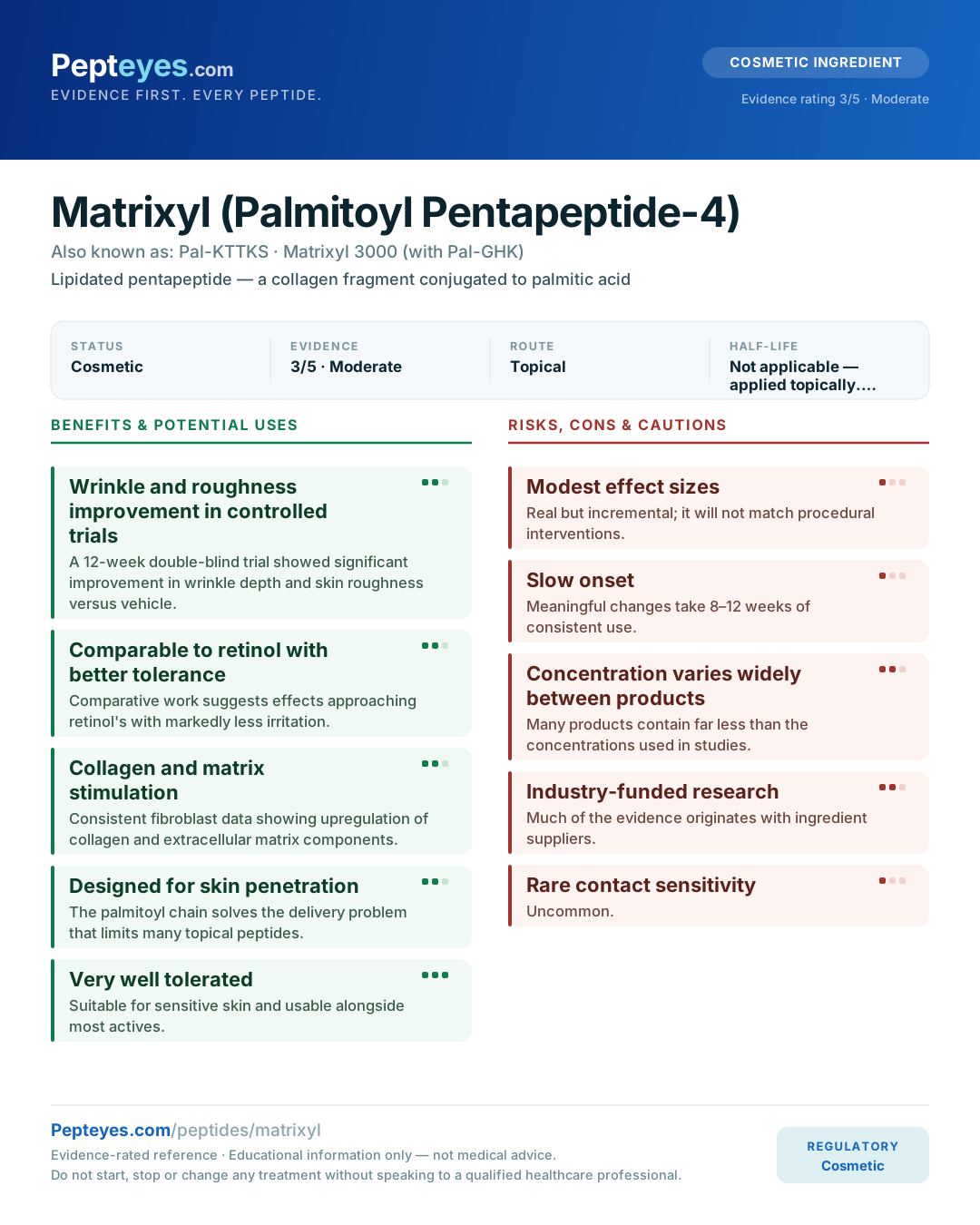
Benefits — Matrixyl (Palmitoyl Pentapeptide-4)
- Wrinkle and roughness improvement in controlled trials
A 12-week double-blind trial showed significant improvement in wrinkle depth and skin roughness versus vehicle.
- Comparable to retinol with better tolerance
Comparative work suggests effects approaching retinol's with markedly less irritation.
- Collagen and matrix stimulation
Consistent fibroblast data showing upregulation of collagen and extracellular matrix components.
- Designed for skin penetration
The palmitoyl chain solves the delivery problem that limits many topical peptides.
- Very well tolerated
Suitable for sensitive skin and usable alongside most actives.
Risks & cons — Biotinoyl Tripeptide-1 (Biotinyl-GHK)
- The peptide alone has never been tested in people
Every human study gave participants a finished multi-ingredient product. The only work on biotinoyl tripeptide-1 by itself is in-vitro and ex-vivo, which means the case for it rests on follicles in a culture dish rather than on anyone's scalp.
- Multi-ingredient attribution problem, compounded
Procapil carries two other actives with their own rationales, and several trials then stack it on minoxidil or platelet-rich plasma. When a two-or-three-active arm beats a one-active arm, the extra effect could belong to any component or to none of them individually.
- Cosmetic lawfulness is not evidence of efficacy
Appearing on the EU ingredient inventory as a hair-conditioning agent means the ingredient may lawfully be put in a cosmetic and described in cosmetic terms. It is a statement about labelling and safety review, not a regulator's conclusion that it does anything to hair loss.
- The peptide-specific data comes from the ingredient manufacturer
The follicle-explant growth study, the localisation study and the gene array were commissioned by the company that makes the blend and circulate as a technical dossier rather than as peer-reviewed papers. They have not been independently replicated.
- Biotin on a peptide is not a biotin supplement
The biotin here is chemically bonded to a tripeptide and applied to the scalp. It is not a nutrient being delivered, and it says nothing about swallowing biotin, which in reviewed case reports helped only people with a genuine deficiency or a specific hair or nail disorder.
Risks & cons — Matrixyl (Palmitoyl Pentapeptide-4)
- Modest effect sizes
Real but incremental; it will not match procedural interventions.
- Slow onset
Meaningful changes take 8–12 weeks of consistent use.
- Concentration varies widely between products
Many products contain far less than the concentrations used in studies.
- Industry-funded research
Much of the evidence originates with ingredient suppliers.
- Rare contact sensitivity
Uncommon.
A comparison is not a recommendation. Neither column is being suggested for you. Which — if either — is appropriate depends on your diagnosis, history and medications, and that is a conversation for a qualified clinician.