Epitalon vs Livagen
The distinction that mattersStudied side by side in the same chromatin and enkephalinase papers and sold as a pair. Epitalon is AEDG and pitched at the pineal gland and telomeres; Livagen is KEDA and pitched at the liver. In a hepatocyte assay Epitalon did nothing, and neither inherits the other's evidence.
| Epitalon Research Use Only | Livagen Research Use Only | |
|---|---|---|
| Evidence rating |
2/5 Limited
Evidence rating 2 out of 5: Limited
|
2/5 Limited
Evidence rating 2 out of 5: Limited
|
| Regulatory status | Not approved in the US, EU or UK. Used in Russian gerontology practice. Widely sold as an anti-aging research peptide. | Not an approved medicine anywhere. The US patent on the sequence lapsed in 2014 and nothing is marketed under this name through any regulator; it circulates under research-use-only labelling. No registered human trial exists as of October 2026. |
| Category | Longevity & Mitochondrial | Longevity & Mitochondrial |
| Drug class | Synthetic tetrapeptide modelled on the pineal extract epithalamin | Synthetic tetrapeptide Lys-Glu-Asp-Ala, one of the Khavinson short peptide bioregulators, designed from the amino acid composition of a calf-liver polypeptide extract |
| Route | Subcutaneous or intranasal (research) | Grey-market lyophilised powder for injection, also swallowed by some users; the inventor's patent describes intramuscular injection. No route has been studied for absorption in a person. |
| Half-life | Never measured. No pharmacokinetic study of Epitalon has been published in any species; reviews only note that short peptides like it degrade fast in vivo. | Never measured in any species. It resists intestinal peptidases in a test tube for hours, which is a stability finding, not a pharmacokinetic one. |
| Sequence length | 4 residues | 4 residues |
| Molecular weight | 390.4 Da | 461.5 Da |
| Studied in | Russian studies in elderly cohorts reporting reduced mortality over multi-year follow-up; cell culture telomerase work; rodent lifespan studies. | Rat hepatocyte cultures, liver explants and an organotypic liver culture; two weeks of oral dosing in young and old rats; carbon tetrachloride hepatitis and a transplanted hepatoma in rats, reported only in the patent; cultured lymphocytes from elderly donors and from cardiomyopathy and breast cancer patients; and one 23-patient open comparison in chronic hepatitis, also patent-only. |
| Who should avoid it |
|
|
| Legal status | Not approved for human use in the US, EU or UK. | Livagen has no marketing authorisation in the United States, the European Union or the United Kingdom, and no licence as a medicine anywhere we could find. It is not a controlled substance. Its inventor's institute patented it in the United States in 2006 (US 7,101,854) on a Russian filing of 2000; the patent lapsed in 2014 for non-payment, so nothing stops anyone synthesising it. In Russia the group's commercial liver product is the calf-liver complex sold as Ventvil, not this peptide. It is not on the WADA Prohibited List, but the clause for substances with no approval from any health authority reaches it. |
Benefits — Epitalon
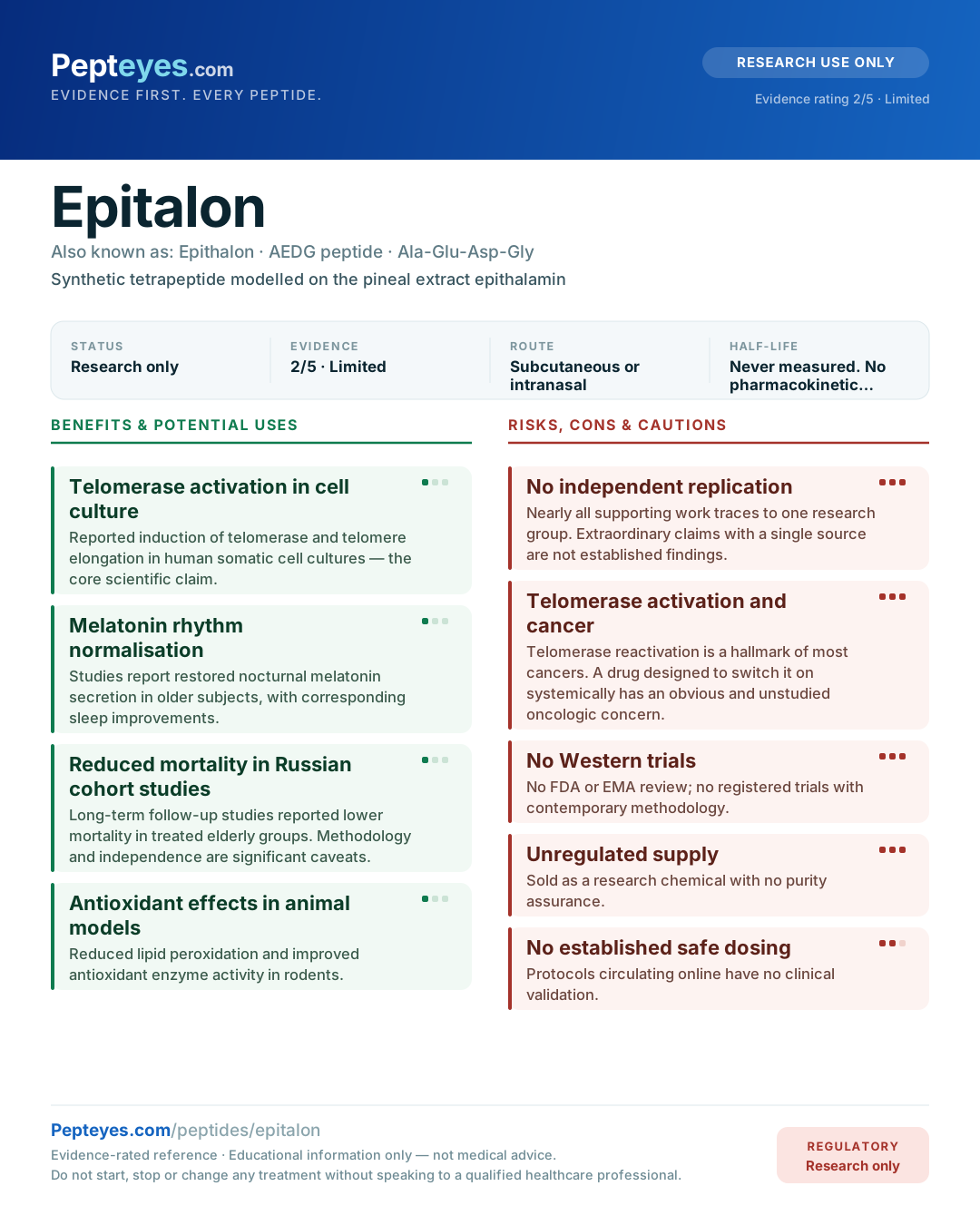
- Telomerase activation in cell culture
Reported induction of telomerase and telomere elongation in human somatic cell cultures — the core scientific claim.
- Melatonin rhythm normalisation
Studies report restored nocturnal melatonin secretion in older subjects, with corresponding sleep improvements.
- Reduced mortality in Russian cohort studies
Long-term follow-up studies reported lower mortality in treated elderly groups. Methodology and independence are significant caveats.
- Antioxidant effects in animal models
Reduced lipid peroxidation and improved antioxidant enzyme activity in rodents.
Benefits — Livagen
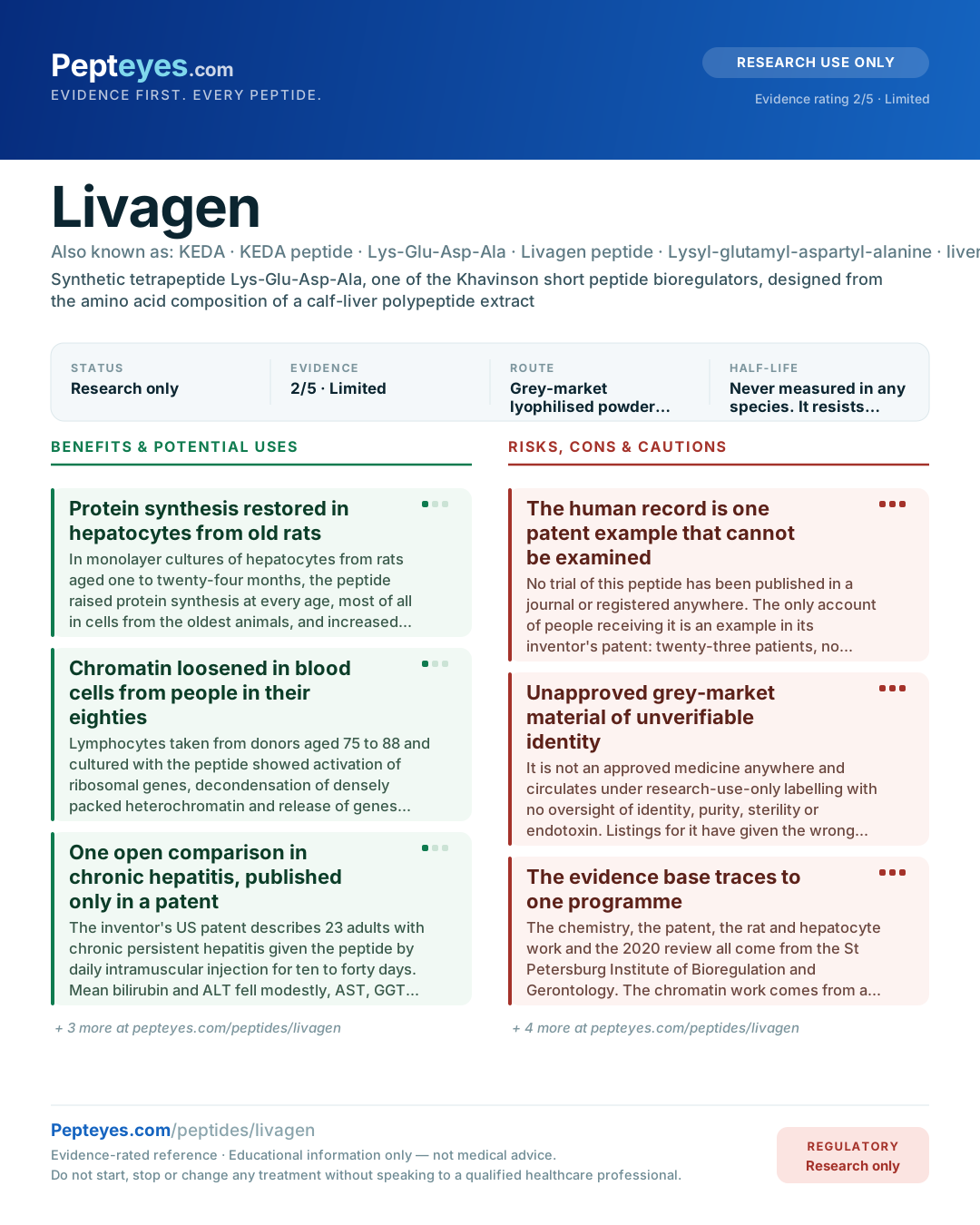
- Protein synthesis restored in hepatocytes from old rats
In monolayer cultures of hepatocytes from rats aged one to twenty-four months, the peptide raised protein synthesis at every age, most of all in cells from the oldest animals, and increased the amplitude of the hour-scale rhythm of synthesis that flattens with age. Epitalon in the same assay changed nothing, which is the best evidence that the effect is sequence-specific.
- Chromatin loosened in blood cells from people in their eighties
Lymphocytes taken from donors aged 75 to 88 and cultured with the peptide showed activation of ribosomal genes, decondensation of densely packed heterochromatin and release of genes silenced by age-related compaction, selectively on chromosomes 1 and 9. It is a reproducible readout from one laboratory, in cells in a dish; no one has shown it happens in a living person or that it would be desirable if it did.
- One open comparison in chronic hepatitis, published only in a patent
The inventor's US patent describes 23 adults with chronic persistent hepatitis given the peptide by daily intramuscular injection for ten to forty days. Mean bilirubin and ALT fell modestly, AST, GGT and lipids did not change, and most patients reported less weakness. A control group of twelve on conventional care is mentioned, but its results are never reported, and no journal version of the study exists.
- Survives gut peptidases and shifted digestive enzymes in old rats
Small-intestine peptide hydrolases barely cleave it in a tube, which is unusual for a short peptide. After two weeks by mouth, digestive enzyme activity fell in young rats and rose in old ones toward the young-control level. Resistance to digestion is not the same as absorption, and nothing shows the intact peptide reaching the liver by this route.
- Liver protection and a smaller tumour in rats, by the inventor's account
The patent and the group's own review report that in rats with carbon tetrachloride hepatitis it normalised bilirubin, transaminases and liver glycogen, and that in rats carrying a transplanted hepatoma the tumour was smaller at a month with a tendency toward longer survival. None of this has been published outside the group, and a patent is an advocacy document.
Risks & cons — Epitalon
- No independent replication
Nearly all supporting work traces to one research group. Extraordinary claims with a single source are not established findings.
- Telomerase activation and cancer
Telomerase reactivation is a hallmark of most cancers. A drug designed to switch it on systemically has an obvious and unstudied oncologic concern.
- No Western trials
No FDA or EMA review; no registered trials with contemporary methodology.
- Unregulated supply
Sold as a research chemical with no purity assurance.
- No established safe dosing
Protocols circulating online have no clinical validation.
Risks & cons — Livagen
- The human record is one patent example that cannot be examined
No trial of this peptide has been published in a journal or registered anywhere. The only account of people receiving it is an example in its inventor's patent: twenty-three patients, no reported control results, no randomisation or blinding, modest changes in two lab values. Everything else claimed for it in people is extrapolation from rat liver cells and cultured blood cells.
- Unapproved grey-market material of unverifiable identity
It is not an approved medicine anywhere and circulates under research-use-only labelling with no oversight of identity, purity, sterility or endotoxin. Listings for it have given the wrong sequence, the wrong source organ and a molecular weight that matches no form of the molecule, which says something about how carefully it is handled.
- The evidence base traces to one programme
The chemistry, the patent, the rat and hepatocyte work and the 2020 review all come from the St Petersburg Institute of Bioregulation and Gerontology. The chromatin work comes from a genetics department in Tbilisi that began as that institute's collaborator and works with peptides it supplied. No group outside that circle has published on the sequence, which is a weaker position than merely being untested.
- Delaying real liver care
Fatty liver disease, viral hepatitis and alcohol-related liver disease all have assessment pathways and treatments with trial evidence behind them, and several are silent until late. Taking an untested peptide for 'liver support' instead of having abnormal liver tests, jaundice or heavy drinking assessed is the practical harm most likely to occur here.
- Gene-activation effects are not benign by default
The reported actions are activation of ribosomal genes and unpacking of silenced chromatin in blood cells, plus faster growth of liver explants. A smaller tumour in one rat experiment reported by the inventor does not settle what sustained chromatin activation does over years. The oncologic question has not been asked in a person.
A comparison is not a recommendation. Neither column is being suggested for you. Which — if either — is appropriate depends on your diagnosis, history and medications, and that is a conversation for a qualified clinician.