Insulin vs MK-677 (Ibutamoren)
These are not equivalent in evidence Insulin is rated 5/5 and MK-677 (Ibutamoren) is rated 3/5 — a gap of 2 levels on our scale. Similar marketing does not mean similar proof.
| Insulin FDA Approved | MK-677 (Ibutamoren) Not a Peptide | |
|---|---|---|
| Evidence rating |
5/5 Very strong
Evidence rating 5 out of 5: Very strong
|
3/5 Moderate
Evidence rating 3 out of 5: Moderate
|
| Regulatory status | Approved worldwide since 1923 and on the WHO Model List of Essential Medicines. Regulated in the US as a biologic since 2020, which opened a pathway for interchangeable biosimilars. | Not a peptide. Investigational drug; development discontinued. Not approved. Prohibited in sport. |
| Category | Metabolic & Weight | Growth Hormone Axis |
| Drug class | Endogenous 51-residue two-chain peptide hormone (A-chain 21 residues, B-chain 30 residues) joined by two interchain disulfide bridges; therapeutic versions are recombinant human insulin or analogues with residue substitutions that alter absorption rate | Non-peptide, orally active ghrelin receptor agonist — listed here because it is universally marketed alongside peptides |
| Route | Subcutaneous injection or infusion; intravenous in hospital; one inhaled formulation | Oral, once daily |
| Half-life | Rapid-acting analogues ~1 h subcutaneously (regular insulin ~1.5 h); degludec ~25 h at steady state, set by slow depot absorption and albumin binding. | ~4-6 h in beagles; no published human half-life. A single oral dose keeps GH and IGF-1 raised for about 24 hours. |
| Sequence length | 51 residues | Not a peptide |
| Molecular weight | 5,807.6 Da | 528.7 Da |
| Studied in | Close to a century of randomized trials, registries and outcome studies. DCCT and its EDIC follow-up established that tight glycaemic control reduces microvascular complications in type 1 diabetes; UKPDS did the equivalent work in type 2. Analogue-versus-human-insulin trials consistently show fewer hypoglycaemic episodes rather than better HbA1c. | Multiple phase 2 trials including elderly hip-fracture recovery, sarcopenia, GH deficiency, and a 2-year trial in healthy older adults. |
| Who should avoid it |
|
|
| Legal status | Prescription-only in essentially every jurisdiction, though some US states permit emergency pharmacist dispensing. Not available as a research chemical and not a supplement. | Unapproved investigational drug. Not lawful as a dietary supplement in the US. WADA-prohibited. |
Benefits — Insulin
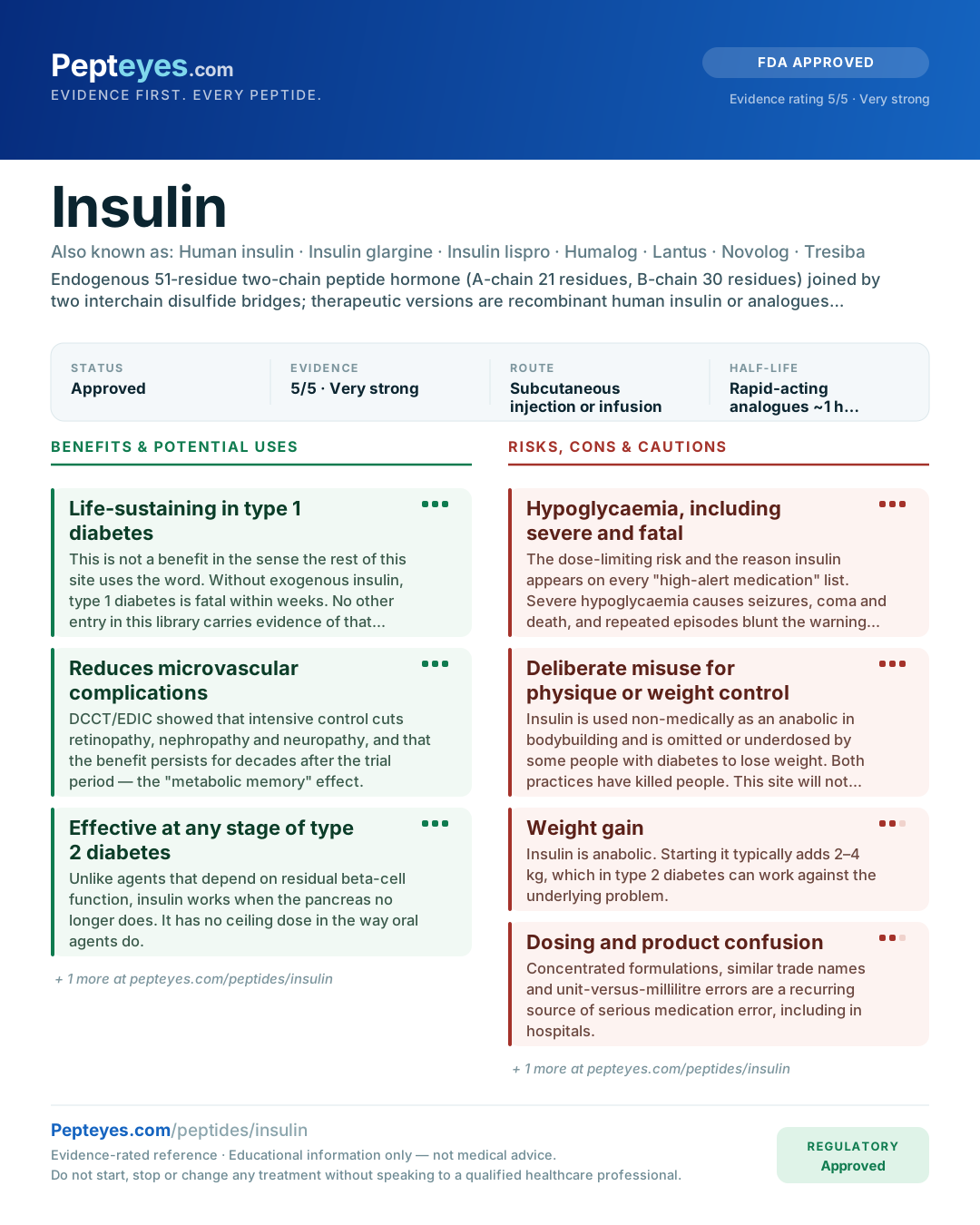
- Life-sustaining in type 1 diabetes
This is not a benefit in the sense the rest of this site uses the word. Without exogenous insulin, type 1 diabetes is fatal within weeks. No other entry in this library carries evidence of that character.
- Reduces microvascular complications
DCCT/EDIC showed that intensive control cuts retinopathy, nephropathy and neuropathy, and that the benefit persists for decades after the trial period — the "metabolic memory" effect.
- Effective at any stage of type 2 diabetes
Unlike agents that depend on residual beta-cell function, insulin works when the pancreas no longer does. It has no ceiling dose in the way oral agents do.
- Analogues reduce hypoglycaemia versus human insulin
Long-acting analogues produce flatter profiles and consistently fewer nocturnal hypoglycaemic events, though the HbA1c difference is small.
Benefits — MK-677 (Ibutamoren)
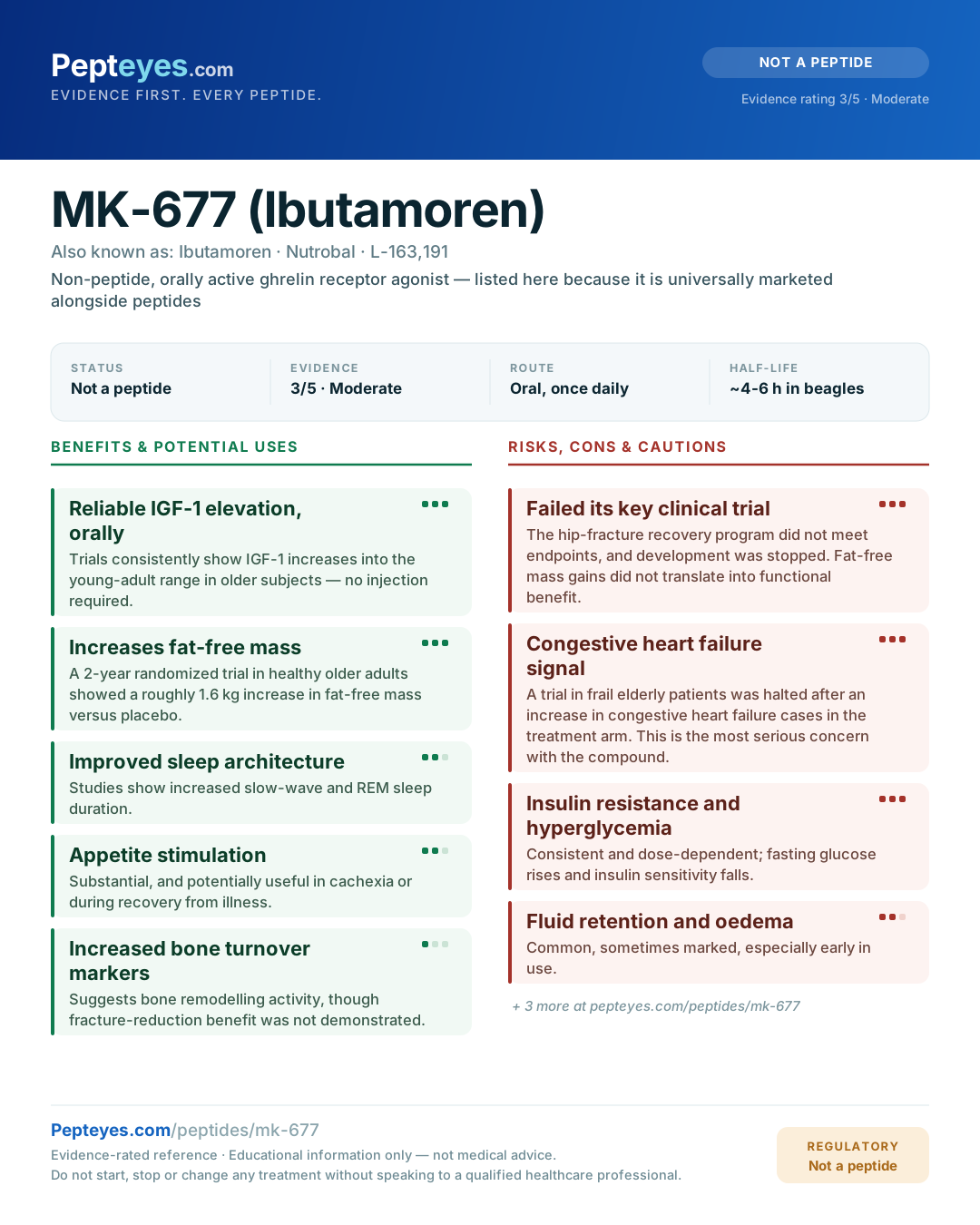
- Reliable IGF-1 elevation, orally
Trials consistently show IGF-1 increases into the young-adult range in older subjects — no injection required.
- Increases fat-free mass
A 2-year randomized trial in healthy older adults showed a roughly 1.6 kg increase in fat-free mass versus placebo.
- Improved sleep architecture
Studies show increased slow-wave and REM sleep duration.
- Appetite stimulation
Substantial, and potentially useful in cachexia or during recovery from illness.
- Increased bone turnover markers
Suggests bone remodelling activity, though fracture-reduction benefit was not demonstrated.
Risks & cons — Insulin
- Hypoglycaemia, including severe and fatal
The dose-limiting risk and the reason insulin appears on every "high-alert medication" list. Severe hypoglycaemia causes seizures, coma and death, and repeated episodes blunt the warning symptoms that would otherwise prevent the next one.
- Deliberate misuse for physique or weight control
Insulin is used non-medically as an anabolic in bodybuilding and is omitted or underdosed by some people with diabetes to lose weight. Both practices have killed people. This site will not describe either.
- Weight gain
Insulin is anabolic. Starting it typically adds 2–4 kg, which in type 2 diabetes can work against the underlying problem.
- Dosing and product confusion
Concentrated formulations, similar trade names and unit-versus-millilitre errors are a recurring source of serious medication error, including in hospitals.
- Injection site lipohypertrophy
Repeated injection into the same site produces fatty lumps that absorb insulin erratically, which is a common and under-recognised cause of unexplained glucose swings.
Risks & cons — MK-677 (Ibutamoren)
- Failed its key clinical trial
The hip-fracture recovery program did not meet endpoints, and development was stopped. Fat-free mass gains did not translate into functional benefit.
- Congestive heart failure signal
A trial in frail elderly patients was halted after an increase in congestive heart failure cases in the treatment arm. This is the most serious concern with the compound.
- Insulin resistance and hyperglycemia
Consistent and dose-dependent; fasting glucose rises and insulin sensitivity falls.
- Fluid retention and oedema
Common, sometimes marked, especially early in use.
- Increased appetite and weight gain
Often unwanted; a substantial fraction of gained weight is not lean tissue.
A comparison is not a recommendation. Neither column is being suggested for you. Which — if either — is appropriate depends on your diagnosis, history and medications, and that is a conversation for a qualified clinician.