Supplied ready in solution
Metabolic & Weight
At a glance
Ten answers, each one line. Open any row for the detail behind it.
What it does The oldest peptide drug and still the most consequential.
The oldest peptide drug and still the most consequential. Insulin is not a wellness compound and does not belong in the same conversation as the research peptides on this site — it is included because it is the reference point. Everything else here is measured against a peptide that has a century of trials, a defined therapeutic window, and a well-documented way to kill you if that window is missed.
Half-life Rapid-acting analogues ~1 h subcutaneously (regular insulin… — Documented
Rapid-acting analogues ~1 h subcutaneously (regular insulin ~1.5 h); degludec ~25 h at steady state, set by slow depot absorption and albumin binding.
Typical studied dose Set on the approved label, which states the starting dose, how it is… — On the label
Set on the approved label, which states the starting dose, how it is increased and the maximum. Read it there rather than anywhere else — including here.
How often it is used Set on the approved label. The interval follows the half-life above… — On the label
Set on the approved label. The interval follows the half-life above, which is why some of these are weekly and others daily.
How it is taken Subcutaneous injection or infusion; intravenous in hospital; one inhaled… — Documented
Subcutaneous injection or infusion; intravenous in hospital; one inhaled formulation
Main side effects Hypoglycaemia, including severe and fatal · Deliberate misuse for physique or weight control · Weight gain — Carries serious risk
Hypoglycaemia, including severe and fatal — The dose-limiting risk and the reason insulin appears on every "high-alert medication" list. Severe hypoglycaemia causes seizures, coma and death, and repeated episodes blunt the warning symptoms that would otherwise prevent the next one.
Deliberate misuse for physique or weight control — Insulin is used non-medically as an anabolic in bodybuilding and is omitted or underdosed by some people with diabetes to lose weight. Both practices have killed people. This site will not describe either.
Weight gain — Insulin is anabolic. Starting it typically adds 2–4 kg, which in type 2 diabetes can work against the underlying problem.
Storage before mixing Supplied already in solution and kept refrigerated, not frozen. Freezing…
Supplied already in solution and kept refrigerated, not frozen. Freezing a protein solution can aggregate it, which is not always visible.
Shelf life after mixing Nothing to mix — it is not supplied as a powder. The relevant date is…
Nothing to mix — it is not supplied as a powder. The relevant date is the one printed on the product.
Evidence level 5/5 · Very strong — Documented
Multiple phase 3 randomized trials plus regulatory approval in a major market.
Regulatory status FDA Approved — Documented
Approved worldwide since 1923 and on the WHO Model List of Essential Medicines. Regulated in the US as a biologic since 2020, which opened a pathway for interchangeable biosimilars. Prescription-only in essentially every jurisdiction, though some US states permit emergency pharmacist dispensing. Not available as a research chemical and not a supplement.
Overview
The oldest peptide drug and still the most consequential. Insulin is not a wellness compound and does not belong in the same conversation as the research peptides on this site — it is included because it is the reference point. Everything else here is measured against a peptide that has a century of trials, a defined therapeutic window, and a well-documented way to kill you if that window is missed.
FDA ApprovedApproved worldwide since 1923 and on the WHO Model List of Essential Medicines. Regulated in the US as a biologic since 2020, which opened a pathway for interchangeable biosimilars.
| Regulatory status | Approved worldwide since 1923 and on the WHO Model List of Essential Medicines. Regulated in the US as a biologic since 2020, which opened a pathway for interchangeable biosimilars. |
|---|---|
| Drug class | Endogenous 51-residue two-chain peptide hormone (A-chain 21 residues, B-chain 30 residues) joined by two interchain disulfide bridges; therapeutic versions are recombinant human insulin or analogues with residue substitutions that alter absorption rate |
| Route | Subcutaneous injection or infusion; intravenous in hospital; one inhaled formulation |
| Half-life | Rapid-acting analogues ~1 h subcutaneously (regular insulin ~1.5 h); degludec ~25 h at steady state, set by slow depot absorption and albumin binding. |
| Evidence rating |
5/5 Very strong
Evidence rating 5 out of 5: Very strong
Multiple phase 3 randomized trials plus regulatory approval in a major market. |
| Studied in | Close to a century of randomized trials, registries and outcome studies. DCCT and its EDIC follow-up established that tight glycaemic control reduces microvascular complications in type 1 diabetes; UKPDS did the equivalent work in type 2. Analogue-versus-human-insulin trials consistently show fewer hypoglycaemic episodes rather than better HbA1c. |
Insulin sequence & structure
Insulin is a 51-residue disulfide-bridged peptide with a free C-terminal acid; molecular weight 5,807.58 Da.
| Three-letter | B chain: H-Phe-Val-Asn-Gln-His-Leu-Cys-Gly-Ser-His-Leu-Val-Glu-Ala-Leu-Tyr-Leu-Val-Cys-Gly-Glu-Arg-Gly-Phe-Phe-Tyr-Thr-Pro-Lys-Thr-OH / A chain: H-Gly-Ile-Val-Glu-Gln-Cys-Cys-Thr-Ser-Ile-Cys-Ser-Leu-Tyr-Gln-Leu-Glu-Asn-Tyr-Cys-Asn-OH |
|---|---|
| Length | 51 amino acid residues |
| Modifications |
|
| Molecular formula | C257H383N65O77S6 |
| Molecular weight | 5,807.58 Da (average, free base) |
| Identifiers | CAS 11061-68-0 · PubChem CID 118984375 · DrugBank DB00030 · UniProt P01308 |
| Which molecule | "Insulin" on pepteyes covers native insulin plus the engineered analogues listed as aliases (lispro/Humalog, aspart/Novolog, glargine/Lantus, degludec/Tresiba, detemir, glulisine). This record describes recombinant human insulin (INN: insulin human; Humulin, Novolin, Actrapid), the 51-residue two-chain hormone identical to the mature endogenous product of the INS gene; the analogues differ by 1–3 substitutions, chain extensions and/or acylation and need their own records. |
| Sources | UniProt P01308 (INS_HUMAN) — precursor sequence, B chain 25–54, A chain 90–110, disulfide featuresKEGG DRUG D03230 (Insulin human, USP/INN) — A/B chain sequences, disulfides A6–A11/A7–B7/A20–B19, C257H383N65O77S6, MW 5807.58, CAS 11061-68-0ChEMBL CHEMBL1201631 (INSULIN HUMAN) — heavy (B) and light (A) chain sequences, max phase 4PubChem CID 118984375 (insulin human) — formula C257H383N65O77S6, MW 5808DailyMed — HUMULIN R (insulin human) prescribing information, Description |
Two chains, not one continuous peptide: oneLetter gives the B chain (30 aa, B1–B30) then a '/' then the A chain (21 aa, A1–A21), total 51 residues; there is no peptide bond between Thr B30 and Gly A1, and both chains have a free N-terminal amine and a free C-terminal acid. Mature insulin is excised from the 110-aa preproinsulin (UniProt P01308: B chain = residues 25–54, A chain = 90–110) with the C-peptide removed. The MW is 5807.58 Da (KEGG; PubChem rounds to 5808); pharmaceutical insulin is formulated as a zinc hexamer. CAS 9004-10-8 (KEGG D00085) is the generic/animal-source 'insulin' entry, not human insulin. DrugBank DB00030 could not be opened (HTTP 403) and is retained only because the ID is well established in the literature.
Record confidence: high — two independent authoritative sources agree on the sequence and modifications. Every sequence on the site is listed with its sources on the peptide sequences index.
How it works
Binds the insulin receptor, a transmembrane tyrosine kinase. Autophosphorylation recruits IRS proteins and activates the PI3K/Akt arm, which drives GLUT4 translocation in muscle and fat, suppresses hepatic gluconeogenesis, and promotes glycogen, lipid and protein synthesis. The parallel MAPK arm carries the mitogenic signalling that underlies most theoretical concern about long-term analogue use.
Evidence base
Rated 5 of 5 — Very strong. Multiple phase 3 randomized trials plus regulatory approval in a major market.
- The evidence base here is categorically different from the rest of this library: a century of trials, mandatory pharmacovigilance, and hard outcome data rather than surrogate markers.
- Insulin is included as a reference point. A 5 rating on insulin and a 1 on a research peptide are not two points on one scale so much as two different worlds.
- Biosimilar and interchangeable insulins have narrowed price differences in the US since 2021, but affordability failures still drive documented rationing.
Benefits and risks, weighed against the evidence
Every entry below carries the strength of the evidence behind it — three bars for strong human data, two for moderate, one for preliminary or preclinical work. The two columns are not equal by design: where a compound has more documented risk than demonstrated benefit, the lists say so.
Reported benefits
4 entries · 4 on strong human evidence
-
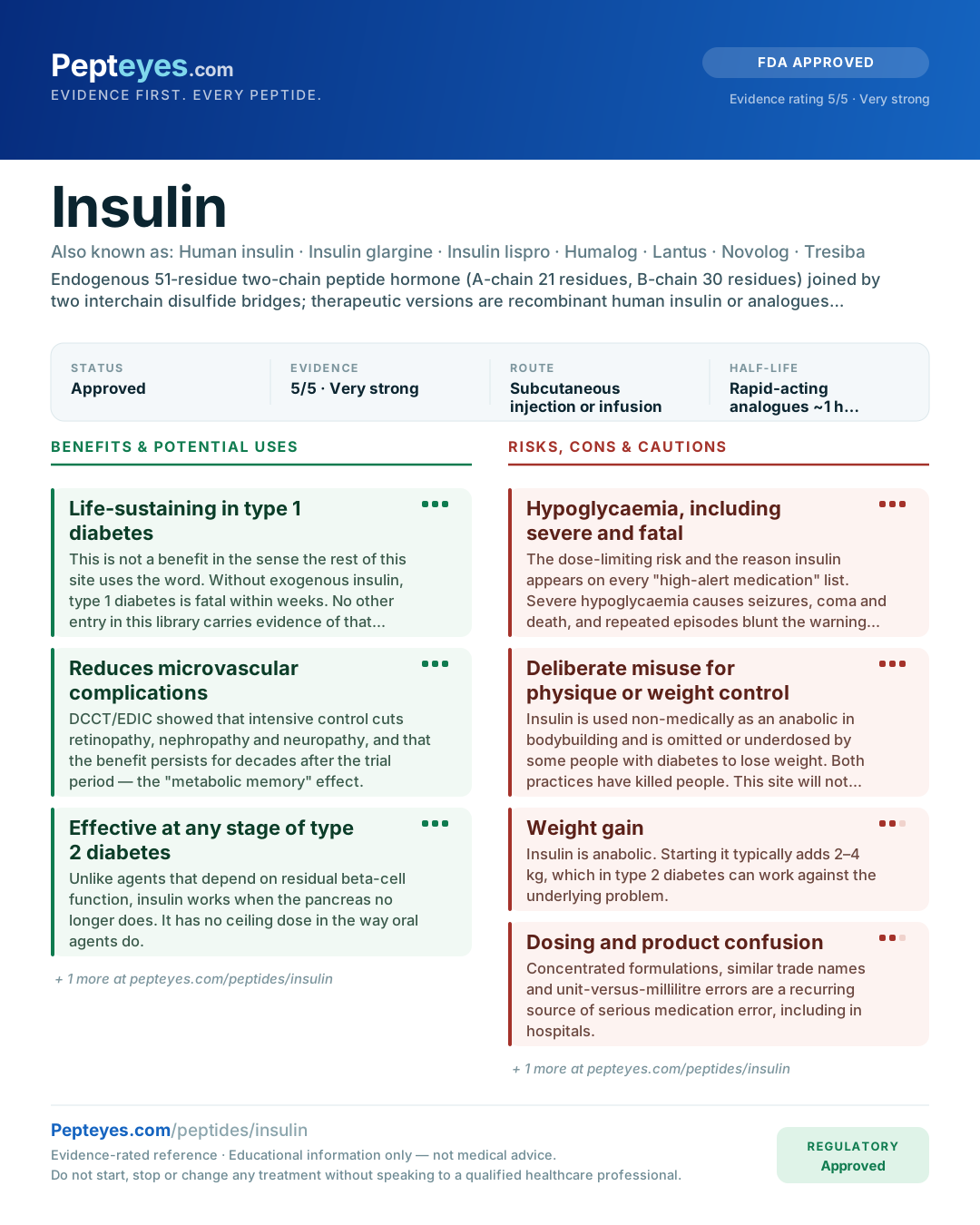
Life-sustaining in type 1 diabetes
This is not a benefit in the sense the rest of this site uses the word. Without exogenous insulin, type 1 diabetes is fatal within weeks. No other entry in this library carries evidence of that character.
Evidence: Strong evidence -
Reduces microvascular complications
DCCT/EDIC showed that intensive control cuts retinopathy, nephropathy and neuropathy, and that the benefit persists for decades after the trial period — the "metabolic memory" effect.
Evidence: Strong evidence -
Effective at any stage of type 2 diabetes
Unlike agents that depend on residual beta-cell function, insulin works when the pancreas no longer does. It has no ceiling dose in the way oral agents do.
Evidence: Strong evidence -
Analogues reduce hypoglycaemia versus human insulin
Long-acting analogues produce flatter profiles and consistently fewer nocturnal hypoglycaemic events, though the HbA1c difference is small.
Evidence: Strong evidence
Risks and cautions
5 entries · 2 serious or common
-
Hypoglycaemia, including severe and fatal
The dose-limiting risk and the reason insulin appears on every "high-alert medication" list. Severe hypoglycaemia causes seizures, coma and death, and repeated episodes blunt the warning symptoms that would otherwise prevent the next one.
Evidence: Serious -
Deliberate misuse for physique or weight control
Insulin is used non-medically as an anabolic in bodybuilding and is omitted or underdosed by some people with diabetes to lose weight. Both practices have killed people. This site will not describe either.
Evidence: Serious -
Weight gain
Insulin is anabolic. Starting it typically adds 2–4 kg, which in type 2 diabetes can work against the underlying problem.
Evidence: Moderate evidence -
Dosing and product confusion
Concentrated formulations, similar trade names and unit-versus-millilitre errors are a recurring source of serious medication error, including in hospitals.
Evidence: Moderate evidence -
Injection site lipohypertrophy
Repeated injection into the same site produces fatty lumps that absorb insulin erratically, which is a common and under-recognised cause of unexplained glucose swings.
Evidence: Minor
Counts are not a score. A single serious risk can outweigh several well-supported benefits, and a long benefit list built on preclinical work outweighs nothing at all.
Opinion — what people actually report
7 themes · 5 reported problems
This is the weakest tier on this site. These are themes drawn from public discussion — forums, subreddits and patient threads — not from trials. There is no control group, no denominator, and no way to confirm that what someone injected matched its label. People post when a result is dramatic and when something goes wrong, and rarely when nothing happens, so treat everything below as a description of the conversation rather than of the compound. The bars count how often a thing is said, not how well it is supported.
-
The conversation is about logistics, not effect Practical note. Dominant theme: Comes up in most discussions of this compound.
Nobody debates whether insulin works. Discussion is dominated by dosing around meals and exercise, pump and sensor choices, travel, insurance and cost — the practicalities of running a therapy with no margin for error.
-
Fear of overnight hypoglycaemia Reported problem. Dominant theme: Comes up in most discussions of this compound.
The most emotionally charged recurring theme, particularly among parents of children with type 1. Continuous glucose monitoring with alarms is credited by many with changing this more than any insulin formulation did.
-
Cost and rationing Reported problem. Dominant theme: Comes up in most discussions of this compound.
A dominant and long-running theme in US communities specifically, including openly discussed dose-stretching. Documented deaths have made this a mainstream advocacy issue rather than a fringe complaint.
-
Lipohypertrophy and erratic absorption Reported problem. Recurring: Raised regularly, though not by everyone.
Frequently described as the explanation people eventually found for unexplained glucose swings, often after months of assuming they were doing something wrong.
-
Weight gain on intensifying control Reported problem. Recurring: Raised regularly, though not by everyone.
A common frustration, and one that drives interest in adding GLP-1 agents.
-
Bodybuilding use is treated as reckless by the diabetes communities Practical note. Recurring: Raised regularly, though not by everyone.
One of the few areas where two communities discussing the same compound are in open conflict, and the patient side is unambiguous about it.
-
Diabulimia — deliberate underdosing to lose weight Reported problem. Occasional: Reported by a minority, or in specific contexts.
Raised seriously and with concern in patient spaces as a recognised and dangerous eating disorder.
Where the reports and the evidence part ways
There is little disagreement between patient report and evidence here, which is itself the point — a century of trials and mandatory pharmacovigilance leaves little room for folklore. The reports track the literature closely, including on hypoglycaemia risk, weight gain and lipohypertrophy. The one genuine divergence runs the other way: the non-medical bodybuilding use that appears in physique forums has no evidence base whatsoever, is uniformly condemned in the patient communities that live with the drug, and has killed people. Where the community leads the evidence is on cost — the affordability failures driving rationing are documented in the health services literature but are not a pharmacological finding, and they are a bigger practical determinant of outcome than any choice between analogues.
Readers on Insulin
Questions and answers from readers, under generated names. Nothing here has been checked or reviewed by the site and none of it is medical advice. It is the least verified thing on this page — and it is here because people ask each other these things anyway, and most of the other places they can ask are run by sellers.
0 questions · 0 answers
No questions yet. Ask the first one above — it takes one box and an email address.
How names work, and the house rules
Names. Every verified address is given one generated name — two ordinary words — and keeps it. Nobody chooses a name and nobody can take another's. Posts marked desk were written by the site's own editorial desk, usually to open a thread; they carry a generated name like everyone else's and are held to the site's rules, which means they never state an amount.
What is not allowed. Selling, sourcing, vendor names, coupon codes and "message me" — posts that read that way are held and usually removed. Personal medical details you would not want public. Abuse. Instructions framed as what someone else should do.
What this is not. A reader's report of what happened to them is a report, not a finding, and an answer here is one person's view. Nothing in this section changes the evidence rating above it. If something you read here would change what you take, take it to a pharmacist or physician first.
Your data. Delete any post of yours at any time, or remove everything you have written together with your name. Details in the privacy notice.
Who should avoid it
- Anyone without a diagnosis requiring it — there is no non-diabetic use of insulin that is not dangerous
- Use for muscle gain or body composition
- Any use not directed and monitored by a prescriber
If used under medical supervision, monitor
- Capillary or continuous glucose monitoring
- HbA1c every 3–6 months
- Injection site inspection at every review
- Renal function, which changes insulin clearance
- Potassium during intravenous use
Regulatory & legal status
Prescription-only in essentially every jurisdiction, though some US states permit emergency pharmacist dispensing. Not available as a research chemical and not a supplement.
Infographic
Where to read further
We link to live literature searches rather than a frozen citation list, so you always see current results — including anything published after our last review.
- PubMed — all published literature on Insulin
- PubMed — randomized controlled trials only
- ClinicalTrials.gov — registered human trials
- DailyMed — official FDA prescribing information
Related peptides in Metabolic & Weight
Terms used on this page
- Therapeutic Window
- The therapeutic window is the range of exposure above the concentration needed for effect and below the one producing unacceptable harm, and its width decides how tightly dosing must be controlled.
- Peptide Analog
- A peptide analog is a molecule built from a native peptide sequence with deliberate substitutions or chemical modifications intended to change its stability, duration or receptor profile.
- Pharmacovigilance
- Pharmacovigilance is the science and practice of detecting, assessing, understanding and preventing adverse effects of medicines once they are in real-world use.
- Biosimilar
- A biosimilar is a biological product approved under the 351(k) pathway as highly similar to a licensed reference product, with no clinically meaningful differences in safety, purity or potency.
- Glucose-Dependent Insulin Secretion
- Glucose-dependent insulin secretion is beta-cell insulin release that scales with ambient glucose, so incretin amplification fades as concentrations approach the normal range.
- Glycated Haemoglobin (HbA1c)
- Glycated haemoglobin is the fraction of haemoglobin carrying glucose attached non-enzymatically, giving a weighted average of blood glucose over the preceding two to three months.
This page is educational information, not medical advice. It cannot account for your medical history, medications, or risk factors. Do not start, stop or change any treatment based on it. Speak to a qualified healthcare professional who knows your case.