Lanreotide vs Octreotide
| Lanreotide FDA Approved | Octreotide FDA Approved | |
|---|---|---|
| Evidence rating |
5/5 Very strong
Evidence rating 5 out of 5: Very strong
|
5/5 Very strong
Evidence rating 5 out of 5: Very strong
|
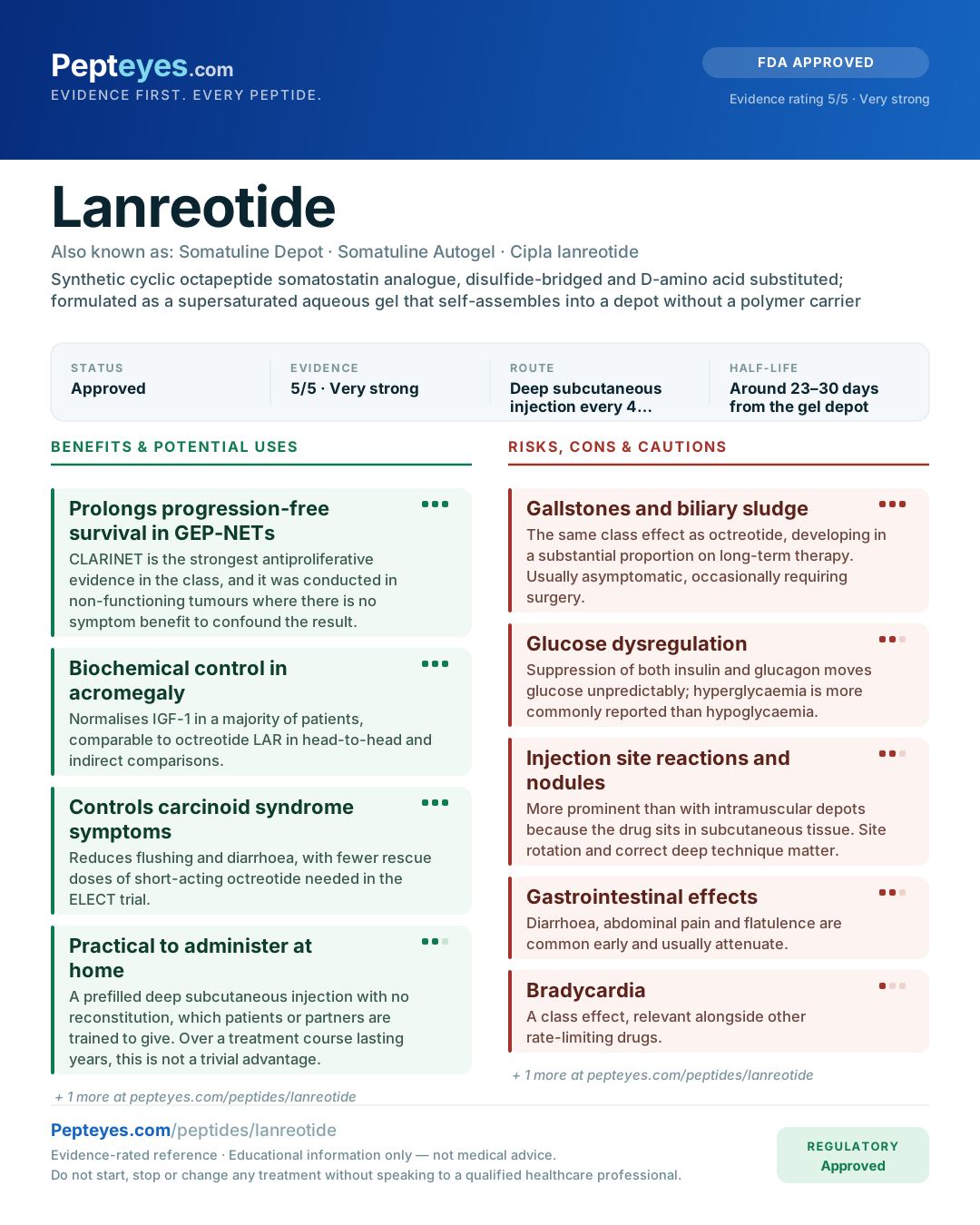
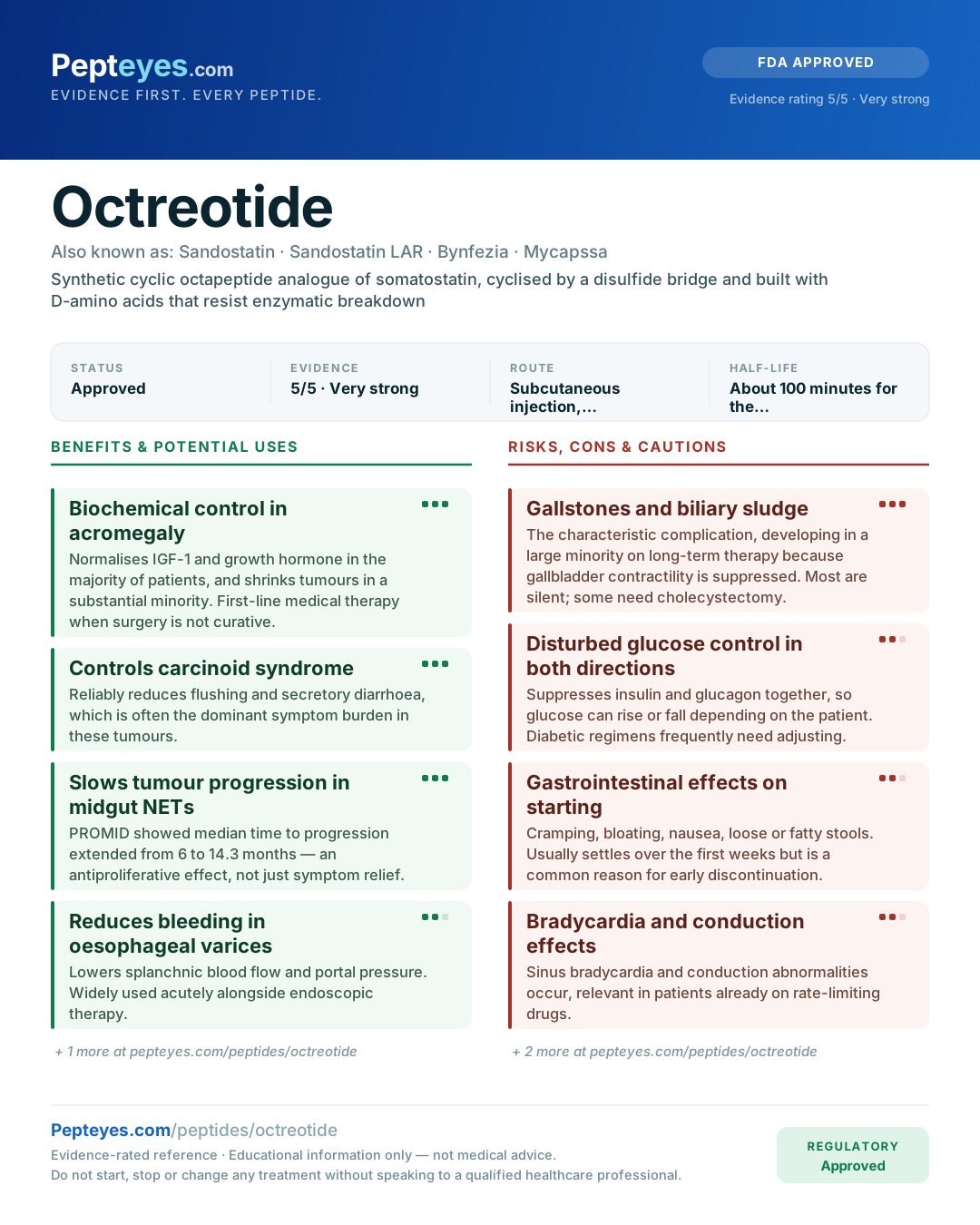
| Regulatory status | FDA-approved 2007 for acromegaly, 2014 for gastroenteropancreatic neuroendocrine tumours, and 2017 for carcinoid syndrome. The first generic entered the US market in 2021. | FDA-approved 1988 for acromegaly and for the diarrhoea of carcinoid and VIPoma tumours. An oral delayed-release capsule was approved in 2020 for maintenance in acromegaly. |
| Category | Hormonal & Reproductive | Hormonal & Reproductive |
| Drug class | Synthetic cyclic octapeptide somatostatin analogue, disulfide-bridged and D-amino acid substituted; formulated as a supersaturated aqueous gel that self-assembles into a depot without a polymer carrier | Synthetic cyclic octapeptide analogue of somatostatin, cyclised by a disulfide bridge and built with D-amino acids that resist enzymatic breakdown |
| Route | Deep subcutaneous injection every 4 weeks; intervals of 6–8 weeks are used in well-controlled patients | Subcutaneous injection, intramuscular depot every 4 weeks, intravenous infusion, or delayed-release oral capsule |
| Half-life | Around 23–30 days from the gel depot | About 100 minutes for the immediate-release form, against roughly 2 minutes for native somatostatin |
| Sequence length | 8 residues | 8 residues |
| Molecular weight | 1,096.3 Da | 1,019.3 Da |
| Studied in | CLARINET randomized 204 patients with non-functioning enteropancreatic neuroendocrine tumours and showed progression-free survival not reached at 24 months against 18 months on placebo. Acromegaly trials show biochemical control comparable to octreotide LAR, with extended dosing intervals feasible in responders. | Decades of trials in acromegaly show biochemical control in roughly 55–65% of patients on depot therapy. PROMID randomized octreotide LAR in metastatic midgut neuroendocrine tumours and showed a near-tripling of time to progression, establishing an antiproliferative effect beyond symptom control. |
| Who should avoid it |
|
|
| Legal status | Prescription-only. A US generic has been available since 2021, though supply has been intermittent. | Prescription-only. Generic injectable forms are widely available; depot and oral forms are not. |
Benefits — Lanreotide
- Prolongs progression-free survival in GEP-NETs
CLARINET is the strongest antiproliferative evidence in the class, and it was conducted in non-functioning tumours where there is no symptom benefit to confound the result.
- Biochemical control in acromegaly
Normalises IGF-1 in a majority of patients, comparable to octreotide LAR in head-to-head and indirect comparisons.
- Controls carcinoid syndrome symptoms
Reduces flushing and diarrhoea, with fewer rescue doses of short-acting octreotide needed in the ELECT trial.
- Practical to administer at home
A prefilled deep subcutaneous injection with no reconstitution, which patients or partners are trained to give. Over a treatment course lasting years, this is not a trivial advantage.
- Dosing interval can be extended in responders
Well-controlled patients are often maintained at 6 or 8 weeks rather than 4, reducing burden and cost.
Benefits — Octreotide
- Biochemical control in acromegaly
Normalises IGF-1 and growth hormone in the majority of patients, and shrinks tumours in a substantial minority. First-line medical therapy when surgery is not curative.
- Controls carcinoid syndrome
Reliably reduces flushing and secretory diarrhoea, which is often the dominant symptom burden in these tumours.
- Slows tumour progression in midgut NETs
PROMID showed median time to progression extended from 6 to 14.3 months — an antiproliferative effect, not just symptom relief.
- Reduces bleeding in oesophageal varices
Lowers splanchnic blood flow and portal pressure. Widely used acutely alongside endoscopic therapy.
- Reduces output from high-output fistulas
Slows secretion and transit. Evidence is modest and mostly on fistula closure time rather than mortality.
Risks & cons — Lanreotide
- Gallstones and biliary sludge
The same class effect as octreotide, developing in a substantial proportion on long-term therapy. Usually asymptomatic, occasionally requiring surgery.
- Glucose dysregulation
Suppression of both insulin and glucagon moves glucose unpredictably; hyperglycaemia is more commonly reported than hypoglycaemia.
- Injection site reactions and nodules
More prominent than with intramuscular depots because the drug sits in subcutaneous tissue. Site rotation and correct deep technique matter.
- Gastrointestinal effects
Diarrhoea, abdominal pain and flatulence are common early and usually attenuate.
- Bradycardia
A class effect, relevant alongside other rate-limiting drugs.
Risks & cons — Octreotide
- Gallstones and biliary sludge
The characteristic complication, developing in a large minority on long-term therapy because gallbladder contractility is suppressed. Most are silent; some need cholecystectomy.
- Disturbed glucose control in both directions
Suppresses insulin and glucagon together, so glucose can rise or fall depending on the patient. Diabetic regimens frequently need adjusting.
- Gastrointestinal effects on starting
Cramping, bloating, nausea, loose or fatty stools. Usually settles over the first weeks but is a common reason for early discontinuation.
- Bradycardia and conduction effects
Sinus bradycardia and conduction abnormalities occur, relevant in patients already on rate-limiting drugs.
- Fat-soluble vitamin malabsorption
Follows from suppressed pancreatic exocrine secretion and steatorrhoea during long-term use.
A comparison is not a recommendation. Neither column is being suggested for you. Which — if either — is appropriate depends on your diagnosis, history and medications, and that is a conversation for a qualified clinician.