Supplied ready in solution
Hormonal & Reproductive
At a glance
Ten answers, each one line. Open any row for the detail behind it.
What it does A long-approved hormone with well-defined indications and one of the most thoroughly…
A long-approved hormone with well-defined indications and one of the most thoroughly debunked claims in diet history. The legitimate uses are real; the weight-loss protocol is not.
Half-life ~29 hours terminal after subcutaneous recombinant hCG; ~27… — Documented
~29 hours terminal after subcutaneous recombinant hCG; ~27 hours after intravenous dosing.
Typical studied dose Set on the approved label, which states the starting dose, how it is… — On the label
Set on the approved label, which states the starting dose, how it is increased and the maximum. Read it there rather than anywhere else — including here.
How often it is used Set on the approved label. The interval follows the half-life above… — On the label
Set on the approved label. The interval follows the half-life above, which is why some of these are weekly and others daily.
How it is taken Intramuscular or subcutaneous — Documented
Intramuscular or subcutaneous
Main side effects The hCG diet does not work · Ovarian hyperstimulation syndrome · Thromboembolism risk — Carries serious risk
The hCG diet does not work — Randomized trials repeatedly found no weight loss or appetite benefit beyond the accompanying 500-calorie diet — which is itself the actual and dangerous intervention.
Ovarian hyperstimulation syndrome — A potentially life-threatening complication of ovulation induction requiring specialist monitoring.
Thromboembolism risk — Reported particularly in the context of ovarian hyperstimulation.
Storage before mixing Supplied already in solution and kept refrigerated, not frozen. Freezing…
Supplied already in solution and kept refrigerated, not frozen. Freezing a protein solution can aggregate it, which is not always visible.
Shelf life after mixing Nothing to mix — it is not supplied as a powder. The relevant date is…
Nothing to mix — it is not supplied as a powder. The relevant date is the one printed on the product.
Evidence level 5/5 · Very strong — Documented
Multiple phase 3 randomized trials plus regulatory approval in a major market.
Regulatory status FDA Approved — Documented
FDA-approved for hypogonadotropic hypogonadism, prepubertal cryptorchidism, and ovulation induction. FDA prohibited OTC hCG weight-loss products in 2011. Prescription drug. OTC and homeopathic hCG weight-loss products are unlawful in the US.
Overview
A long-approved hormone with well-defined indications and one of the most thoroughly debunked claims in diet history. The legitimate uses are real; the weight-loss protocol is not.
FDA ApprovedFDA-approved for hypogonadotropic hypogonadism, prepubertal cryptorchidism, and ovulation induction. FDA prohibited OTC hCG weight-loss products in 2011.
| Regulatory status | FDA-approved for hypogonadotropic hypogonadism, prepubertal cryptorchidism, and ovulation induction. FDA prohibited OTC hCG weight-loss products in 2011. |
|---|---|
| Drug class | Glycoprotein hormone with an LH-like beta subunit — technically a glycoprotein rather than a simple peptide |
| Route | Intramuscular or subcutaneous |
| Half-life | ~29 hours terminal after subcutaneous recombinant hCG; ~27 hours after intravenous dosing. |
| Evidence rating |
5/5 Very strong
Evidence rating 5 out of 5: Very strong
Multiple phase 3 randomized trials plus regulatory approval in a major market. |
| Studied in | Decades of trials in fertility, hypogonadism and cryptorchidism; multiple randomized trials specifically testing and refuting the hCG diet. |
Human Chorionic Gonadotropin (hCG) sequence & structure
Human Chorionic Gonadotropin (hCG) is a 237-residue protein, catalogued under UniProt P01215; P0DN86. The full sequence is shown below.
| Three-letter | H-Ala-Pro-Asp-Val-Gln-Asp-Cys-Pro-Glu-Cys-Thr-Leu-Gln-Glu-Asn-Pro-Phe-Phe-Ser-Gln-Pro-Gly-Ala-Pro-Ile-Leu-Gln-Cys-Met-Gly-Cys-Cys-Phe-Ser-Arg-Ala-Tyr-Pro-Thr-Pro-Leu-Arg-Ser-Lys-Lys-Thr-Met-Leu-Val-Gln-Lys-Asn-Val-Thr-Ser-Glu-Ser-Thr-Cys-Cys-Val-Ala-Lys-Ser-Tyr-Asn-Arg-Val-Thr-Val-Met-Gly-Gly-Phe-Lys-Val-Glu-Asn-His-Thr-Ala-Cys-His-Cys-Ser-Thr-Cys-Tyr-Tyr-His-Lys-Ser-OH / H-Ser-Lys-Glu-Pro-Leu-Arg-Pro-Arg-Cys-Arg-Pro-Ile-Asn-Ala-Thr-Leu-Ala-Val-Glu-Lys-Glu-Gly-Cys-Pro-Val-Cys-Ile-Thr-Val-Asn-Thr-Thr-Ile-Cys-Ala-Gly-Tyr-Cys-Pro-Thr-Met-Thr-Arg-Val-Leu-Gln-Gly-Val-Leu-Pro-Ala-Leu-Pro-Gln-Val-Val-Cys-Asn-Tyr-Arg-Asp-Val-Arg-Phe-Glu-Ser-Ile-Arg-Leu-Pro-Gly-Cys-Pro-Arg-Gly-Val-Asn-Pro-Val-Val-Ser-Tyr-Ala-Val-Ala-Leu-Ser-Cys-Gln-Cys-Ala-Leu-Cys-Arg-Arg-Ser-Thr-Thr-Asp-Cys-Gly-Gly-Pro-Lys-Asp-His-Pro-Leu-Thr-Cys-Asp-Asp-Pro-Arg-Phe-Gln-Asp-Ser-Ser-Ser-Ser-Lys-Ala-Pro-Pro-Pro-Ser-Leu-Pro-Ser-Pro-Ser-Arg-Leu-Pro-Gly-Pro-Ser-Asp-Thr-Pro-Ile-Leu-Pro-Gln-OH |
|---|---|
| Length | 237 amino acid residues |
| Modifications |
|
| Identifiers | CAS 9002-61-3 · DrugBank DB00097 · UniProt P01215; P0DN86 |
| Which molecule | Record describes the intact heterodimeric hCG hormone: the 92-residue alpha subunit (UniProt P01215 / RefSeq NP_000726.1, gene CGA; shared with LH, FSH and TSH) plus the 145-residue beta subunit (UniProt P0DN86 / RefSeq NP_000728.1, gene CGB3; the older accession P01233 was merged into P0DN86, and CGB3/CGB5/CGB8 encode identical mature proteins). Pregnyl, Novarel and Choragon are urinary-derived chorionic gonadotropin (INN 'chorionic gonadotrophin', CAS 9002-61-3, dosed in USP/IU units); Ovidrel/Ovitrelle is the CHO-cell recombinant choriogonadotropin alfa (INN, CAS 177073-44-8, dosed by mass, 250 ug), whose ChEMBL biotherapeutic record (CHEMBL1201464) carries the same 92 + 145 residue chains. Sequences shown are the mature chains after removal of the 24-residue (alpha) and 20-residue (beta) signal peptides; they match the chains in PDB crystal structure 1HCN. |
| Sources | UniProt P01215 (GLHA_HUMAN, glycoprotein hormones alpha chain)UniProt P0DN86 (CGB3_HUMAN, choriogonadotropin subunit beta 3)NCBI RefSeq NP_000726.1 (CGA precursor) and NP_000728.1 (CGB3 precursor), GenPept records with signal/mature peptide and glycosylation sitesRCSB PDB 1HCN - crystal structure of human chorionic gonadotropin (chain A 92 aa, chain B 145 aa)ChEMBL CHEMBL1201464 (choriogonadotropin alfa, biotherapeutic record with alpha and beta chain sequences) / CHEMBL1201509 (chorionic gonadotropin, urinary) |
oneLetter gives the alpha then beta chain joined by a single '/' (threeLetter uses ' / '); length 237 is the sum of both mature chains (92 + 145). Sequence and mature-chain boundaries were confirmed identically by UniProt, NCBI RefSeq, PDB 1HCN and ChEMBL. No single formula or MW is meaningful because roughly 30% of the mass is heterogeneous N- and O-linked carbohydrate; the unglycosylated precursor masses from UniProt are 13,075 Da (alpha, 116-aa precursor) and 17,739 Da (beta, 165-aa precursor), i.e. ~10.2 kDa and ~15.5 kDa for the mature chains, while the glycosylated dimer is usually quoted at ~36-40 kDa. CAS 9002-61-3 (check digit valid) is confirmed by ChemIDplus and KEGG C18185 via PubChem substance records; 177073-44-8 (also check-digit valid) is the NCIt/ChemIDplus CAS for the recombinant product. Beta-subunit numbering conventions differ: catalogue fragments such as hCG-beta(109-145) use mature numbering, UniProt/RefSeq use precursor numbering (+20).
Record confidence: high — two independent authoritative sources agree on the sequence and modifications. Every sequence on the site is listed with its sources on the peptide sequences index.
How it works
Binds and activates the LH receptor, stimulating Leydig cell testosterone production in men and triggering ovulation in women. Its long half-life relative to LH makes it useful clinically.
Evidence base
Rated 5 of 5 — Very strong. Multiple phase 3 randomized trials plus regulatory approval in a major market.
- A useful example of strong evidence both for legitimate uses and against a popular misuse.
Benefits and risks, weighed against the evidence
Every entry below carries the strength of the evidence behind it — three bars for strong human data, two for moderate, one for preliminary or preclinical work. The two columns are not equal by design: where a compound has more documented risk than demonstrated benefit, the lists say so.
Reported benefits
4 entries · 4 on strong human evidence
-
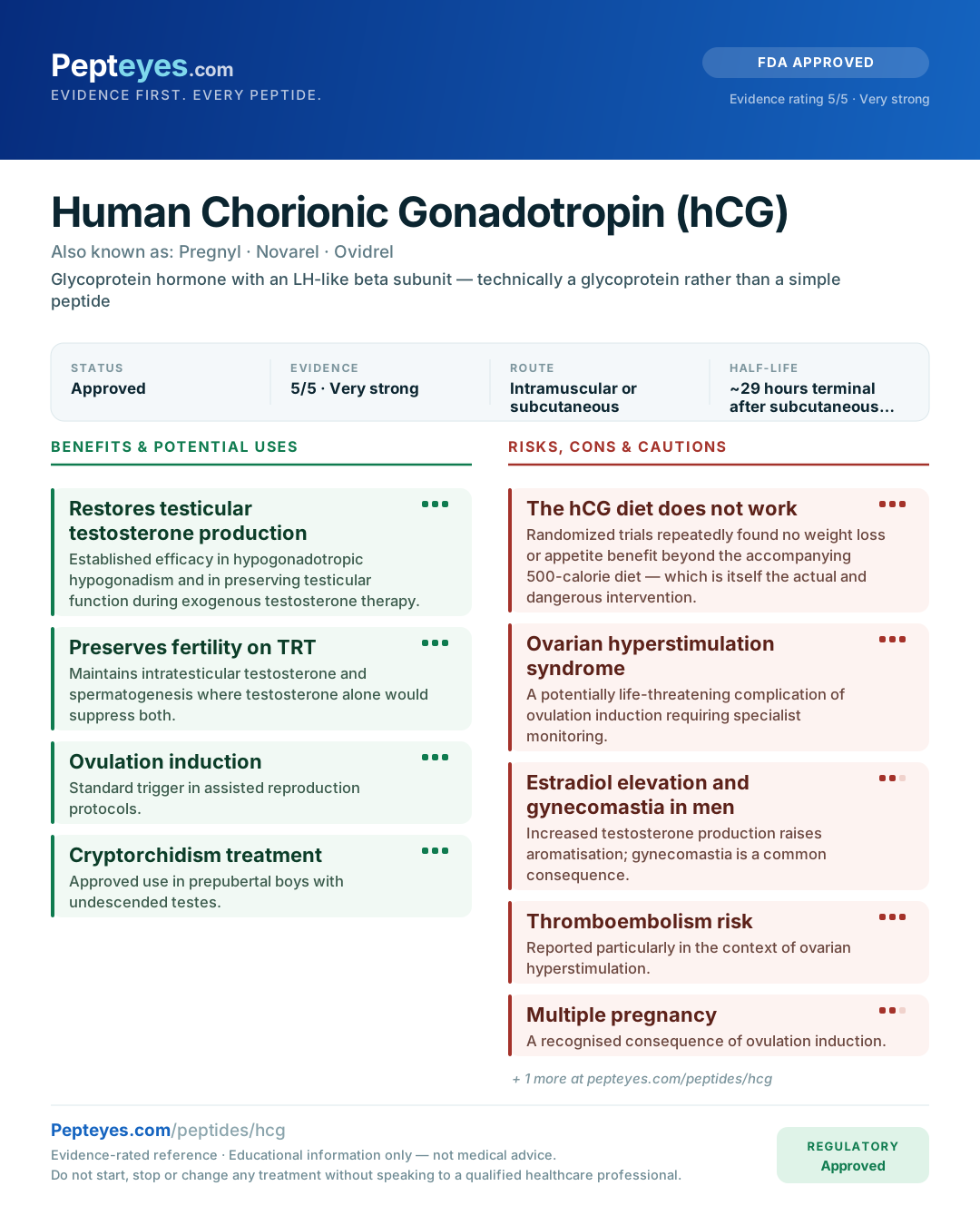
Restores testicular testosterone production
Established efficacy in hypogonadotropic hypogonadism and in preserving testicular function during exogenous testosterone therapy.
Evidence: Strong evidence -
Preserves fertility on TRT
Maintains intratesticular testosterone and spermatogenesis where testosterone alone would suppress both.
Evidence: Strong evidence -
Ovulation induction
Standard trigger in assisted reproduction protocols.
Evidence: Strong evidence -
Cryptorchidism treatment
Approved use in prepubertal boys with undescended testes.
Evidence: Strong evidence
Risks and cautions
6 entries · 3 serious or common
-
The hCG diet does not work
Randomized trials repeatedly found no weight loss or appetite benefit beyond the accompanying 500-calorie diet — which is itself the actual and dangerous intervention.
Evidence: Serious -
Ovarian hyperstimulation syndrome
A potentially life-threatening complication of ovulation induction requiring specialist monitoring.
Evidence: Serious -
Estradiol elevation and gynecomastia in men
Increased testosterone production raises aromatisation; gynecomastia is a common consequence.
Evidence: Moderate evidence -
Thromboembolism risk
Reported particularly in the context of ovarian hyperstimulation.
Evidence: Serious -
Multiple pregnancy
A recognised consequence of ovulation induction.
Evidence: Moderate evidence -
Precocious puberty in boys
Risk when used in prepubertal patients without endocrinology supervision.
Evidence: Moderate evidence
Counts are not a score. A single serious risk can outweigh several well-supported benefits, and a long benefit list built on preclinical work outweighs nothing at all.
Opinion — what people actually report
6 themes · 2 reported benefits · 3 reported problems
This is the weakest tier on this site. These are themes drawn from public discussion — forums, subreddits and patient threads — not from trials. There is no control group, no denominator, and no way to confirm that what someone injected matched its label. People post when a result is dramatic and when something goes wrong, and rarely when nothing happens, so treat everything below as a description of the conversation rather than of the compound. The bars count how often a thing is said, not how well it is supported.
-
Preserving testicular size and fertility on TRT Reported benefit. Dominant theme: Comes up in most discussions of this compound.
The dominant use discussed, and the one with the most consistent reports. Frequently described as reversing shrinkage within weeks.
-
Restarting natural production after a cycle Reported benefit. Dominant theme: Comes up in most discussions of this compound.
A central part of post-cycle discussion in performance communities, with elaborate protocols that are largely forum convention.
-
Oestrogen rising and associated symptoms Reported problem. Recurring: Raised regularly, though not by everyone.
Aromatisation is the most-cited problem, with mood, nipple sensitivity and water retention reported.
-
Mood changes and irritability Reported problem. Recurring: Raised regularly, though not by everyone.
Reported frequently and inconsistently, sometimes as improvement and sometimes as the opposite.
-
The weight-loss diet protocol is condemned Reported problem. Dominant theme: Comes up in most discussions of this compound.
The hCG diet is discussed almost universally negatively in informed communities, and correctly identified as the calorie restriction doing the work.
-
Prescription versus grey-market and counterfeits Practical note. Recurring: Raised regularly, though not by everyone.
Widespread concern about mislabelled product, especially given it is sold as a lyophilised powder.
Where the reports and the evidence part ways
The fertility and testicular-volume uses have genuine clinical support — hCG mimics LH and does maintain intratesticular testosterone, which is why it is used in hypogonadotropic hypogonadism and alongside testosterone therapy. The elaborate post-cycle protocols, by contrast, are forum-derived rather than trial-derived. On the diet, community scepticism is fully vindicated: controlled trials found hCG produces no weight loss beyond the very-low-calorie diet it accompanies, and the FDA requires products to state this. That is one of the clearest cases in this library of an evidence base directly contradicting a commercial claim.
Readers on Human Chorionic Gonadotropin (hCG)
Questions and answers from readers, under generated names. Nothing here has been checked or reviewed by the site and none of it is medical advice. It is the least verified thing on this page — and it is here because people ask each other these things anyway, and most of the other places they can ask are run by sellers.
0 questions · 0 answers
No questions yet. Ask the first one above — it takes one box and an email address.
How names work, and the house rules
Names. Every verified address is given one generated name — two ordinary words — and keeps it. Nobody chooses a name and nobody can take another's. Posts marked desk were written by the site's own editorial desk, usually to open a thread; they carry a generated name like everyone else's and are held to the site's rules, which means they never state an amount.
What is not allowed. Selling, sourcing, vendor names, coupon codes and "message me" — posts that read that way are held and usually removed. Personal medical details you would not want public. Abuse. Instructions framed as what someone else should do.
What this is not. A reader's report of what happened to them is a report, not a finding, and an answer here is one person's view. Nothing in this section changes the evidence rating above it. If something you read here would change what you take, take it to a pharmacist or physician first.
Your data. Delete any post of yours at any time, or remove everything you have written together with your name. Details in the privacy notice.
Who should avoid it
- Hormone-sensitive cancers including prostate cancer
- Precocious puberty
- Unexplained uterine bleeding
- Weight-loss use of any kind
If used under medical supervision, monitor
- Testosterone and estradiol in men
- Ultrasound and estradiol during ovulation induction
- Hematocrit
Interactions
Not exhaustive. Always have a pharmacist or physician review your full medication list — including supplements.
- Exogenous testosterone — suppresses the axis hCG is being used to preserve; timing and dosing matter
- Aromatase inhibitors — often co-prescribed to control the estradiol rise from increased testosterone production
- Gonadotropin preparations — additive ovarian hyperstimulation risk
Regulatory & legal status
Prescription drug. OTC and homeopathic hCG weight-loss products are unlawful in the US.
Infographic
Where to read further
We link to live literature searches rather than a frozen citation list, so you always see current results — including anything published after our last review.
- PubMed — all published literature on Human Chorionic Gonadotropin (hCG)
- PubMed — randomized controlled trials only
- ClinicalTrials.gov — registered human trials
- DailyMed — official FDA prescribing information
Related peptides in Hormonal & Reproductive
Terms used on this page
- Testosterone
- Testosterone is the principal androgen, a 19-carbon steroid made mainly by testicular Leydig cells and converted peripherally to dihydrotestosterone by 5-alpha-reductase and to estradiol by aromatase.
- Terminal Half-Life
- Terminal half-life is the time taken for drug concentration to fall by half during the final, slowest phase of elimination, and it sets the dosing interval.
- Primary vs Secondary Hypogonadism
- Primary hypogonadism is gonadal failure with raised gonadotropins, while secondary hypogonadism is a low sex steroid with low or inappropriately normal LH and FSH from a pituitary or hypothalamic cause.
- Spermatogenesis
- Spermatogenesis is the roughly 74-day process by which spermatogonia in the seminiferous tubules become spermatozoa, driven by FSH on Sertoli cells and by very high intratesticular testosterone.
- Ovulation Induction
- Ovulation induction is the pharmacological restoration of ovulation in anovulatory women, distinct from controlled ovarian stimulation, which deliberately recruits many follicles for assisted reproduction.
- Aromatization
- Aromatization is the conversion of androgens to estrogens by the cytochrome P450 enzyme aromatase, turning testosterone into estradiol and androstenedione into estrone.
This page is educational information, not medical advice. It cannot account for your medical history, medications, or risk factors. Do not start, stop or change any treatment based on it. Speak to a qualified healthcare professional who knows your case.