Supplied as a lyophilised powder to reconstitute
Immune & Anti-inflammatory
At a glance
Ten answers, each one line. Open any row for the detail behind it.
What it does The smallest active piece of alpha-MSH, retaining the anti-inflammatory activity while…
The smallest active piece of alpha-MSH, retaining the anti-inflammatory activity while dropping the pigmentation effects. The preclinical inflammatory bowel data is genuinely interesting. Human data does not exist.
Half-life No pharmacokinetic study exists, in humans or animals. As an… — Documented
No pharmacokinetic study exists, in humans or animals. As an unmodified tripeptide it is expected to be cleaved rapidly by peptidases.
Typical studied dose None established. No dose has ever been set for a human being, because… — Nothing established
None established. No dose has ever been set for a human being, because the studies that would set one have not been done. Any figure circulating for this compound was chosen by somebody selling it or by somebody guessing.
How often it is used No schedule exists. Cycles and intervals quoted for this compound come… — Nothing established
No schedule exists. Cycles and intervals quoted for this compound come from forums rather than from any study, and they vary because nothing anchors them.
How it is taken Oral, topical, or subcutaneous (research) — Documented
Oral, topical, or subcutaneous (research)
Main side effects No human trials · Unapproved and unregulated · Immune modulation is not inherently benign — Carries serious risk
No human trials — All efficacy claims are preclinical extrapolation.
Unapproved and unregulated — Research-chemical supply chain.
Immune modulation is not inherently benign — Suppressing NF-κB signalling long-term has implications for infection surveillance and tumour immunity that have not been studied.
Storage before mixing As a sealed lyophilised powder, refrigerated is typical and a freezer…
As a sealed lyophilised powder, refrigerated is typical and a freezer suits long storage; both should be dark and dry. A dry powder tolerates a few days out of the cold far better than anything in solution — which is why it ships that way.
Shelf life after mixing Once mixed it is refrigerated and treated as short-lived. Bacteriostatic…
Once mixed it is refrigerated and treated as short-lived. Bacteriostatic water contains a preservative and buys the longer window; sterile water contains none and buys a much shorter one. Peptides in solution also degrade on their own, so the container is only half the question.
Evidence level 1/5 · Minimal — Nothing established
Animal or laboratory data only. No human efficacy evidence.
Regulatory status Research Use Only — Nothing established
Not approved. Preclinical anti-inflammatory research compound; increasingly marketed for gut and skin inflammation. Not approved for human use.
Overview
The smallest active piece of alpha-MSH, retaining the anti-inflammatory activity while dropping the pigmentation effects. The preclinical inflammatory bowel data is genuinely interesting. Human data does not exist.
Not approved for human use anywhereNo approval anywhere for human use. Sold under research-use labelling. Not approved for human use.
| Regulatory status | Not approved. Preclinical anti-inflammatory research compound; increasingly marketed for gut and skin inflammation. |
|---|---|
| Drug class | C-terminal tripeptide fragment of alpha-melanocyte-stimulating hormone |
| Route | Oral, topical, or subcutaneous (research) |
| Half-life | No pharmacokinetic study exists, in humans or animals. As an unmodified tripeptide it is expected to be cleaved rapidly by peptidases. |
| Evidence rating |
1/5 Minimal
Evidence rating 1 out of 5: Minimal
Animal or laboratory data only. No human efficacy evidence. |
| Studied in | Rodent colitis models, in-vitro immune cell work, and topical dermatology models. No completed human trials. |
KPV sequence & structure
KPV is a 3-residue linear peptide with a free C-terminal acid; molecular weight 342.43 Da.
| Three-letter | H-Lys-Pro-Val-OH |
|---|---|
| Length | 3 amino acid residues |
| Modifications | None — an unmodified chain of standard L-amino acids |
| Molecular formula | C16H30N4O4 |
| Molecular weight | 342.43 Da (average, free base) |
| SMILES | CC(C)[C@@H](C(=O)O)NC(=O)[C@@H]1CCCN1C(=O)[C@H](CCCCN)N |
| Identifiers | CAS 67727-97-3 · PubChem CID 125672 · UniProt P01189 |
| Which molecule | This record describes the unmodified free-acid tripeptide L-Lys-L-Pro-L-Val (alpha-MSH 11-13 / ACTH 11-13, CAS 67727-97-3), the form sold as research-grade KPV and the molecule the pepteyes monograph covers. Native alpha-MSH itself is N-acetylated and C-terminally amidated (Val13-NH2), so isolated KPV as supplied does NOT carry those terminal groups; analogues such as Ac-KPV-NH2 or the palmitoyl/D-amino-acid derivatives used in cosmetics are different molecules. |
| Sources | PubChem CID 125672 (Lys-Pro-Val) — formula C16H30N4O4, MW 342.43, isomeric SMILES, InChIKey YSPZCHGIWAQVKQ-AVGNSLFASA-NPubChem CID 125672 — synonyms (CAS 67727-97-3, alpha-MSH (11-13), ACTH (11-13), CHEBI:160254)ChEBI CHEBI:160254 Lys-Pro-Val — independent verification: C16H30N4O4, average mass 342.440, all-(S) IUPAC name, CAS 67727-97-3, ChemSpider 111779UniProt P01189 (POMC, human) — precursor sequence; alpha-MSH = residues 138-150 SYSMEHFRWGKPV, KPV = residues 148-150NovoPro Labs — alpha-MSH (11-13)/KPV, H-Lys-Pro-Val-OH (vendor cross-check) |
KPV is the C-terminal tripeptide (positions 11-13) of alpha-MSH, which is itself residues 138-150 of the POMC precursor (UniProt P01189); all three residues are L-configured (all-(S) per the PubChem/ChEBI IUPAC name) and the peptide carries no modifications. Formula and MW refer to the free base (calculated 342.44; PubChem 342.43, ChEBI 342.440); vendors usually supply it as the TFA or acetate salt, which raises the apparent MW. CAS 67727-97-3 check digit validated. No DrugBank entry or INN exists — research-only status.
Record confidence: high — two independent authoritative sources agree on the sequence and modifications. Every sequence on the site is listed with its sources on the peptide sequences index.
How it works
Enters cells and inhibits NF-κB nuclear translocation and downstream pro-inflammatory cytokine production (TNF-α, IL-6, IL-1β), apparently without requiring melanocortin receptor binding. Also shows direct antimicrobial activity against some organisms in vitro.
Evidence base
Rated 1 of 5 — Minimal. Animal or laboratory data only. No human efficacy evidence.
- Promising preclinical anti-inflammatory data; the human translation step has not been attempted.
Benefits and risks, weighed against the evidence
Every entry below carries the strength of the evidence behind it — three bars for strong human data, two for moderate, one for preliminary or preclinical work. The two columns are not equal by design: where a compound has more documented risk than demonstrated benefit, the lists say so.
Reported benefits
4 entries
-
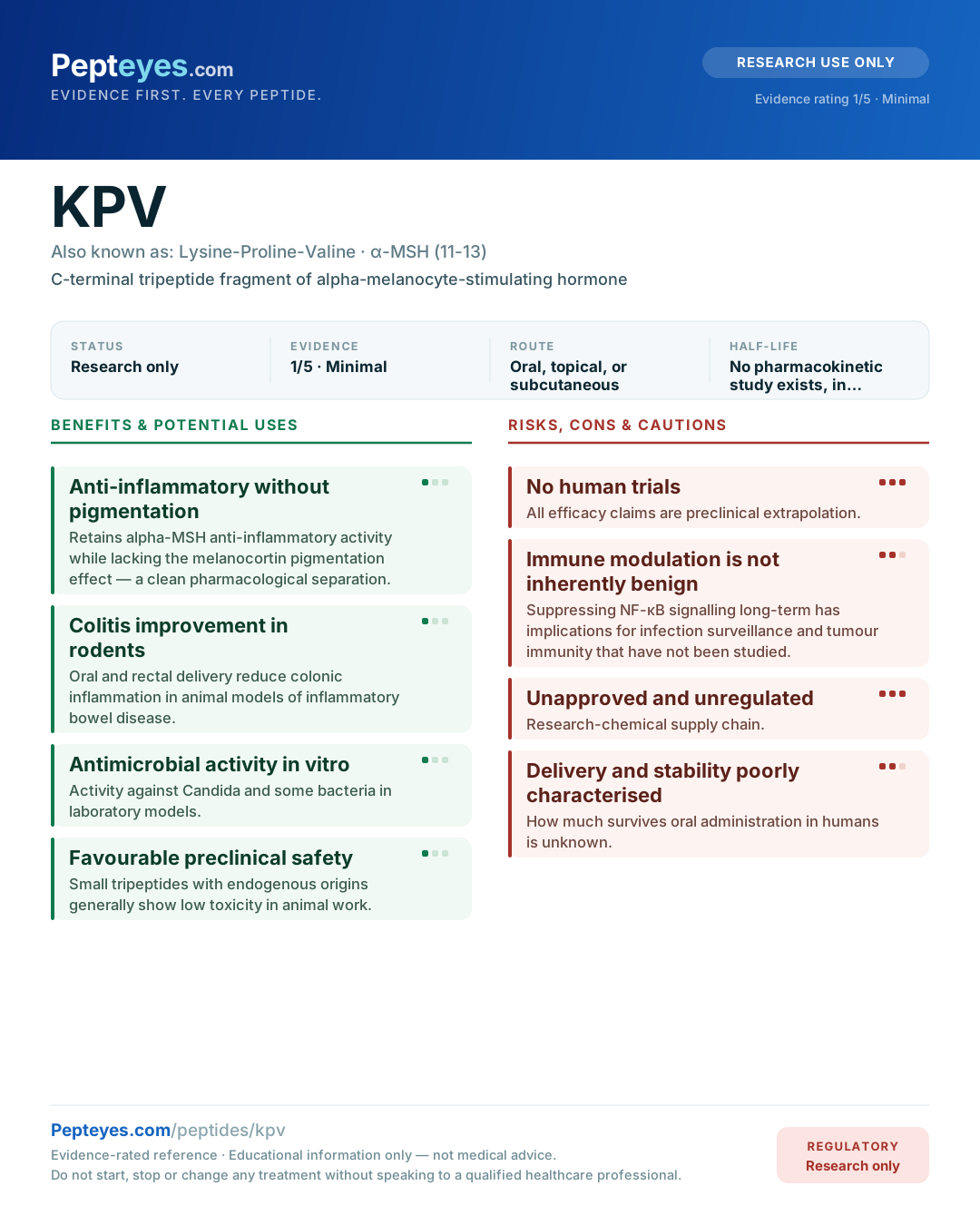
Anti-inflammatory without pigmentation
Retains alpha-MSH anti-inflammatory activity while lacking the melanocortin pigmentation effect — a clean pharmacological separation.
Evidence: Preliminary -
Colitis improvement in rodents
Oral and rectal delivery reduce colonic inflammation in animal models of inflammatory bowel disease.
Evidence: Preliminary -
Antimicrobial activity in vitro
Activity against Candida and some bacteria in laboratory models.
Evidence: Preliminary -
Favourable preclinical safety
Small tripeptides with endogenous origins generally show low toxicity in animal work.
Evidence: Preliminary
Risks and cautions
4 entries · 2 serious or common
-
No human trials
All efficacy claims are preclinical extrapolation.
Evidence: Serious -
Immune modulation is not inherently benign
Suppressing NF-κB signalling long-term has implications for infection surveillance and tumour immunity that have not been studied.
Evidence: Moderate evidence -
Unapproved and unregulated
Research-chemical supply chain.
Evidence: Serious -
Delivery and stability poorly characterised
How much survives oral administration in humans is unknown.
Evidence: Moderate evidence
Counts are not a score. A single serious risk can outweigh several well-supported benefits, and a long benefit list built on preclinical work outweighs nothing at all.
Opinion — what people actually report
4 themes · 2 reported benefits · 1 reported problem
This is the weakest tier on this site. These are themes drawn from public discussion — forums, subreddits and patient threads — not from trials. There is no control group, no denominator, and no way to confirm that what someone injected matched its label. People post when a result is dramatic and when something goes wrong, and rarely when nothing happens, so treat everything below as a description of the conversation rather than of the compound. The bars count how often a thing is said, not how well it is supported.
-
Gut symptom reports, often alongside BPC-157 Reported benefit. Recurring: Raised regularly, though not by everyone.
Mostly from people with inflammatory bowel conditions, and usually as part of a combination that makes attribution difficult.
-
Topical use for skin inflammation Reported benefit. Recurring: Raised regularly, though not by everyone.
A growing secondary use, with reports for eczema and wound healing.
-
Very few isolated accounts Reported problem. Dominant theme: Comes up in most discussions of this compound.
Almost always stacked, so the evidence base is even weaker than the compound's own thin record suggests.
-
Marketed as the anti-inflammatory alternative Practical note. Recurring: Raised regularly, though not by everyone.
Clinic positioning drives a lot of the interest.
Where the reports and the evidence part ways
KPV is the C-terminal tripeptide of alpha-MSH and has real anti-inflammatory activity in cell and animal models of colitis, which is where the plausibility comes from. There are no published human trials for any indication. Because it is nearly always used with other compounds, even the anecdotal record cannot attribute anything to it. The clinic framing as a gentler anti-inflammatory is a marketing position, not a demonstrated property.
Cheat sheet
The full sheet, all 77 compounds →The community reference numbers for this compound — reconstitution, working dose, cycle and bloodwork. Research and education only, not medical advice, and not part of the evidence-rated monograph above. Doses assume a 1mL / 100-unit insulin syringe — the calculator does the units for you.
Protocol overview
Dosing & reconstitution 10 mg vial
| WEEK | DAILY DOSE | UNITS PER INJECTION |
|---|---|---|
| Week 1 | 200 mcg | 2 units (0.02 mL) |
| Week 2 | 300 mcg | 3 units (0.03 mL) |
| Week 3 | 400 mcg | 4 units (0.04 mL) |
| Weeks 4 to 8 | 500 mcg | 5 units (0.05 mL) |
Frequency: Inject once daily subcutaneously. For 10 unit (0.10 mL) or smaller administrations, consider 30- or
On the master sheet
- Vial
- 10mg
- BAC
- 2mL
- Dose
- 250mcg-1mg daily
- Route
- SubQ
- Cycle
- 4–8 wks
- Time Off
- 2–4 wks
- Bloodwork
- CRP, CBC
Readers on KPV
Questions and answers from readers, under generated names. Nothing here has been checked or reviewed by the site and none of it is medical advice. It is the least verified thing on this page — and it is here because people ask each other these things anyway, and most of the other places they can ask are run by sellers.
0 questions · 0 answers
No questions yet. Ask the first one above — it takes one box and an email address.
How names work, and the house rules
Names. Every verified address is given one generated name — two ordinary words — and keeps it. Nobody chooses a name and nobody can take another's. Posts marked desk were written by the site's own editorial desk, usually to open a thread; they carry a generated name like everyone else's and are held to the site's rules, which means they never state an amount.
What is not allowed. Selling, sourcing, vendor names, coupon codes and "message me" — posts that read that way are held and usually removed. Personal medical details you would not want public. Abuse. Instructions framed as what someone else should do.
What this is not. A reader's report of what happened to them is a report, not a finding, and an answer here is one person's view. Nothing in this section changes the evidence rating above it. If something you read here would change what you take, take it to a pharmacist or physician first.
Your data. Delete any post of yours at any time, or remove everything you have written together with your name. Details in the privacy notice.
Who should avoid it
- Immunosuppressed patients
- Pregnancy
- Active infection
If used under medical supervision, monitor
- No validated monitoring exists
Regulatory & legal status
Not approved for human use.
Off Category 2 since April 2026 and recommended by the FDA’s advisory committee in July 2026 — but not yet on the 503A bulks list, so not yet lawfully compoundable.
- Removed from Category 2
- 22 April 2026
- Advisory committee vote
- 8–6, one abstention on 23–24 July 2026, considered for wound healing and inflammatory conditions
- Approved as a drug?
- No. Compounding status and drug approval are separate questions; this compound has no approval for the uses it is sold for.
The full dated record, with sources, and every affected peptide →
Infographic
Where to read further
We link to live literature searches rather than a frozen citation list, so you always see current results — including anything published after our last review.
- PubMed — all published literature on KPV
- PubMed — randomized controlled trials only
- ClinicalTrials.gov — registered human trials
Related peptides in Immune & Anti-inflammatory
Terms used on this page
- Preclinical Study and Animal Model
- Preclinical studies are the laboratory, cell and animal experiments done before any human exposure, establishing mechanism, target engagement and the toxicology package that permits a first trial.
- Melanocortin System
- The melanocortin system is the POMC-derived signalling network in which alpha-MSH and ACTH act on five receptors to control pigmentation, adrenal steroid output, appetite and energy balance.
- Cytokine
- Cytokines are small secreted signalling proteins acting at picomolar concentrations over short distances to coordinate immune cells, characterised by pleiotropy and extensive functional redundancy.
- Nuclear Factor Kappa B (NF-kB)
- Nuclear factor kappa B is a family of transcription factors held inactive in the cytoplasm until an inflammatory signal frees them to switch on genes for cytokines, adhesion molecules and survival.
- Tumour Necrosis Factor Alpha (TNF-alpha)
- Tumour necrosis factor alpha is a pro-inflammatory cytokine central to acute inflammation and to several autoimmune diseases, and the target of the most widely used class of biologic drugs.
- Oral Peptide Delivery
- Oral peptide delivery is the formulation of a peptide into a swallowed dosage form, a route that fights gastric acid, gut proteases and an epithelium built to exclude large molecules.
This page is educational information, not medical advice. It cannot account for your medical history, medications, or risk factors. Do not start, stop or change any treatment based on it. Speak to a qualified healthcare professional who knows your case.