Supplied as a nasal solution
Immune & Anti-inflammatory
At a glance
Ten answers, each one line. Open any row for the detail behind it.
What it does A real endogenous neuropeptide with legitimate research behind it, and a substantial…
A real endogenous neuropeptide with legitimate research behind it, and a substantial off-label following in the mould-illness and CIRS communities where the supporting evidence is far weaker than the enthusiasm.
Half-life ~1–2 minutes intravenously for the initial phase; elimination… — Documented
~1–2 minutes intravenously for the initial phase; elimination is biexponential, with a terminal phase near 20 minutes.
Typical studied dose No established dose. Each trial protocol fixes its own and publishes it… — Depends on the study
No established dose. Each trial protocol fixes its own and publishes it in the registry entry, under medical supervision that is part of the dose. There is no approved amount for use outside a study.
How often it is used Whatever the protocol specifies. The registry entry for a given study… — Depends on the study
Whatever the protocol specifies. The registry entry for a given study states its interval; nothing establishes one outside a study.
How it is taken Intranasal (off-label), intravenous or inhaled (trials) — Documented
Intranasal (off-label), intravenous or inhaled (trials)
Main side effects COVID-19 trials did not secure approval · Hypotension and flushing · Diarrhea — Depends on the study
COVID-19 trials did not secure approval — Results were mixed and did not persuade regulators, despite emergency-context review.
Hypotension and flushing — Direct consequence of potent vasodilation; can be significant with intravenous use.
Diarrhea — VIP is the hormone responsible for the secretory diarrhea of VIPoma; this is on-target, not idiosyncratic.
Storage before mixing Refrigerated, upright and sealed. A nasal solution is usually preserved…
Refrigerated, upright and sealed. A nasal solution is usually preserved, but it is still a solution and the same rules on heat and light apply.
Shelf life after mixing Nothing to mix — it is not supplied as a powder. The relevant date is…
Nothing to mix — it is not supplied as a powder. The relevant date is the one printed on the product.
Evidence level 2/5 · Limited — Nothing established
Preclinical work plus scattered human reports, uncontrolled use, or negative trials.
Regulatory status In Clinical Trials — Depends on the study
Aviptadil (synthetic VIP) was studied in COVID-19 respiratory failure without securing approval. Intranasal VIP is used off-label in chronic inflammatory response syndrome protocols. No approved VIP product in the US. Intranasal preparations are compounded.
Overview
A real endogenous neuropeptide with legitimate research behind it, and a substantial off-label following in the mould-illness and CIRS communities where the supporting evidence is far weaker than the enthusiasm.
Investigational — not approvedNo approved VIP product in the US. Intranasal preparations are compounded.
| Regulatory status | Aviptadil (synthetic VIP) was studied in COVID-19 respiratory failure without securing approval. Intranasal VIP is used off-label in chronic inflammatory response syndrome protocols. |
|---|---|
| Drug class | Endogenous 28-amino-acid neuropeptide |
| Route | Intranasal (off-label), intravenous or inhaled (trials) |
| Half-life | ~1–2 minutes intravenously for the initial phase; elimination is biexponential, with a terminal phase near 20 minutes. |
| Evidence rating |
2/5 Limited
Evidence rating 2 out of 5: Limited
Preclinical work plus scattered human reports, uncontrolled use, or negative trials. |
| Studied in | Randomized trials of intravenous and inhaled aviptadil in COVID-19 acute respiratory failure; small studies in sarcoidosis and pulmonary hypertension; no controlled trials of intranasal VIP for CIRS. |
Vasoactive Intestinal Peptide (VIP) sequence & structure
Vasoactive Intestinal Peptide (VIP) is a 28-residue linear peptide with a C-terminal amide; molecular weight 3,325.8 Da.
| Three-letter | H-His-Ser-Asp-Ala-Val-Phe-Thr-Asp-Asn-Tyr-Thr-Arg-Leu-Arg-Lys-Gln-Met-Ala-Val-Lys-Lys-Tyr-Leu-Asn-Ser-Ile-Leu-Asn-NH2 |
|---|---|
| Length | 28 amino acid residues |
| Modifications |
|
| Molecular formula | C147H238N44O42S |
| Molecular weight | 3,325.8 Da (average, free base) |
| Identifiers | CAS 37221-79-7 · PubChem CID 53314964 · DrugBank DB06260 · UniProt P01282 |
| Which molecule | Describes native human VIP, the 28-residue C-terminally amidated peptide cleaved from residues 125-152 of the VIP/PHM-27 precursor (UniProt P01282). Aviptadil (INN/USAN; CAS 40077-57-4; UNII A67JUW790C; PubChem CID 16132300; KEGG D12127) is the synthetic drug substance with the identical sequence and amide, so this record covers both; VIP(6-28) and other fragments/analogs are not covered. |
| Sources | UniProt P01282 VIP_HUMAN precursor sequence (residues 125-152 = VIP; feature table gives Asn-152 amide)FDA GSRS UNII A67JUW790C Aviptadil (sequence, C-terminal asparaginamide, formula C147H238N44O42S, CAS 40077-57-4, DrugBank DB06260)KEGG DRUG D12127 Aviptadil (sequence, C147H238N44O42S, MW 3325.80, CAS 40077-57-4)PubChem CIDs 53314964 (VIP) and 16132300 (Aviptadil) property records — note both depict the free acid (C147H237N43O43S, 3326.8)Wikidata Q4828930 aviptadil (DrugBank DB06260, CAS 40077-57-4, UNII A67JUW790C) |
Human, porcine, rat, mouse, rabbit and canine VIP share this sequence, so vendors often label it 'VIP (human, porcine, rat)'. The C-terminal amide is essential for activity; a free-acid 'VIP' listing is an error. Formula and MW here are for the amidated free base (C147H238N44O42S, 3325.8); PubChem and ChEMBL structures depict the free acid and therefore quote C147H237N43O43S / 3326.8, which should not be copied. Aviptadil is usually supplied as the acetate salt. CAS 37221-79-7 is the native-peptide registry number (PubChem synonyms); 40077-57-4 is aviptadil.
Record confidence: high — two independent authoritative sources agree on the sequence and modifications. Every sequence on the site is listed with its sources on the peptide sequences index.
How it works
Binds VPAC1 and VPAC2 receptors, producing vasodilation, bronchodilation, pulmonary surfactant production in alveolar type II cells, and broad anti-inflammatory effects including cytokine suppression and regulatory T-cell promotion.
Evidence base
Rated 2 of 5 — Limited. Preclinical work plus scattered human reports, uncontrolled use, or negative trials.
- Legitimate mechanism and real trials, but no positive definitive result.
Benefits and risks, weighed against the evidence
Every entry below carries the strength of the evidence behind it — three bars for strong human data, two for moderate, one for preliminary or preclinical work. The two columns are not equal by design: where a compound has more documented risk than demonstrated benefit, the lists say so.
Reported benefits
4 entries
-
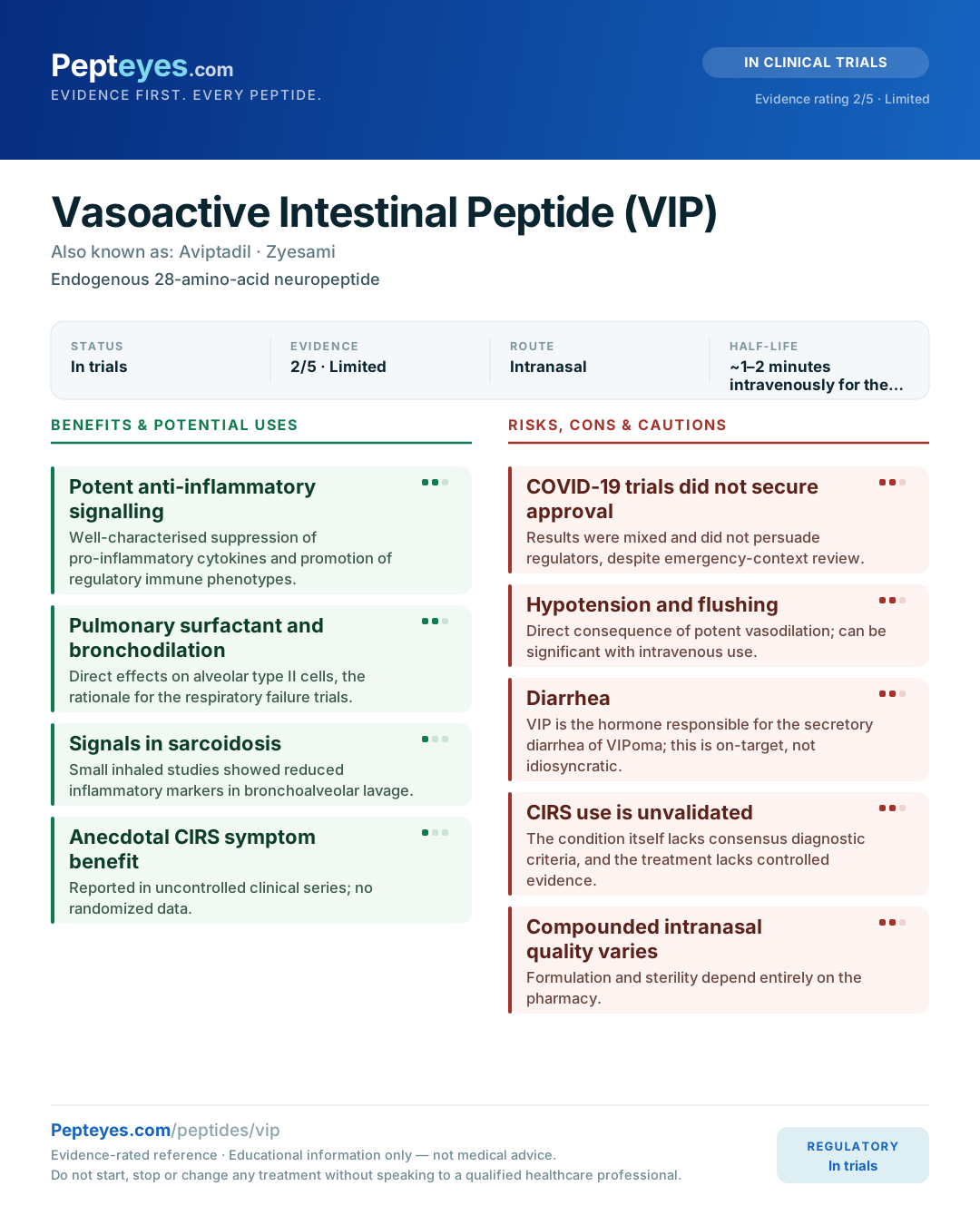
Potent anti-inflammatory signalling
Well-characterised suppression of pro-inflammatory cytokines and promotion of regulatory immune phenotypes.
Evidence: Moderate evidence -
Pulmonary surfactant and bronchodilation
Direct effects on alveolar type II cells, the rationale for the respiratory failure trials.
Evidence: Moderate evidence -
Signals in sarcoidosis
Small inhaled studies showed reduced inflammatory markers in bronchoalveolar lavage.
Evidence: Preliminary -
Anecdotal CIRS symptom benefit
Reported in uncontrolled clinical series; no randomized data.
Evidence: Preliminary
Risks and cautions
5 entries
-
COVID-19 trials did not secure approval
Results were mixed and did not persuade regulators, despite emergency-context review.
Evidence: Moderate evidence -
Hypotension and flushing
Direct consequence of potent vasodilation; can be significant with intravenous use.
Evidence: Moderate evidence -
Diarrhea
VIP is the hormone responsible for the secretory diarrhea of VIPoma; this is on-target, not idiosyncratic.
Evidence: Moderate evidence -
CIRS use is unvalidated
The condition itself lacks consensus diagnostic criteria, and the treatment lacks controlled evidence.
Evidence: Moderate evidence -
Compounded intranasal quality varies
Formulation and sterility depend entirely on the pharmacy.
Evidence: Moderate evidence
Counts are not a score. A single serious risk can outweigh several well-supported benefits, and a long benefit list built on preclinical work outweighs nothing at all.
Opinion — what people actually report
4 themes · 1 reported benefit · 2 reported problems
This is the weakest tier on this site. These are themes drawn from public discussion — forums, subreddits and patient threads — not from trials. There is no control group, no denominator, and no way to confirm that what someone injected matched its label. People post when a result is dramatic and when something goes wrong, and rarely when nothing happens, so treat everything below as a description of the conversation rather than of the compound. The bars count how often a thing is said, not how well it is supported.
-
Almost entirely a mould-illness protocol compound Practical note. Dominant theme: Comes up in most discussions of this compound.
Use is concentrated in one specific chronic illness framework, and intranasal VIP is a defined step within it.
-
Reports of improvement within that group Reported benefit. Recurring: Raised regularly, though not by everyone.
Positive accounts exist, embedded in a multi-step protocol that makes single-compound attribution impossible.
-
Blood pressure drops and flushing Reported problem. Recurring: Raised regularly, though not by everyone.
VIP is a potent vasodilator, and these effects are reported and expected.
-
Cost of compounded nasal preparations Reported problem. Recurring: Raised regularly, though not by everyone.
Compounded nasal preparations are expensive and not covered by insurance, which is a frequently cited reason people stop or never start.
Where the reports and the evidence part ways
Vasoactive intestinal peptide is real and important signalling biology, and there is legitimate research interest in VIP receptor agonists, notably in pulmonary hypertension and sarcoidosis. The intranasal use discussed in these communities comes from a specific clinical protocol rather than from randomized trials, and it sits inside a multi-component regimen where nothing can be attributed to one part. The underlying illness framework is itself contested in mainstream medicine, which matters when interpreting the reports.
Cheat sheet
The full sheet, all 77 compounds →The community reference numbers for this compound — reconstitution, working dose, cycle and bloodwork. Research and education only, not medical advice, and not part of the evidence-rated monograph above. Doses assume a 1mL / 100-unit insulin syringe — the calculator does the units for you.
Protocol overview
Dosing & reconstitution 10 mg vial
| PHASE | DAILY DOSE | UNITS PER INJECTION |
|---|---|---|
| Full course | 50–200 mcg | 1–4 units (0.01–0.04 mL) |
Dose in the morning — the half-life is around a minute, so the route matters more than the clock.
On the master sheet
- Vial
- 10mg
- BAC
- 2mL (SubQ)
- Dose
- IN 50–100mcg / SubQ 50–200mcg AM
- Route
- IN/SubQ
- Cycle
- 4 wks-18 mo
- Notes
- ~1 min half-life, route matters
Readers on Vasoactive Intestinal Peptide (VIP)
Questions and answers from readers, under generated names. Nothing here has been checked or reviewed by the site and none of it is medical advice. It is the least verified thing on this page — and it is here because people ask each other these things anyway, and most of the other places they can ask are run by sellers.
0 questions · 0 answers
No questions yet. Ask the first one above — it takes one box and an email address.
How names work, and the house rules
Names. Every verified address is given one generated name — two ordinary words — and keeps it. Nobody chooses a name and nobody can take another's. Posts marked desk were written by the site's own editorial desk, usually to open a thread; they carry a generated name like everyone else's and are held to the site's rules, which means they never state an amount.
What is not allowed. Selling, sourcing, vendor names, coupon codes and "message me" — posts that read that way are held and usually removed. Personal medical details you would not want public. Abuse. Instructions framed as what someone else should do.
What this is not. A reader's report of what happened to them is a report, not a finding, and an answer here is one person's view. Nothing in this section changes the evidence rating above it. If something you read here would change what you take, take it to a pharmacist or physician first.
Your data. Delete any post of yours at any time, or remove everything you have written together with your name. Details in the privacy notice.
Who should avoid it
- Hypotension or hemodynamic instability
- Pregnancy
- Known VIPoma or carcinoid
If used under medical supervision, monitor
- Blood pressure
- Symptom diaries where used off-label
Regulatory & legal status
No approved VIP product in the US. Intranasal preparations are compounded.
Infographic
Where to read further
We link to live literature searches rather than a frozen citation list, so you always see current results — including anything published after our last review.
- PubMed — all published literature on Vasoactive Intestinal Peptide (VIP)
- PubMed — randomized controlled trials only
- ClinicalTrials.gov — registered human trials
Related peptides in Immune & Anti-inflammatory
Terms used on this page
- Regulatory T Cell (Treg)
- Regulatory T cells are a CD4 subset defined by FOXP3 expression that actively suppress other lymphocytes, maintaining tolerance to self and restraining responses once a threat has cleared.
- Surfactant Stabilizer (Polysorbate)
- A surfactant stabiliser is a non-ionic excipient, usually polysorbate 20 or 80, added to occupy interfaces so that the peptide is not the molecule that unfolds at them.
- Cytokine
- Cytokines are small secreted signalling proteins acting at picomolar concentrations over short distances to coordinate immune cells, characterised by pleiotropy and extensive functional redundancy.
- Intravenous Administration (IV)
- Intravenous administration delivers drug directly into the bloodstream, giving complete bioavailability by definition and making it the reference route against which all others are measured.
- Intranasal Delivery
- Intranasal delivery uses the nasal mucosa as an absorption surface, offering needle-free administration and rapid onset but low and variable bioavailability for peptides.
- Agonist
- An agonist is a ligand that binds a receptor and stabilises its active conformation, producing a biological response rather than merely occupying the binding site.
This page is educational information, not medical advice. It cannot account for your medical history, medications, or risk factors. Do not start, stop or change any treatment based on it. Speak to a qualified healthcare professional who knows your case.