GHRP-2 vs GHRP-6
These are not equivalent in evidence GHRP-2 is rated 3/5 and GHRP-6 is rated 2/5 — a gap of 1 level on our scale. Similar marketing does not mean similar proof.
| GHRP-2 Limited Approval | GHRP-6 Research Use Only | |
|---|---|---|
| Evidence rating |
3/5 Moderate
Evidence rating 3 out of 5: Moderate
|
2/5 Limited
Evidence rating 2 out of 5: Limited
|
| Regulatory status | Approved in Japan as a diagnostic agent for GH deficiency. Not approved in the US or EU for therapeutic use. | Not approved. Superseded by more selective secretagogues; largely of historical and research interest. |
| Category | Growth Hormone Axis | Growth Hormone Axis |
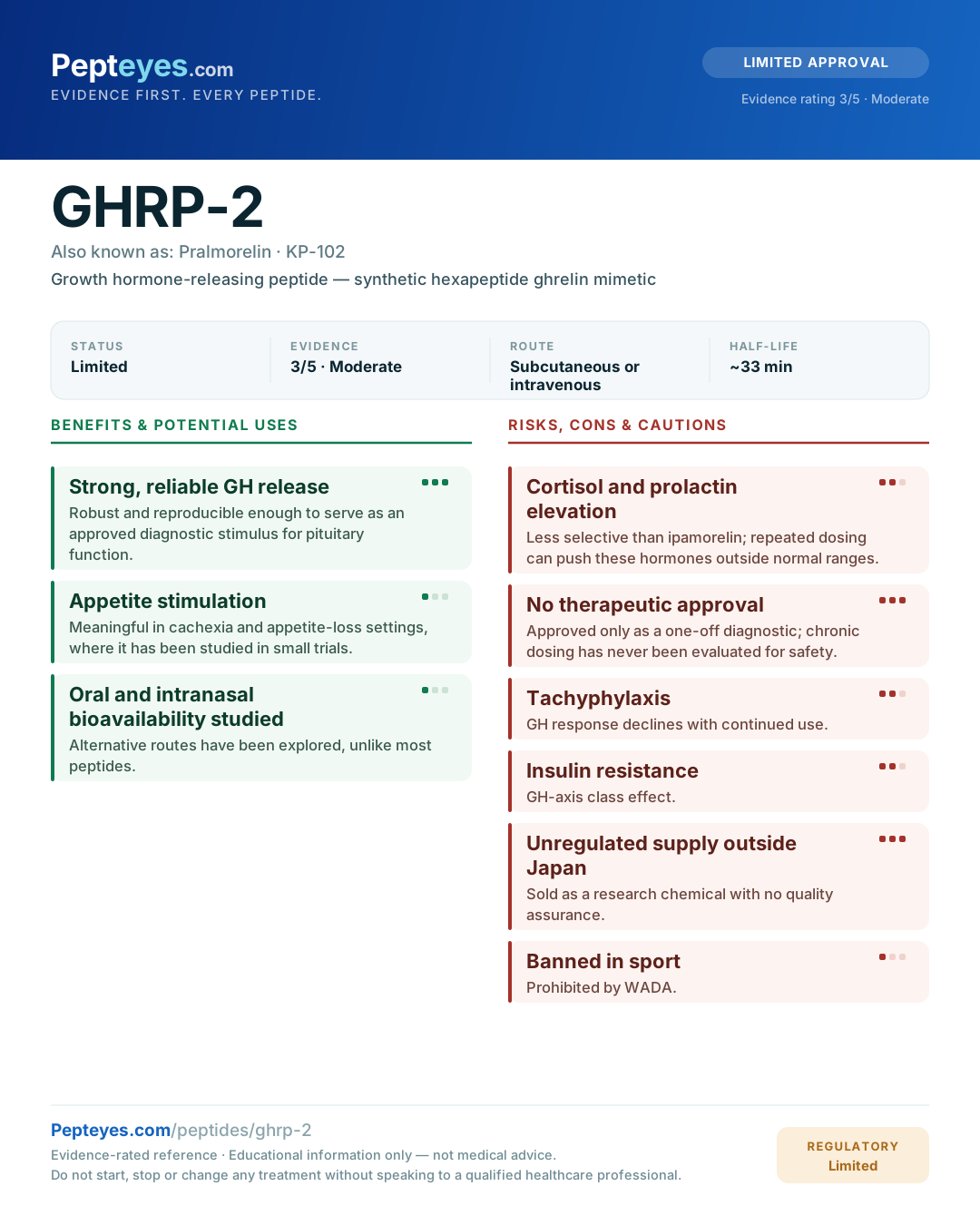
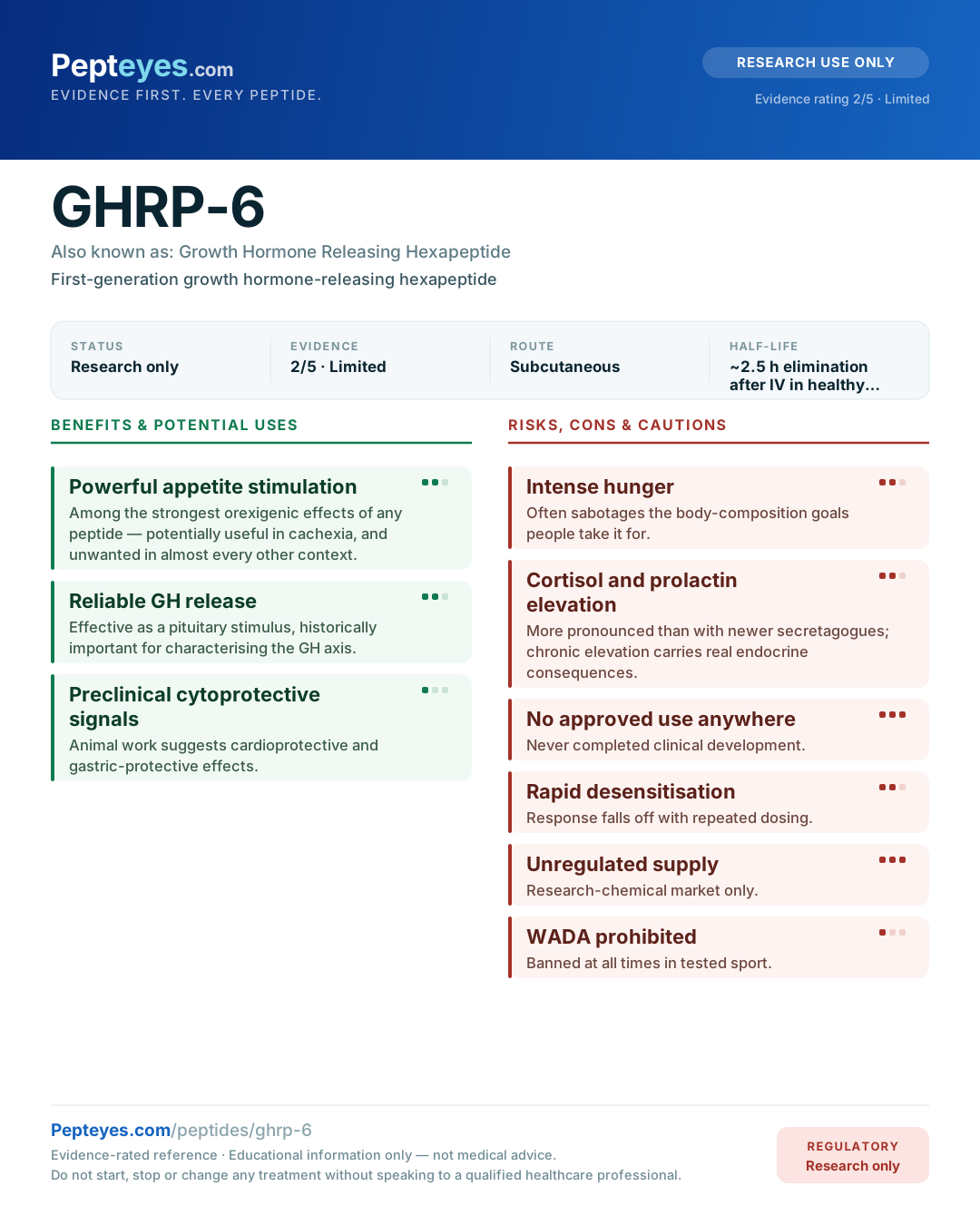
| Drug class | Growth hormone-releasing peptide — synthetic hexapeptide ghrelin mimetic | First-generation growth hormone-releasing hexapeptide |
| Route | Subcutaneous or intravenous | Subcutaneous (research) |
| Half-life | ~33 min (t1/2 0.55 h) after IV — measured in children, the only published human study; no adult figure exists. | ~2.5 h elimination after IV in healthy men; the short figures quoted elsewhere are its ~8 min distribution phase. |
| Sequence length | 6 residues | 6 residues |
| Molecular weight | 818 Da | 873 Da |
| Studied in | Diagnostic validation studies in Japan; short-term GH secretion studies; small studies in cachexia. | Extensive endocrine pharmacology research; small cardioprotection studies; no completed therapeutic development program. |
| Who should avoid it |
|
|
| Legal status | Diagnostic approval in Japan only. Not lawful for therapeutic sale in the US. | Not approved for human use in any major market. |
Benefits — GHRP-2
- Strong, reliable GH release
Robust and reproducible enough to serve as an approved diagnostic stimulus for pituitary function.
- Appetite stimulation
Meaningful in cachexia and appetite-loss settings, where it has been studied in small trials.
- Oral and intranasal bioavailability studied
Alternative routes have been explored, unlike most peptides.
Benefits — GHRP-6
- Powerful appetite stimulation
Among the strongest orexigenic effects of any peptide — potentially useful in cachexia, and unwanted in almost every other context.
- Reliable GH release
Effective as a pituitary stimulus, historically important for characterising the GH axis.
- Preclinical cytoprotective signals
Animal work suggests cardioprotective and gastric-protective effects.
Risks & cons — GHRP-2
- Cortisol and prolactin elevation
Less selective than ipamorelin; repeated dosing can push these hormones outside normal ranges.
- No therapeutic approval
Approved only as a one-off diagnostic; chronic dosing has never been evaluated for safety.
- Tachyphylaxis
GH response declines with continued use.
- Insulin resistance
GH-axis class effect.
- Unregulated supply outside Japan
Sold as a research chemical with no quality assurance.
Risks & cons — GHRP-6
- Intense hunger
Often sabotages the body-composition goals people take it for.
- Cortisol and prolactin elevation
More pronounced than with newer secretagogues; chronic elevation carries real endocrine consequences.
- No approved use anywhere
Never completed clinical development.
- Rapid desensitisation
Response falls off with repeated dosing.
- Unregulated supply
Research-chemical market only.
A comparison is not a recommendation. Neither column is being suggested for you. Which — if either — is appropriate depends on your diagnosis, history and medications, and that is a conversation for a qualified clinician.