Supplied as a finished topical
Antimicrobial & Antibiotic
At a glance
Ten answers, each one line. Open any row for the detail behind it.
What it does The body's own broad-spectrum antimicrobial peptide, and a good illustration of why…
The body's own broad-spectrum antimicrobial peptide, and a good illustration of why "natural" does not mean "safe to add more of". LL-37 is also directly implicated in the pathology of psoriasis, rosacea and lupus.
Half-life No measured half-life, in humans or animals. Proteases in… — Documented
No measured half-life, in humans or animals. Proteases in serum and wound fluid degrade it, which is why analogues are engineered for stability.
Typical studied dose None established. No dose has ever been set for a human being, because… — Nothing established
None established. No dose has ever been set for a human being, because the studies that would set one have not been done. Any figure circulating for this compound was chosen by somebody selling it or by somebody guessing.
How often it is used No schedule exists. Cycles and intervals quoted for this compound come… — Nothing established
No schedule exists. Cycles and intervals quoted for this compound come from forums rather than from any study, and they vary because nothing anchors them.
How it is taken Topical or subcutaneous (research) — Documented
Topical or subcutaneous (research)
Main side effects Drives autoimmune skin disease · Pro-inflammatory at higher concentrations · No systemic human data — Carries serious risk
Drives autoimmune skin disease — LL-37 is overexpressed in psoriasis and rosacea lesions and functions as an autoantigen in psoriasis. Adding more is mechanistically the wrong direction in these conditions.
Pro-inflammatory at higher concentrations — The same peptide is antimicrobial at low concentration and inflammatory at high concentration — a narrow therapeutic window.
No systemic human data — Injectable use has never been evaluated.
Storage before mixing A finished cream or serum follows its own label — usually cool, dark and…
A finished cream or serum follows its own label — usually cool, dark and sealed. Copper peptides in particular discolour when they degrade, and a colour change is a reason to stop using it.
Shelf life after mixing Nothing to mix — it is not supplied as a powder. The relevant date is…
Nothing to mix — it is not supplied as a powder. The relevant date is the one printed on the product.
Evidence level 2/5 · Limited — Nothing established
Preclinical work plus scattered human reports, uncontrolled use, or negative trials.
Regulatory status Research Use Only — Nothing established
Not approved. Studied topically for chronic wounds; systemic use unstudied. Has a genuine pro-inflammatory disease association. Not approved for human use.
Overview
The body's own broad-spectrum antimicrobial peptide, and a good illustration of why "natural" does not mean "safe to add more of". LL-37 is also directly implicated in the pathology of psoriasis, rosacea and lupus.
Not approved for human use anywhereNo approval anywhere for human use. Sold under research-use labelling. Not approved for human use.
| Regulatory status | Not approved. Studied topically for chronic wounds; systemic use unstudied. Has a genuine pro-inflammatory disease association. |
|---|---|
| Drug class | Human cathelicidin antimicrobial peptide — 37 residues |
| Route | Topical or subcutaneous (research) |
| Half-life | No measured half-life, in humans or animals. Proteases in serum and wound fluid degrade it, which is why analogues are engineered for stability. |
| Evidence rating |
2/5 Limited
Evidence rating 2 out of 5: Limited
Preclinical work plus scattered human reports, uncontrolled use, or negative trials. |
| Studied in | Small phase 1/2 topical trials in hard-to-heal venous leg ulcers; extensive immunology research; substantial literature on its role in autoimmune skin disease. |
LL-37 sequence & structure
LL-37 is a 37-residue linear peptide with a free C-terminal acid; molecular weight 4,493.34 Da.
| Three-letter | H-Leu-Leu-Gly-Asp-Phe-Phe-Arg-Lys-Ser-Lys-Glu-Lys-Ile-Gly-Lys-Glu-Phe-Lys-Arg-Ile-Val-Gln-Arg-Ile-Lys-Asp-Phe-Leu-Arg-Asn-Leu-Val-Pro-Arg-Thr-Glu-Ser-OH |
|---|---|
| Length | 37 amino acid residues |
| Modifications | None — an unmodified chain of standard L-amino acids |
| Molecular formula | C205H340N60O53 |
| Molecular weight | 4,493.34 Da (average, free base) |
| Identifiers | CAS 154947-66-7 · PubChem CID 16198951 · UniProt P49913 |
| Which molecule | "Cathelicidin" is a family name; the human precursor hCAP-18 (CAMP gene product, 170 aa, UniProt P49913) is cleaved by proteinase 3 to release the C-terminal 37-residue peptide LL-37 (precursor residues 134-170), which is what this record describes. Truncated forms (LL-23, LL-29, KR-20, KS-30, RK-31, FF-33, FALL-39, LL-37(18-37)) are distinct molecules. Synthetic LL-37 developed for wound healing carries the INN ropocamptide; the C-terminally amidated analogue (ChEMBL2426408, C205H341N61O52, 4492.4 Da) is a different compound from the native free-acid peptide. |
| Sources | UniProt P49913 (CAMP_HUMAN), PEPTIDE 134-170 "Antibacterial peptide LL-37"ChEMBL CHEMBL530345 (CATHELICIDIN; HELM sequence, C205H340N60O53, 4493.34)PubChem CID 16198951 (LL-37; formula, MW, CAS 154947-66-7, UNII 3DD771JO2H)Selleck Chemicals LL37 (human cathelicidin) product page (vendor cross-check) |
Unmodified linear 37-mer with free N-terminus and free C-terminal acid, no cysteines and no post-translational modifications; the 37-mer is exactly residues 134-170 of the UniProt P49913 precursor, and literature numbering LL-37(x-y) counts from Leu1 of the mature peptide. Average MW recomputed from the formula is 4493.34 Da (PubChem 4493, ChEMBL 4493.34; vendors quote 4493.26-4493.37); research-grade material is usually supplied as a TFA or acetate salt. CAS 154947-66-7 passes the check-digit test and is listed by PubChem. The pepteyes glossary alias "CAP-18" originally named the rabbit cathelicidin; the human precursor is hCAP-18, though PubChem lists CAP-18/CAP18 among LL-37 synonyms.
Record confidence: high — two independent authoritative sources agree on the sequence and modifications. Every sequence on the site is listed with its sources on the peptide sequences index.
How it works
Amphipathic helical peptide that disrupts bacterial membranes and neutralises endotoxin. It also acts as an immune signalling molecule, chemoattracting neutrophils and monocytes, and — critically — forms complexes with self-DNA and RNA that activate plasmacytoid dendritic cells, driving interferon responses.
Evidence base
Rated 2 of 5 — Limited. Preclinical work plus scattered human reports, uncontrolled use, or negative trials.
- One of the clearest examples of a peptide whose known biology argues against casual use.
Benefits and risks, weighed against the evidence
Every entry below carries the strength of the evidence behind it — three bars for strong human data, two for moderate, one for preliminary or preclinical work. The two columns are not equal by design: where a compound has more documented risk than demonstrated benefit, the lists say so.
Reported benefits
4 entries
-
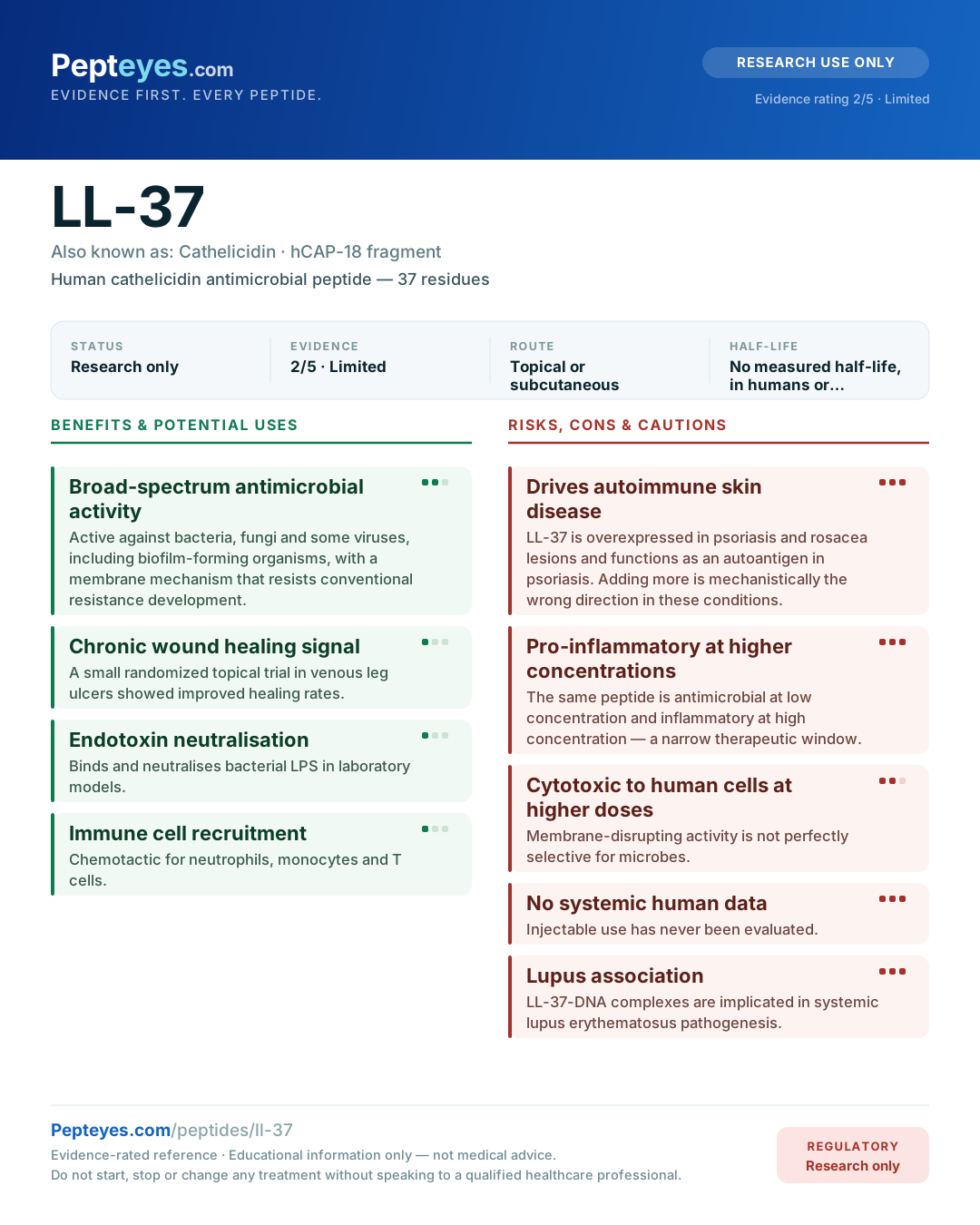
Broad-spectrum antimicrobial activity
Active against bacteria, fungi and some viruses, including biofilm-forming organisms, with a membrane mechanism that resists conventional resistance development.
Evidence: Moderate evidence -
Chronic wound healing signal
A small randomized topical trial in venous leg ulcers showed improved healing rates.
Evidence: Preliminary -
Endotoxin neutralisation
Binds and neutralises bacterial LPS in laboratory models.
Evidence: Preliminary -
Immune cell recruitment
Chemotactic for neutrophils, monocytes and T cells.
Evidence: Preliminary
Risks and cautions
5 entries · 4 serious or common
-
Drives autoimmune skin disease
LL-37 is overexpressed in psoriasis and rosacea lesions and functions as an autoantigen in psoriasis. Adding more is mechanistically the wrong direction in these conditions.
Evidence: Serious -
Pro-inflammatory at higher concentrations
The same peptide is antimicrobial at low concentration and inflammatory at high concentration — a narrow therapeutic window.
Evidence: Serious -
Cytotoxic to human cells at higher doses
Membrane-disrupting activity is not perfectly selective for microbes.
Evidence: Moderate evidence -
No systemic human data
Injectable use has never been evaluated.
Evidence: Serious -
Lupus association
LL-37-DNA complexes are implicated in systemic lupus erythematosus pathogenesis.
Evidence: Serious
Counts are not a score. A single serious risk can outweigh several well-supported benefits, and a long benefit list built on preclinical work outweighs nothing at all.
Opinion — what people actually report
4 themes · 1 reported benefit · 1 reported problem
This is the weakest tier on this site. These are themes drawn from public discussion — forums, subreddits and patient threads — not from trials. There is no control group, no denominator, and no way to confirm that what someone injected matched its label. People post when a result is dramatic and when something goes wrong, and rarely when nothing happens, so treat everything below as a description of the conversation rather than of the compound. The bars count how often a thing is said, not how well it is supported.
-
Discussed within specific chronic-illness communities Practical note. Dominant theme: Comes up in most discussions of this compound.
Interest concentrates in biotoxin, mould illness and chronic Lyme discussions rather than in general peptide use.
-
Reports of significant inflammatory flares Reported problem. Dominant theme: Comes up in most discussions of this compound.
A recurring and serious theme — worsening symptoms after dosing, sometimes interpreted by users as a herxheimer reaction rather than as an adverse effect.
-
Occasional reports of improvement Reported benefit. Occasional: Reported by a minority, or in specific contexts.
Present but a minority, and in conditions with fluctuating natural courses.
-
Concern about autoimmunity Practical note. Recurring: Raised regularly, though not by everyone.
Better-informed posters note LL-37's role as an autoantigen in psoriasis and lupus, and raise it as a reason for caution.
Where the reports and the evidence part ways
LL-37 is a genuine human antimicrobial peptide with well-characterised immune functions, and that is the source of the interest. It has never been trialled as an injectable therapeutic in humans. The autoimmunity concern is the substantive one and is better supported than the benefit case: LL-37 is an established autoantigen in psoriasis and is implicated in lupus pathogenesis, so administering it is not obviously benign. Interpreting a symptom flare as evidence the treatment is working is a framing that makes adverse effects unfalsifiable, and it appears frequently in these discussions.
Cheat sheet
The full sheet, all 77 compounds →The community reference numbers for this compound — reconstitution, working dose, cycle and bloodwork. Research and education only, not medical advice, and not part of the evidence-rated monograph above. Doses assume a 1mL / 100-unit insulin syringe — the calculator does the units for you.
Protocol overview
Dosing & reconstitution 5 mg vial
| WEEK | DAILY DOSE | UNITS PER INJECTION |
|---|---|---|
| Week 1 | 50 mcg | 0.5 units (0.01 mL) |
| Week 2 | 100 mcg | 1 units (0.01 mL) |
| Week 3 | 150 mcg | 1.5 units (0.02 mL) |
| Week 4 | 200 mcg | 2 units (0.02 mL) |
| Week 5 | 250 mcg | 2.5 units (0.03 mL) |
| Week 6 | 300 mcg | 3 units (0.03 mL) |
| Week 7 | 350 mcg | 3.5 units (0.04 mL) |
| Week 8 | 400 mcg | 4 units (0.04 mL) |
Frequency: Inject once daily subcutaneously. Some protocols use a 5-days-on, 2-days-off schedule. For 10 unit (0.10 mL) or smaller administrations during early titration, consider 30- or 50-unit insulin syringes for improved readability.
On the master sheet
- Vial
- 5mg
- BAC
- 3mL
- Dose
- 50–400mcg daily
- Route
- SubQ
- Cycle
- 2–6 wks
- Time Off
- 2–4 wks
- Bloodwork
- CBC, CRP, liver
Readers on LL-37
Questions and answers from readers, under generated names. Nothing here has been checked or reviewed by the site and none of it is medical advice. It is the least verified thing on this page — and it is here because people ask each other these things anyway, and most of the other places they can ask are run by sellers.
0 questions · 0 answers
No questions yet. Ask the first one above — it takes one box and an email address.
How names work, and the house rules
Names. Every verified address is given one generated name — two ordinary words — and keeps it. Nobody chooses a name and nobody can take another's. Posts marked desk were written by the site's own editorial desk, usually to open a thread; they carry a generated name like everyone else's and are held to the site's rules, which means they never state an amount.
What is not allowed. Selling, sourcing, vendor names, coupon codes and "message me" — posts that read that way are held and usually removed. Personal medical details you would not want public. Abuse. Instructions framed as what someone else should do.
What this is not. A reader's report of what happened to them is a report, not a finding, and an answer here is one person's view. Nothing in this section changes the evidence rating above it. If something you read here would change what you take, take it to a pharmacist or physician first.
Your data. Delete any post of yours at any time, or remove everything you have written together with your name. Details in the privacy notice.
Who should avoid it
- Psoriasis, rosacea, or lupus
- Any autoimmune inflammatory condition
- Pregnancy
- Systemic use generally
If used under medical supervision, monitor
- No validated monitoring exists
Commonly confused with
These mix-ups cause real harm — two products sold under one name, or two molecules whose effects run in opposite directions.
Both host-derived peptides sold for inflammation, with opposite immune directions. KPV suppresses NF-kB signalling; LL-37 is pro-inflammatory at higher concentrations and drives psoriasis and lupus pathology.
Compare side by sideRegulatory & legal status
Not approved for human use.
Off Category 2 since April 2026 with no committee vote yet: neither prohibited as a significant safety risk nor authorised for compounding.
- Removed from Category 2
- 22 April 2026
- Approved as a drug?
- No. Compounding status and drug approval are separate questions; this compound has no approval for the uses it is sold for.
The full dated record, with sources, and every affected peptide →
Infographic
Where to read further
We link to live literature searches rather than a frozen citation list, so you always see current results — including anything published after our last review.
- PubMed — all published literature on LL-37
- PubMed — randomized controlled trials only
- ClinicalTrials.gov — registered human trials
Related peptides in Antimicrobial & Antibiotic
Terms used on this page
- Antimicrobial Peptide (AMP)
- Antimicrobial peptides are short cationic amphipathic sequences of innate immunity that kill microbes mainly by disrupting anionic membranes, a mechanism far easier to demonstrate than to develop into a drug.
- Amphipathicity
- Amphipathicity is the segregation of hydrophobic and hydrophilic residues onto opposite faces of a folded peptide, the arrangement that lets a sequence sit in and disrupt membranes.
- Interferon
- Interferons are antiviral and immunoregulatory cytokines, grouped into type I, type II and type III families, that signal through JAK-STAT to switch on hundreds of interferon-stimulated genes.
- Endotoxin (Lipopolysaccharide)
- Endotoxin is the lipopolysaccharide of Gram-negative outer membranes, a heat-stable TLR4 agonist that causes fever and shock at nanogram doses and that sterilisation does not remove.
- T Cell
- T cells are the lymphocytes of adaptive cellular immunity, each carrying a uniquely rearranged receptor that recognises a peptide fragment only when it is displayed by an MHC molecule.
- Therapeutic Window
- The therapeutic window is the range of exposure above the concentration needed for effect and below the one producing unacceptable harm, and its width decides how tightly dosing must be controlled.
This page is educational information, not medical advice. It cannot account for your medical history, medications, or risk factors. Do not start, stop or change any treatment based on it. Speak to a qualified healthcare professional who knows your case.